34 寶二水庫沉砂池
34 Bao Er Reservoir Sedimentation Basin
設施概況
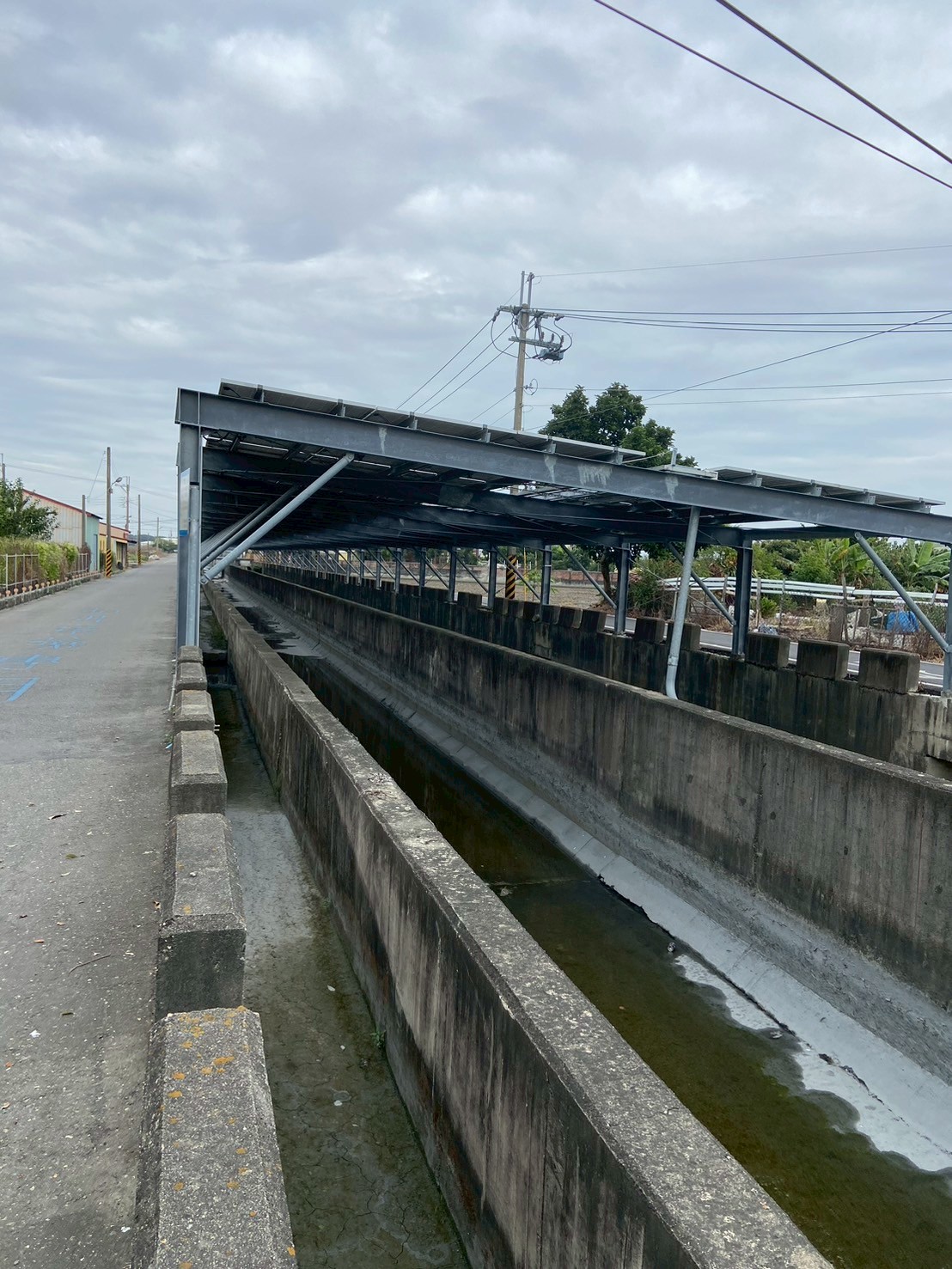
沉砂池位於取水隧道出口之軟橋堤防內,由取水隧道引出三條獨立水路分別進入三座並聯沉砂池,設計容量分別為5cms、10cms及5cms。每座沉砂池均採用漸擴逆坡工型式,擴散角皆為30度,逆坡工後為沉砂溝,共8道,沉砂溝尾端設溢流堰取水,溢流堰下方為排砂道,可於操作排砂時將泥砂排回上坪溪。
設施基本數據
總長度:144.16公尺(含上游整流段、側溢流段、逆坡段及下游自由溢流段)
沉砂溝:共8道,每道淨寬4公尺
溢流堰頂標高:EL.171.80公尺(NO.1)、EL.170.80公尺(NO.2及 NO.3)
排砂閘門:4座,寬3.0公尺,高1.4公尺
Facility Overview: The sedimentation basins are located within the Ruanqiao Embankment at the intake tunnel exit. Three independent waterways from the intake tunnel flow into three parallel sedimentation basins, with design capacities of 5cms, 10cms, and 5cms respectively. Each sedimentation basin employs a gradually expanding reverse slope design with a diffusion angle of 30 degrees. Following the reverse slope are eight sedimentation channels. An overflow weir is located at the end of each channel for water intake, and below the overflow weir is a discharge channel, allowing sediment to be discharged back into the Shangping Creek during operation.
Basic Facility Data
Total Length: 144.16 meters (including upstream straightening section, side overflow section, reverse slope section, and downstream free overflow section)
Sedimentation Channels: 8 in total, each with a net width of 4 meters
Overflow Weir Crest Elevation: EL.171.80 meters (NO.1), EL.170.80 meters (NO.2 and NO.3)
Sediment Discharge Gates: 4, 3.0 meters wide and 1.4 meters high
33 桂山發電廠軟橋機組
33 Guishan Power Plant Soft Bridge Unit
日治時期
軟橋發電廠最早於臺灣日治時期,由新竹市北門鄭家在1912年所設立的新竹電燈株式會社在1919年5月竹東庄員崠子興建「軟橋發電所」,當時廠內共設置100KW之法蘭西式橫軸水輪發電機兩部。
1932年(昭和7年)10月1日,新竹電燈株式會社與「嘉義電燈株式會社」合併為「台灣電燈株式會社新竹出張所,並繼續營運軟橋發電所。
省政府時期
二戰戰後1945年,臺灣省政府成立臺灣電力公司並接收日治時期的軟橋發電所繼續運轉發電。後因水災報廢。
1988年,鑑於竹東圳改善完畢,臺電公司隨即展開軟橋水力發電廠的復建計劃。復建工程於1991年7月開工,1993年11月完成復建工程並更新廠內設備以及設置遠端遙控裝置,更新後,軟橋發電廠改由位於新北市新店區的桂山發電廠進行遠端遙控機組與水閘門開關。
現今
2001年,因應政府組織改革,軟橋發電廠改稱為軟橋機組,並繼續由桂山發電廠遠端管理,其全名改為桂山發電廠軟橋機組。
During the Japanese Occupation Period: The earliest Ruanqiao Power Plant was established in Taiwan during the Japanese occupation period. In 1912, the Hsinchu Electric Light Company, founded by the Zheng family of Beimen, Hsinchu City, built the "Ruanqiao Power Station" in Yuandongzi, Zhudong Village, in May 1919. At that time, the plant had two 100KW French-style horizontal shaft turbine generators.
On October 1, 1932 (Showa 7), the Hsinchu Electric Light Company merged with the "Chiayi Electric Light Company" to form the "Taiwan Electric Light Company Hsinchu Branch Office," which continued to operate the Ruanqiao Power Station.
During the Provincial Government Period: After World War II, in 1945, the Taiwan Provincial Government established the Taiwan Power Company and took over the operation of the Ruanqiao Power Station from the Japanese occupation period. It was later decommissioned due to flooding.
In 1988, given the completion of improvements to the Zhudong Canal, Taiwan Power Company immediately began operating the Ruanqiao Hydropower Station. The plant's reconstruction plan. Reconstruction began in July 1991 and was completed in November 1993, including equipment upgrades and the installation of remote control devices. After the upgrades, the Ruanqiao Power Plant was remotely controlled by the Guishan Power Plant in Xindian District, New Taipei City, for the operation of the generating units and sluice gates.
Currently, in 2001, due to government organizational reforms, the Ruanqiao Power Plant was renamed the Ruanqiao Unit and continues to be remotely managed by the Guishan Power Plant. Its full name is now Guishan Power Plant Ruanqiao Unit.
32 竹東圳
32 Zhudongzhen
竹東圳是台灣新竹縣的重要水利工程之一,在日治時期由竹東鎮二重埔地方士紳林春秀集資,與地方人士共同協力下,並聘請日本專業技士於1926年(大正十五年)正式動工興建,於1928年(昭和三年)竣工;為新竹開拓史上規模最大,灌溉面積最廣大的水利工程。
竹東圳攔取頭前溪上游水源上坪溪,並利用軟橋發電廠引用渠道作為導水路;完成圳路長約21公里餘, 灌溉竹東地區農田,受益面積達800公頃。後來也作為科學園區的用水來源。
The Zhudong Canal is a significant irrigation project in Hsinchu County, Taiwan. During the Japanese occupation, it was funded by Lin Chun-hsiu, a local gentry member from Erchongpu, Zhudong Township, with the cooperation of other local residents and the hiring of Japanese engineers. Construction officially began in 1926 (Taisho 15) and was completed in 1928 (Showa 3). It was the largest and most extensive irrigation project in Hsinchu's history.
The Zhudong Canal diverts water from the Shangping River, the upstream source of the Touqian River, and utilizes the irrigation canal of the Ruanqiao Power Plant as a water diversion route. The canal is approximately 21 kilometers long, irrigating farmland in the Zhudong area, benefiting an area of 800 hectares. It later also served as a water source for the Science Park.
31 資源莊31 Ziyuanzhuang
日昭和元年(西元1926 年)在開鑿竹東圳隧道時,突然爆炸,因而發現此地蘊藏豐富的瓦斯,因此在日昭和9年3月時,台灣礦業株式會社開鑽竹東1號油井,同年五月鑽進300公尺油氣地層時,探得油氣並引發大火,經36天才將大火熄滅,竹東礦區因此世界聞名,直至台灣光復,這之間共鑽井23口井,完成採氣的共有八口,而台灣光復後,國民政府成立台灣油礦探勘處(即為現今的中國石油公司)接收竹東礦區。 而資源莊是日據時代就興建的,依據竹東鎮誌第127頁,及林鎮烈所著的竹東鑽機保養工廠簡介中的說明,資源莊主要是做為員工宿舍,最多可容納285戶,日據時期的資源莊就是一個設施非常完善的獨立住宅社區,內有禮堂一座、醫務室一間、供應社、冰店、兒童育樂所、餐廳各一棟、公差宿舍一棟、員工單身宿舍2棟、員工眷舍200多戶、並有圖書室、網球場、籃球場、溜冰場等。 早期中油公司為了體恤員工採買的便利性,特在冰店附近的空地,規劃臨時攤販區,讓附近的小農進來販售自家的農作物。 依據97年訪問湯達正先生時得知,戰後除了少數因技術需求而留下的日本工作人員外,其餘皆返回日本了,而資源莊的日本房舍拆除後,有昔日的日本工作人員回來探望故居,尋找年輕時栽種的樹木,但一切已成回憶,只能流淚感嘆。 現今的資源莊,最為大家所喜愛的、老少咸宜的就是資源莊冰店,冰店每年只有4/15~10/15 約半年的時間經營,早年是以一台使用阿摩尼亞的製冰機器,現已汰換為冷煤的壓縮冷凍機,製冰過程如下: 1. 煮水 使用員崠淨水廠的水,過濾後煮開放涼,第1 天煮水、第二天放涼、第三天放原料。 2. 製冰 以純糖、純果汁、純開水、檸檬精配料成型,放入零下20度的冰箱,30分鐘後即可包裝,整個製冰階段過程共需1個小時。此外,到資源莊吃清冰,有一特殊吃法,就是一定要加鹽,據說是昔日中油籃球隊選手練球時,為了補充流失的養分之故。 現今的資源莊,日本宿舍皆已拆除,僅冰店、餐廳、理髮院、宿舍還有在運作。
In 1926, during the excavation of the Zhudong Canal Tunnel, an explosion occurred, revealing rich gas reserves in the area. In March of 1928, Taiwan Mining Corporation began drilling the Zhudong No. 1 oil well. In May of the same year, after drilling to a depth of 300 meters, they discovered oil and gas, which triggered a fire that took 36 days to extinguish. The Zhudong mining area thus became world-famous. Until Taiwan's retrocession, a total of 23 wells were drilled, eight of which were successfully used for gas extraction. After Taiwan's retrocession, the Nationalist government established the Taiwan Oilfield Exploration Office (now China Petroleum Corporation) to take over the Zhudong mining area. Ziyuanzhuang was built during the Japanese occupation. According to page 127 of the Zhudong Township Gazetteer and the introduction to the Zhudong Drilling Rig Maintenance Factory by Lin Zhenlie, Ziyuanzhuang was mainly used as employee dormitories, accommodating up to 285 households. During the Japanese occupation, Ziyuanzhuang was a well-equipped independent residential community, with an auditorium, a clinic, a supply store, an ice cream shop, a children's playground, a restaurant, a staff dormitory, two single employee dormitories, more than 200 employee family quarters, a library, tennis courts, basketball courts, and an ice rink. In the early days, to facilitate employees' purchasing, CPC Corporation specially planned a temporary stall area on the open space near the ice cream shop, allowing nearby small farmers to sell their crops. According to a visit to Mr. Tang Dazheng in 1997, after the war, except for a few Japanese staff who stayed due to technical needs, the rest returned to Japan. After the Japanese houses in Ziyuanzhuang were demolished, some former Japanese staff returned to visit their old homes and look for the trees they planted in their youth, but everything was now just a memory, and they could only sigh with tears. Today, the most popular and beloved place in Ziyuanzhuang is the Ziyuanzhuang Ice Shop, which operates for only about half a year, from April 15th to October 15th. In the early days, it used an ammonia-powered ice-making machine, which has now been replaced by a refrigerant-powered compressor. The ice-making process is as follows: 1. Boiling water: Water from the Yuandong Water Purification Plant is used. After filtration, it is boiled and cooled. The process is repeated on the first day of boiling, the second day of cooling, and the third day of adding the raw materials. 2. Ice making: The mixture is made with pure sugar, pure fruit juice, pure boiled water, and lemon extract. It is then placed in a freezer at -20 degrees Celsius and packaged after 30 minutes. The entire ice-making process takes about one hour. In addition, there's a special way to eat shaved ice in Ziyuanzhuang: you must add salt. It's said that this was done by former CPC basketball players to replenish lost nutrients during practice. Today, the Japanese dormitories in Ziyuanzhuang have all been demolished; only the shaved ice shop, restaurant, barbershop, and dormitories remain in operation.
30 林業文化聚落建築群
30 Forestry Culture Cluster
聚落發展史、使用變遷史 1930年代因應日本南進政策,臺灣總督府推動工業發展,竹東因鄰近山區富含木材、石油、天然氣、煤炭、矽砂、石灰石等天然資源,吸引許多新興工業設廠,成為新竹工業重鎮。 昭和十五(1940)年,日本商人平戶吉藏於竹東設立出張所,並在雞油林設立「植松木行竹東支店」,興建大型製材廠、貯木池、貯木場、事務所及員工宿舍等產業設施,積極砍伐天然原始林,以應日本軍方之需。 民國三十四(1945)年11月竹東林業由「臺灣行政長官公署農林處林務局」接收,並沿用「植松」之名繼續經營。次年,國民政府設置林業管理委員會,並正式接收日本人在臺灣公、民營的事業,以三組方式進行接收工作。植松在竹東的林業資產後改名為「竹東林場」,隨著竹東支線的修築,竹東成為林業發展的重鎮。 二戰後至民國六十年代間,為充實國庫財源,臺灣的山林資源有計畫地進行開採,隨著工商業逐漸發展後,民間森林保育意識的抬頭,民國六十二(1973)年行政院頒行「台灣林業經營改革方案」,伐木量逐年減少。至民國七十(1981)年左右,因山林資源漸稀與政府的禁伐令,林業製材的產業日漸沒落,相關地景也逐漸荒廢、拆毀而消失。民國七十九(1990)年後,竹東林場停止生產,土地逐漸轉為都市計畫公共設施用地,原有的空間亦大幅轉變為其他使用。 聚落整體規模及特色 「竹東林場建築群」包括「林業展示館(竹東林場製材廠貯木場辦公室)」、東林路148巷宿舍群、長安路53巷宿舍群,位處竹東車站前,鄰近圓環與竹東鎮公所,許多竹東鎮的政府機關皆設立於此,為竹東鎮行政的核心區。 竹東林場製材廠貯木場辦公室現為「林業展示館」。東林路148巷宿舍群共計40戶,是竹東林場宿舍區中保存範圍完整、且類型豐富而多樣的區域。集結了日治時期、戰後初期的多種宿舍風貌,包括沿中正路的戰後雙拼樓房宿舍,以及內側的日治與戰後日式雙拼木造宿舍。 長安路53巷宿舍群的巷弄蜿蜒,形成特有的紋理景觀。在靠近林森路的空曠處,尚存留一處防空洞設施,是當時防空之用的歷史見證。 聚落建築場所精神價值 「竹東林場建築群」為二戰後六大林場中北部僅存相關辦公與宿舍設施之案例,具其重 要性。此建築群見證林業與都市發展歷史,其保有巷弄紋理的整體景觀、展現了多元型態的宿舍單元,尚存當時宿舍區內的「原醫務室」、「原招待所」等服務設施,且建築群鄰近市中心,具有活化竹東區域發展之潛力。 資料來源:竹東林場宿舍群文化資產價值評估報告委託案成果報告書
History of Settlement Development and Usage Changes: In the 1930s, in response to Japan's southward expansion policy, the Taiwan Governor-General's Office promoted industrial development. Zhudong, due to its proximity to mountainous areas rich in natural resources such as timber, oil, natural gas, coal, silica sand, and limestone, attracted many emerging industries to set up factories, becoming an important industrial town in Hsinchu. In 1940, Japanese businessman Hirado Kichizo established a branch office in Zhudong and set up the "Zhudong Branch of Zhisong Timber Company" in Jiyoulin. He built large-scale lumber mills, timber storage ponds, timber yards, offices, and employee dormitories, and actively cut down natural virgin forests to meet the needs of the Japanese military. In November 1945, the forestry industry in Zhudong was taken over by the Forestry Bureau of the Agriculture and Forestry Department of the Taiwan Executive Yuan, and continued to operate under the name "Zhisong". The following year, the Nationalist government established the Forestry Management Committee and formally took over the public and private enterprises owned by Japanese in Taiwan, carrying out the takeover work in three groups. The forestry assets of Zhisong in Zhudong were later renamed "Zhudong Forest Farm." With the construction of the Zhudong branch line, Zhudong became an important center for forestry development. From the post-World War II period to the 1960s, in order to replenish the national treasury, Taiwan's mountain forest resources were systematically exploited. With the gradual development of industry and commerce and the rise of public awareness of forest conservation, the Executive Yuan issued the "Taiwan Forestry Management Reform Plan" in 1973, and the amount of logging decreased year by year. By around 1981, due to the scarcity of mountain forest resources and the government's logging ban, the forestry timber industry gradually declined, and the related landscapes were gradually abandoned, demolished, and disappeared. After 1990, the Zhudong Forest Farm ceased production, and the land was gradually converted into urban planning public facilities land, and the original space was also largely converted to other uses. The Zhudong Forest Farm Architectural Complex comprises the Forestry Exhibition Hall (formerly the Zhudong Forest Farm Lumber Mill Office), the dormitory complex on Lane 148, Donglin Road, and the dormitory complex on Lane 53, Chang'an Road. Located in front of Zhudong Station, near the roundabout and the Zhudong Township Office, it was the core administrative area of Zhudong Township, housing many government offices. The former Zhudong Forest Farm Lumber Mill Office now houses the Forestry Exhibition Hall. The dormitory complex on Lane 148, Donglin Road, with 40 units, is the best-preserved and most diverse dormitory area in the Zhudong Forest Farm. It showcases various dormitory styles from the Japanese occupation period and the early postwar period, including postwar duplex dormitories along Zhongzheng Road and Japanese-style duplex wooden dormitories from the Japanese occupation and postwar period. The winding lanes of the dormitory complex on Lane 53, Chang'an Road, create a unique landscape. Near Linsen Road, an air-raid shelter remains, a historical testament to its use for air defense. The Zhudong Forest Farm Architectural Complex holds significant importance as it is the only remaining example of related office and dormitory facilities in northern China among the six major forest farms established after World War II. This complex bears witness to the history of forestry and urban development. It preserves the overall landscape with its characteristic alleyway textures, showcases diverse dormitory units, and still retains service facilities such as the original medical clinic and guesthouse. Furthermore, its proximity to the city center gives the complex the potential to revitalize the Zhudong area. (Source: Zhudong Forest Farm Dormitory Complex Cultural Asset Valuation Report - Commissioned Project Outcome Report)
29 大崎彭家祠堂舊址
29 Hsinchu Science Park X Project
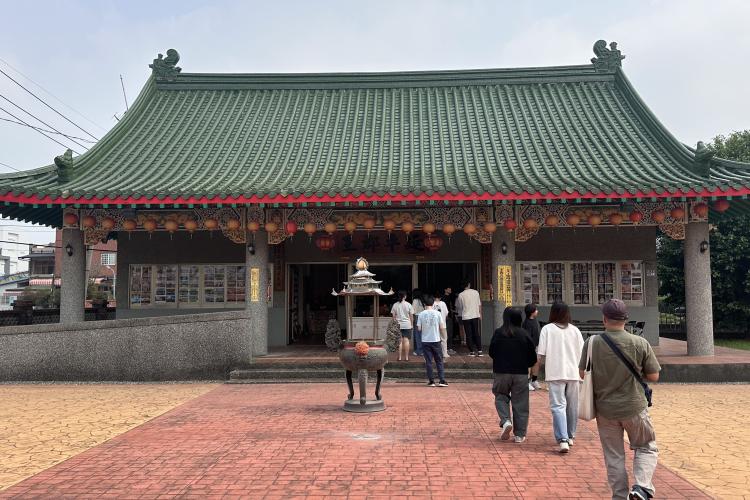
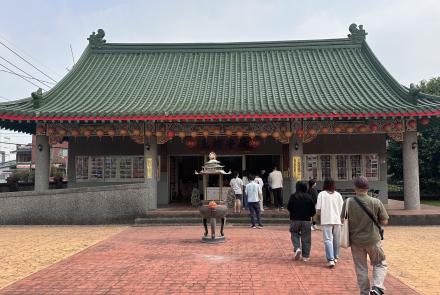
新竹縣寶山鄉大崎村彭家祠堂「隴西堂」建於 1924年,距今九十九年歷史,為北埔面盆寮(今水磜村)彭慶寶公所興建。彭慶寶公屬北埔面盆寮彭協春祭祀公業第三大房,家族子孫滿堂開支散葉,因此在距今百年前,在寶山大崎購買數甲田地並,並興建家族祠堂「隴西堂」,1924年落成後,後代子孫在大崎開墾居住,就此落地生根。2018年開始的竹科寶山擴建計畫,將已限建四十年以上的大崎村北二高速公路以北地區進行土地徵收,也涵蓋了大崎彭家祠堂「隴西堂」。本建築已於2023年正式拆除。
The Peng Family Ancestral Hall, "Longxi Hall," in Daqi Village, Baoshan Township, Hsinchu County, was built in 1924, making it 99 years old. It was constructed by Peng Qingbao, the head of the Peng family ancestral hall in Beipu Mianpenliao (now Shuiqi Village). Peng Qingbao belonged to the third branch of the Peng Xiechun ancestral hall in Beipu Mianpenliao. With numerous descendants, the family purchased several acres of land in Daqi, Baoshan, over a century ago and built the ancestral hall, "Longxi Hall." After its completion in 1924, descendants settled and cultivated the land in Daqi, establishing their roots there. The Hsinchu Science Park Baoshan Expansion Project, which began in 2018, expropriated land north of the Second Freeway in Daqi Village, which had been under construction restrictions for over 40 years. This included the Peng Family Ancestral Hall, "Longxi Hall." The building was officially demolished in 2023.