02西門福德祠
1.大西門福德爺
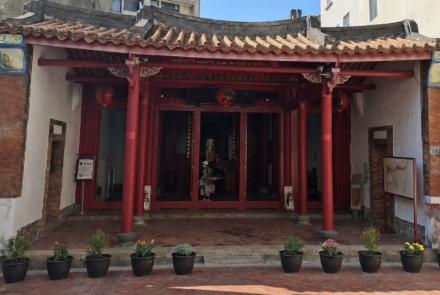
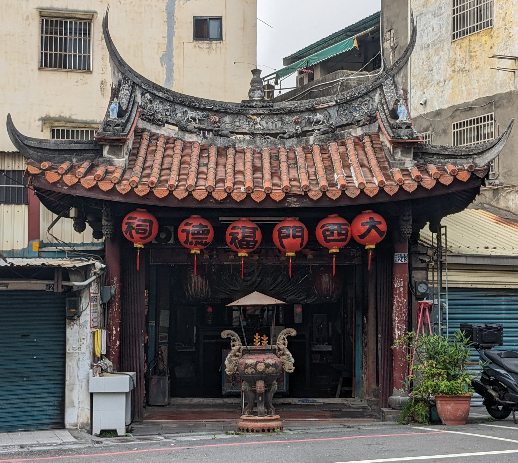
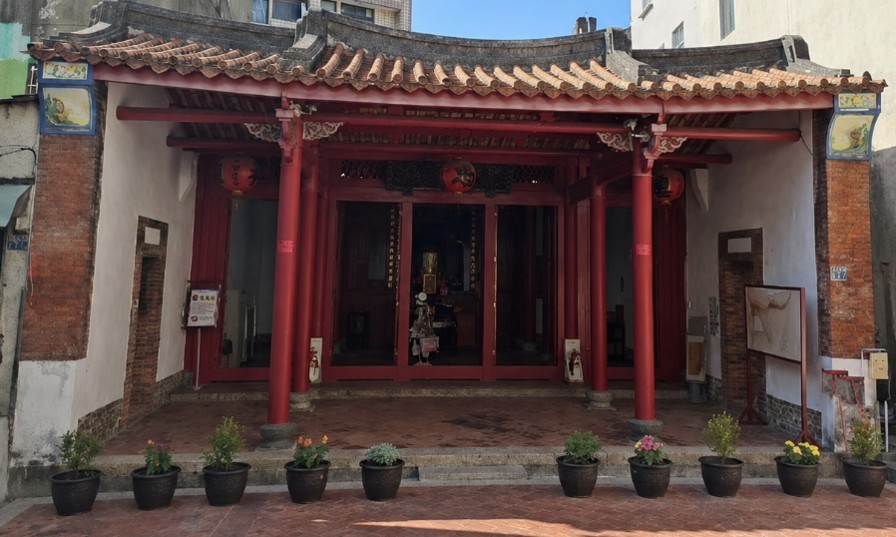
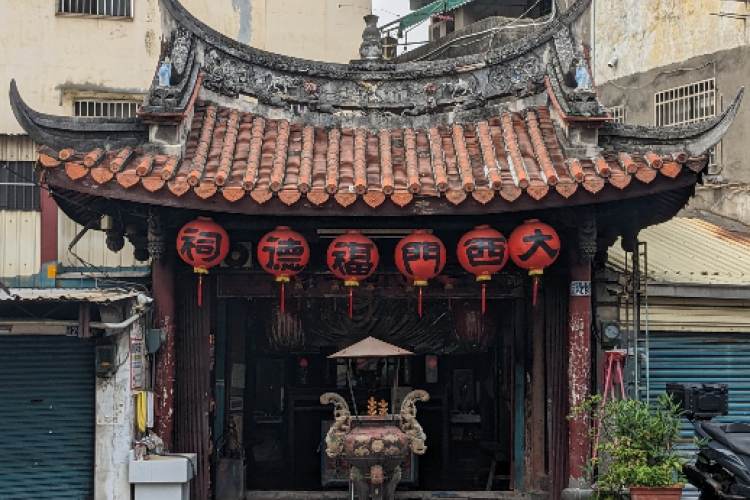
彰化西門福德祠,又稱大西門福德祠,為清朝彰化縣城西門―慶豐門內的土地公廟,始建時間不詳,但鄉紳曾於乾隆46年(1781)重修,當時已有正殿及拜殿。其餘的北門―拱辰門、南門―宣平門、東門―樂耕門內也均有土地公廟,因日人拆除城牆闢為道路,今四座城門均已消失,福德祠則都已改建過。
2.西街福德祠與光緒匾額
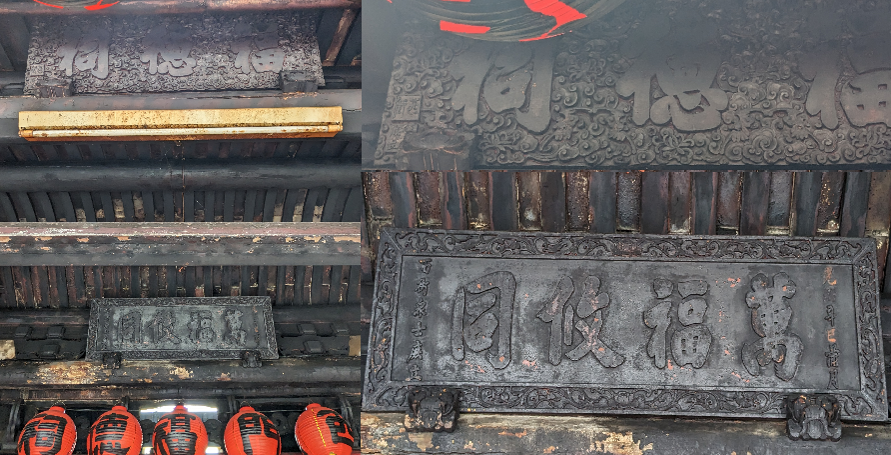
清雍正元年(1723)彰化縣創立,縣治在今彰化市區,原種帶狀莿竹環繞縣衙、街道、民居以護衛安全,設東、南、西、北四門,環竹牆外圍鑿深溝為護城河。乾隆51年(1786)林爽文民變,莿竹被砍光。嘉慶2年(1797)知縣胡應魁復原栽植莿竹牆,於四座城門增建城樓,但僅十多年便因土質鬆軟、地震而傾頹;16年(1811)知縣楊桂森、士紳賴應光等捐銀15,000元以磚建城牆,20年(1815)完工。道光28年(1848)彰化大地震損壞西門福德祠正殿,次年西街住民重建正殿,祠內佈滿雲紋的「福德祠」匾左下角刻有「西街」為證。光緒7年(1881,辛巳年)重修西門福德祠,增高正殿,並依舊制修復拜殿、廂廊,留有「萬福攸同」匾記錄此事,匾上「西街眾士庶立」證明此祠為西門土地神。
3.大西門福德爺
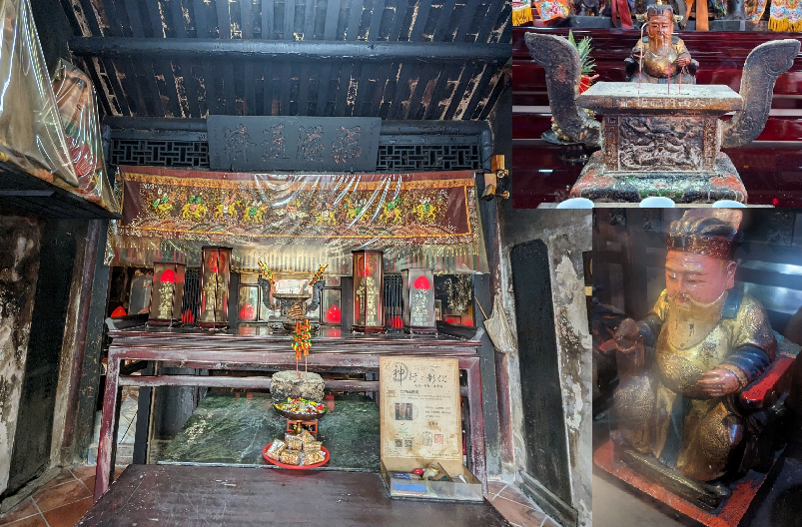
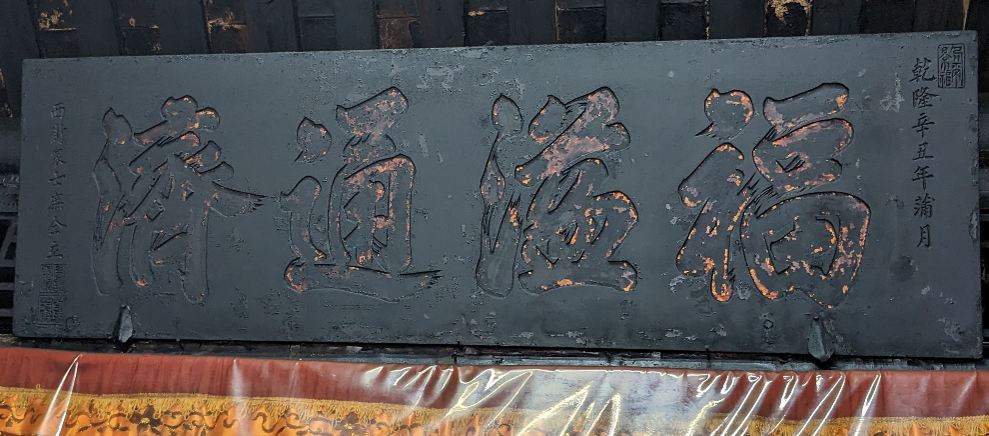
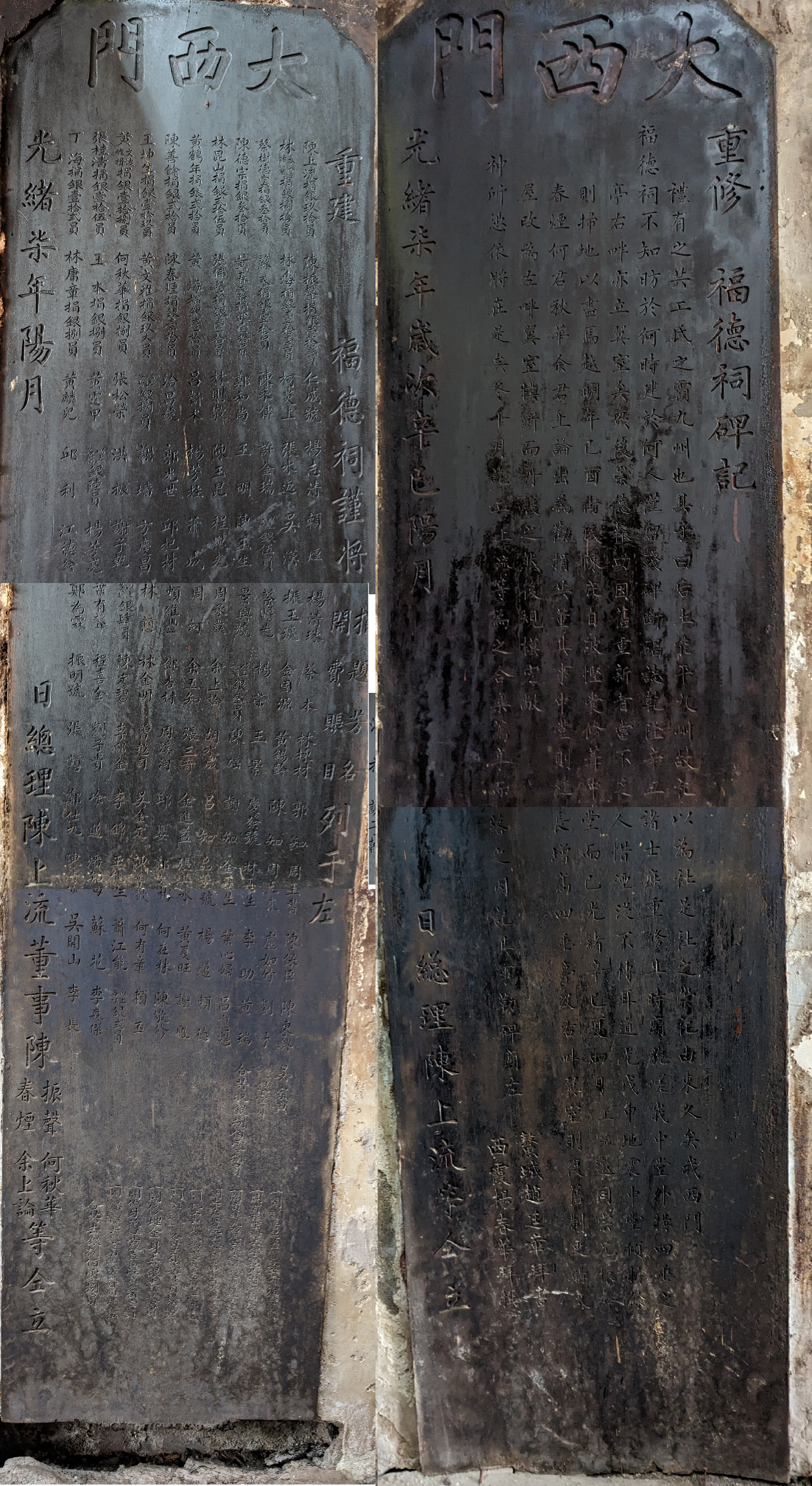
西門福德祠主祀福德正神,廟內正龕上懸有清乾隆46年(1781,辛丑年)「福溢通濟」匾,正中石香爐則是道光16年(1836,丙申年)刻成,因此,可推測本祠創建於乾隆年間。正殿兩側牆壁内嵌的直立木牌,均為光緒7年(1881)重修捐題記事牌。
4.正殿「福溢通濟」匾
乾隆46年農曆5月(1781,辛丑年蒲月)「福溢通濟」匾,西街眾士庶仝立。
5.正殿兩側牆壁內嵌光緒木牌
西門福德祠內殿兩側牆壁內嵌有兩塊光緒7年(1881)重修記事和捐題人名木牌,龍邊左側木牌〈重修福德祠碑記〉記錄本年重修大事,文中清楚寫著乾隆46年大西門福德祠就重修過,經過道光地震毀損中堂,由西街陳庇自費修繕,本年則其陳氏宗親再度倡議重修,由總理陳上流糾集董事陳振聲、陳春煙、何秋華、余上論主持重修一事,花費銀兩808元。
由上可見彰化城西街陳氏是大族,他們也費心聘請鰲城趙廷章書寫、西霞楊春華撰作〈重修福德祠碑記〉。明洪武20年(1387)朝廷在福建泉州建立永寧衛城,因地形如鰲魚卧灘,別稱「鰲城」,與天津衛、威海衛同列明朝三大衛城,西霞在山東威海海濱,大西門福德祠重修完成,特別請泉州、威海人士撰書碑:記,應有祈求土地公雄鎮本區、衛佑西門之意,將西門福德祠視作一處衛城。
6.廣澤尊王
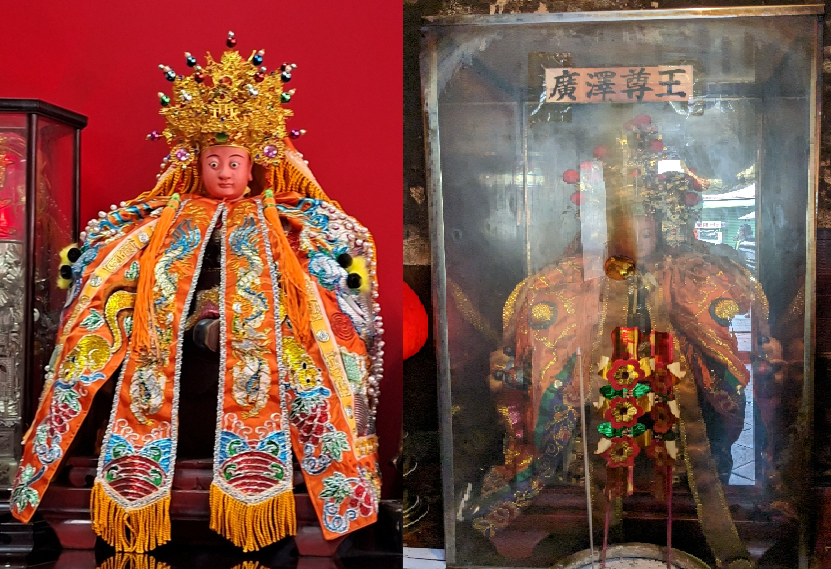
大西門福德祠內也供奉有廣澤尊王,本名郭忠福,有翹右腿、垂左腿的獨特形象。廣澤尊王是五代十國時期福建安溪的一位牧童,後成為泉州府南安縣的鄉土神,信仰範圍擴及整個閩南,據此可知,彰化縣城西門附近陳氏等宗族應屬泉州裔。左側近年重新塑身之廣澤尊王雙眼大睜,目光炯炯,頗具特色。
7.古樸的內殿
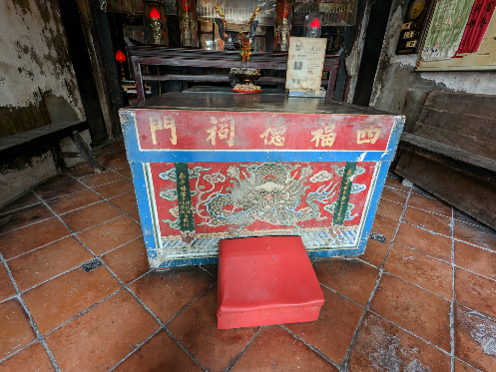
最近一個辛未年(1991)林氏信眾捐獻之供桌,或許也是住在古稱西街地帶的今日信眾?地面斑駁的紅磚,盡顯古意。
8.屋脊小巧思
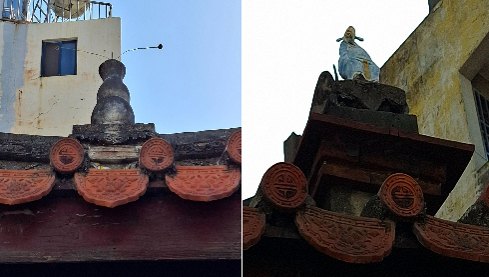
本祠採「三間起一條龍,前帶拜亭」格局,正殿為硬山式、燕尾屋脊,屋脊中央有葫蘆造型、剪貼與泥塑裝飾,結構複雜,不過,今祠前已無拜亭。作為彰化市少數保存完整、留在舊有土地上的古蹟之一,大西門福德祠不僅是周邊鄰里信仰中心,也是建築與文化資產的重要見證,其精工細作適合對臺灣傳統廟宇、民間信仰或地方歷史感興趣者遊訪,至今,仍有市民會於晨間入廟參拜後才去上班。
01懷忠祠
1.懷忠祠紀念客家十八義民
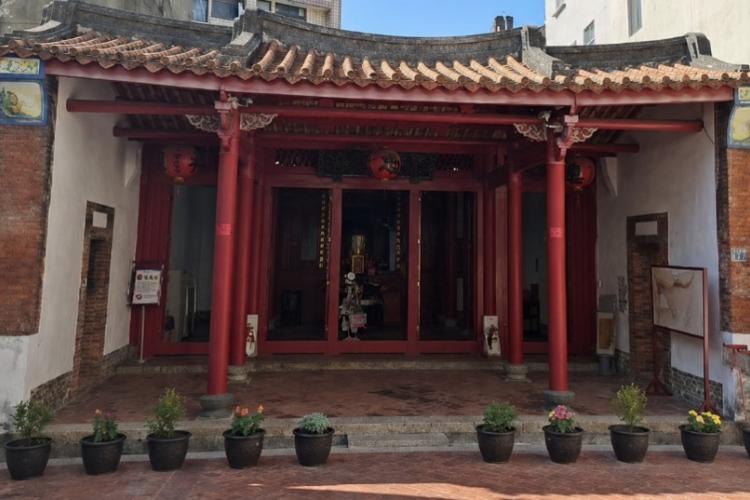
懷忠祠是紀念彰化十八位客家義民之地。清雍正9年(1731)12月發生臺灣最大的平埔族抗官變亂―大甲西社事件,道卡斯族大甲西社的林武力揪集樸仔籬等八社平埔族人,反抗清廷強徵過多勞役而起事。他們在淡水同知張弘章率鄉勇巡視莊頭、行經阿束社(今彰化縣和美鎮)時突襲包圍,危及彰化縣城,住在附近的粵籍移民得知,立刻集結莊民支援官軍,擊退平埔族人,救出同知張弘章,但有十八位莊民不幸犧牲。鄉親感佩十八位陣亡者的英勇,將其合葬於縣城西門外,立「十八義民之墓」碑。隔年事件平定,清廷命地方官購地建祠紀念,春秋祭祀,約在雍正10-11年(1732-1733)建成。
2.歲月掩去的虎邊側門
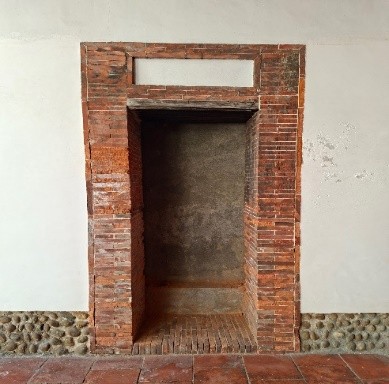
懷忠祠虎邊右側原有之門,今日已被水泥牆堵住,無法通行,龍邊左側門亦是。清朝道光初期(1820s)本祠衰廢,後期重建,迄日治時期的1910年代彰化崇文社詩文內容顯示,道光末重建的懷忠祠再度傾廢不存,命運頗為坎坷。今日也鮮少遊人造訪此地。
3.龍邊門上的吉祥小物
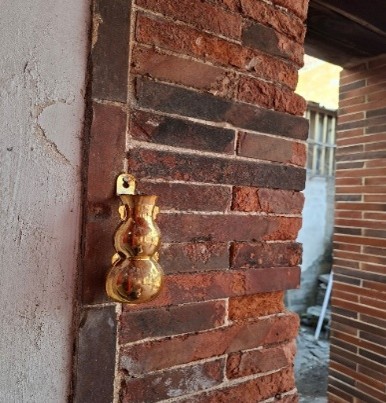
懷忠祠龍邊原本通往左護龍的側門,現今出去後是防火巷,門框上掛著一個金色葫蘆筒,是祭拜門神的小金爐,更是「招財(福祿)化煞(葫蘆)」的風水小物。
4.嘉獎義民的「榮邁登瀛」匾
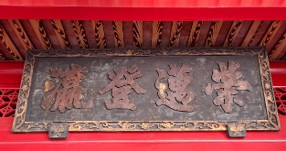
「榮邁登瀛」匾額中的「登瀛」,即「登瀛洲」,瀛洲是傳說中神仙居住的仙山。舊日,唐太宗設立文學館,招攬十八位學士入駐,禮遇備至,使得當時的人們非常羨慕十八學士,認為選入文學館就像「飛升到瀛洲成仙」一般,故稱「登瀛洲」,後成為科舉高中、功名顯赫之比喻。「榮邁登瀛」就是以唐代十八學士之文采榮耀,比擬清代十八義民之忠烈千秋,將十八義民事蹟比擬同於十八學士登文學館之瀛洲殊榮,彰顯其事蹟和朝廷對他們義舉的肯定。
5.正殿奉祀「舍生取義」的十八義民
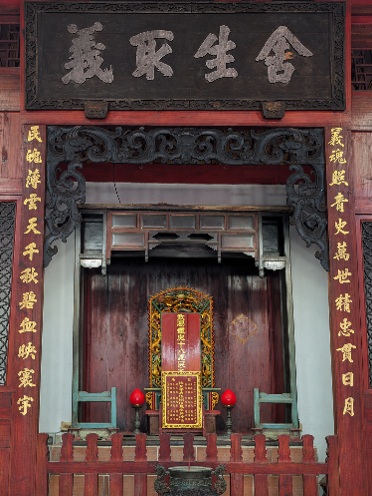
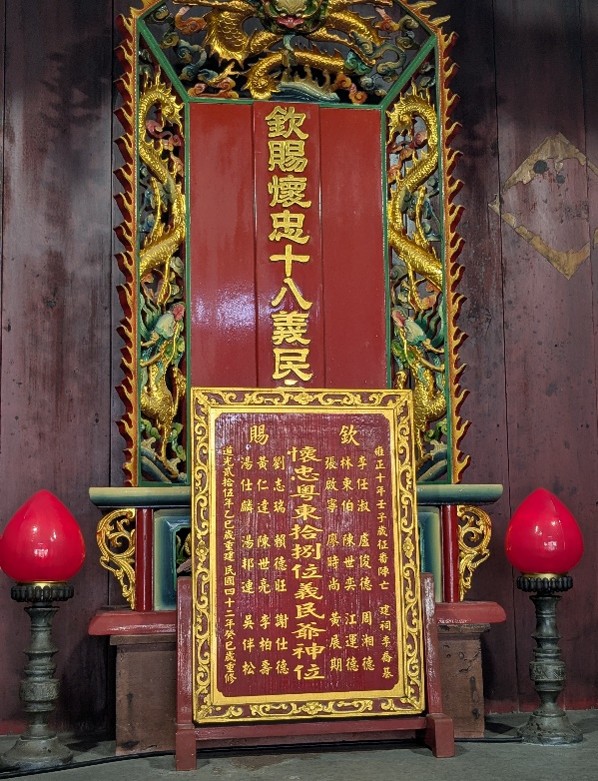
懷忠祠正殿奉祀有彰化縣城十八位粵籍義民牌位,是大甲西社事件之後,閩浙總督郝玉麟上奏他們救援淡水同知張弘章而英勇殉難之事,雍正帝命令敕建祠廟奉祀,以昭忠義。此與常連結到臺灣客家族群的義民精神和信仰相同,但懷忠祠位於以閩南族群為主的彰化縣城,則異於臺灣其他義民廟大多位在客家族群為多數的客家莊的情形。
6.名聲永流傳的十八位義民
正殿內有殉難於大甲西社事件的十八位粵籍義民牌位,上面清楚刻著他們的名字。依據清朝道光8年(1828)左右修的《彰化縣志》,計有黃仕遠、黃展期、陳世英、陳仕亮、湯邦連、湯仕麟、李伯壽、李任淑、賴德旺、劉志瑞、吳伴雲、謝仕德、江運德、廖時尚、盧俊德、張啟寧、周潮德、林東伯,獲雍正帝嘉許,賜祭撫卹,頒給每人卹銀50兩,此版縣志也記載,當時懷忠祠已廢,只存十八義民塚。今祠中牌位誤刻其中六位義民姓名為黃仁達、陳世奕、陳世亮、周湘德、李柏壽、吳伴松,應為道光25年(1845)或民國42年(1953)重新修建時,不慎誤植。
7.正殿屋頂兩端的泥塑巧思
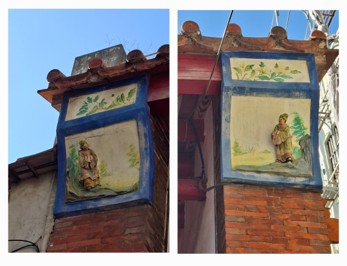
懷忠祠正殿屋頂兩端下方有兩方泥塑裝飾,左側龍邊方框裡是年輕書生手持經卷,神情謙遜,遙望右側虎邊方框裡身著官服、氣度雍容的長者,兩方泥塑遙相呼應,演繹出「教子成名」與「加官進爵」的世俗願景。懷忠祠奉祀義民忠義武勇,但建祠前人在屋頂規帶頭的泥塑裝飾上卻展現出「以文輔武」的巧思,不僅隱含著鄉里對後代子孫「讀書做官」的深切期許,更與正殿內「舍生取義」的古匾形成完美的互文,透過這些裝飾語彙,將保鄉衛土的剛烈氣節昇華為等同於國家棟樑的崇高地位。
8.彰化市十八義民墓
目前位於彰化市第四公墓路邊的粵東十八義民墓,雍正10年(1732)立,同治12年(癸酉,1872)年遷葬至此。日治時期昭和11年《陸孝女詩文集》1卷本裡,錄有多篇臺灣文士所寫的「保存彰化十八義民祠塚議」文章,因有文士自屬來自高雄,故這些文章已為日治時期所撰,顯見當時懷忠祠及十八義士墓均已冷落傾頹,近乎廢置。