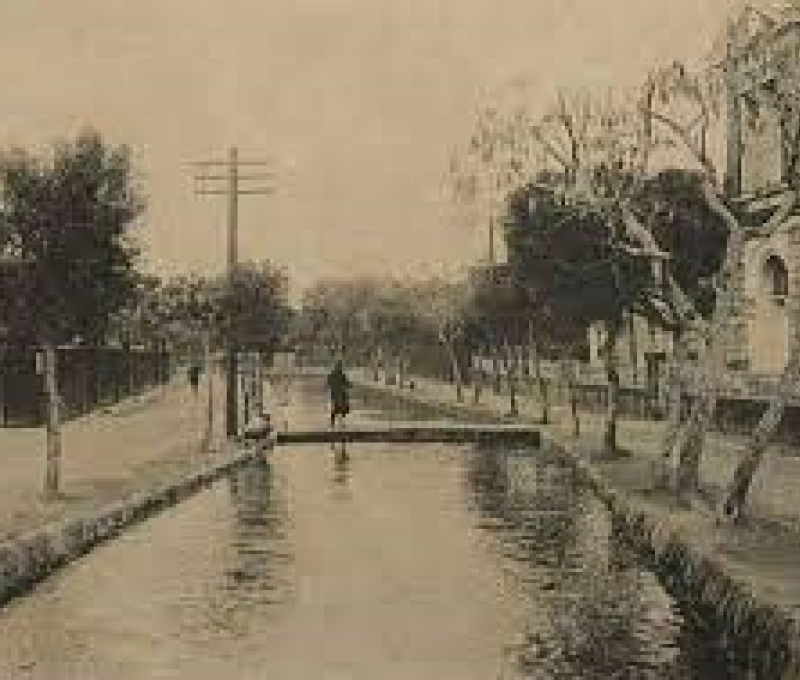
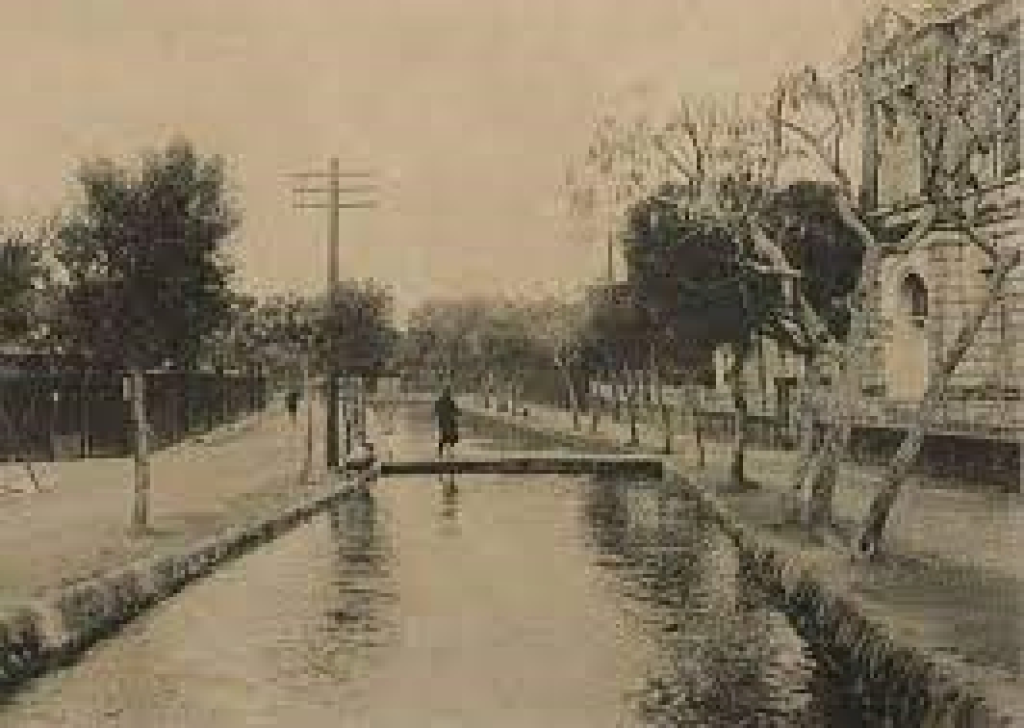
竹塹城護城河的歷史變遷,反映了城市發展與社會觀念的轉變。清治初期(1700 左右),護城河主要用於防禦。隨著經濟發展,築城權力下放,護城河成為城市富裕的象徵。日治時期市區改正 (1905),城牆被拆除,護城河轉型為現代化衛生工程的排水道。戰後,護城河延續排水功能,甚至被加蓋,與民眾生活疏離。從防禦工事到城市象徵,再到衛生工程,護城河見證了竹塹城的演變。2001 年新竹市護城河再造工程由中冶環境造型(郭中端景觀設計師)進行了改建。
The historical evolution of the Hsinchu City moat reflects the changes in urban development and social values. In the early Qing Dynasty (around 1700), the moat primarily served defensive purposes. With economic development and the decentralization of fortification authority, the moat became a symbol of urban wealth. During the Japanese occupation (1905), urban redevelopment led to the demolition of the city walls, and the moat was transformed into a drainage system for modern sanitation. After the war, the moat continued its drainage function and was even covered, becoming detached from daily life. From a defensive fortification to a city symbol, and then to a sanitation project, the moat has witnessed the evolution of Hsinchu City. In 2001, the Hsinchu City moat reconstruction project was carried out by MCC Environmental Design (landscape architect Kuo Chung-Tuan).
數位走讀