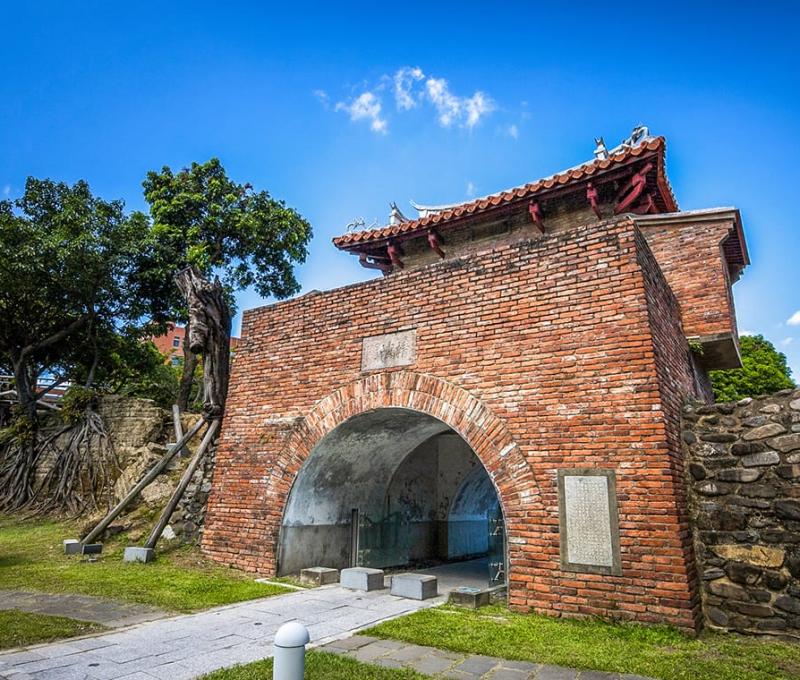
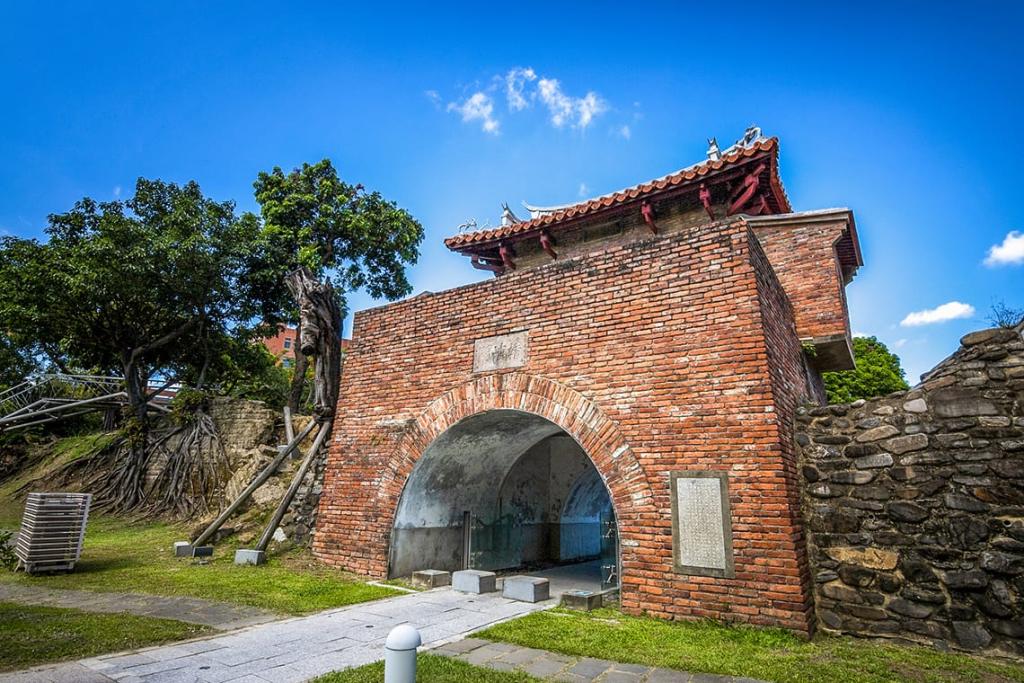
Following its relocation and reassembly, the Xiaoxi Gate, now situated near Chengkung Lake, has emerged as a distinctive feature of the National Cheng Kung University campus. Its unique orientation, with the base, shifted from west to east, the original outer side now on the inner side, and the top of the gate tower rotated 180 degrees, is a fascinating testament to the preservation of history.
The original site of the Little West Gate was approximately at the intersection of Ximen Road and Fuqian Road. During the Japanese colonial period, the "Law for the Preservation of Historic Sites, Scenic Spots, and Natural Monuments" designated the Little West Gate, The Great East Gate, and the Big South Gate as green parks for protection. In 1968, the city government intended to relocate the Little West Gate near the Wufei Temple to accommodate road widening plans. At that time, President Yun-Ping Lo actively campaigned to move the gate to the NCKU campus. It was eventually decided to place it in the Guangfu Campus, within East Gate Remain, Tainan Prefectural City Wal. This ancient city gate, preserved only on a Taiwanese university campus, demonstrates how NCKU pioneers persevered in historical buildings.

鄰近成功湖畔的小西門在經過搬遷、重組後,以反向座落的特點成了成大校園獨特的景觀之一,除了底部的城座由西平移至東外,原城門外側也轉為內側,其頂部的城樓更作了180度的翻轉。
小西門的原址大約在今西門路與府前路的交叉路口周邊,日治時期因〈史蹟名勝天然紀念物保存法〉,小西門、大東門、大南門皆被劃定綠園予以保護。民國五十七年,為配合道路拓寬計畫,市府有意將小西門拆遷至五妃廟附近,當時羅雲平校長積極爭取將城門遷至校園,後決議座落於光復校區,也是現址小東門段城垣殘跡之中。這座臺灣校園中唯一的古城門,映證了本校是全臺保存歷史建築之先驅。
英文文案
英文翻譯
Lutoe Chemueku
其他連結
其它連結
數位走讀