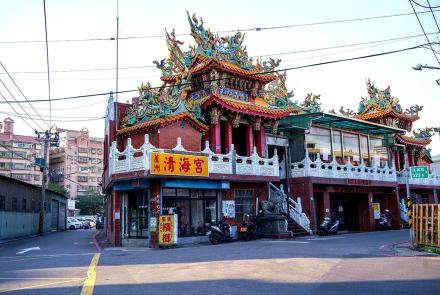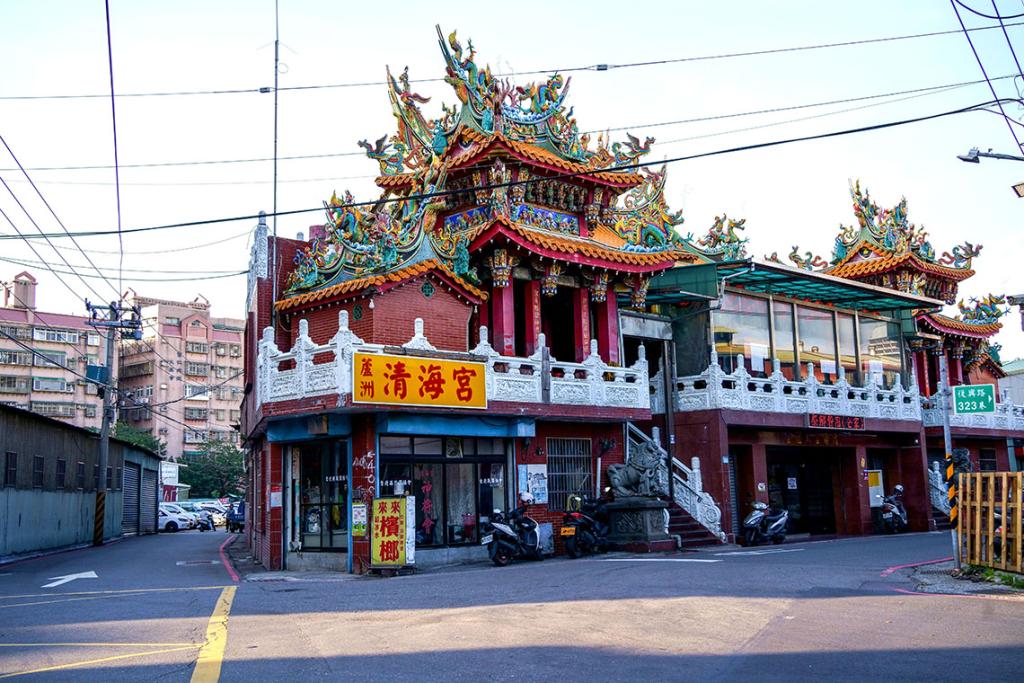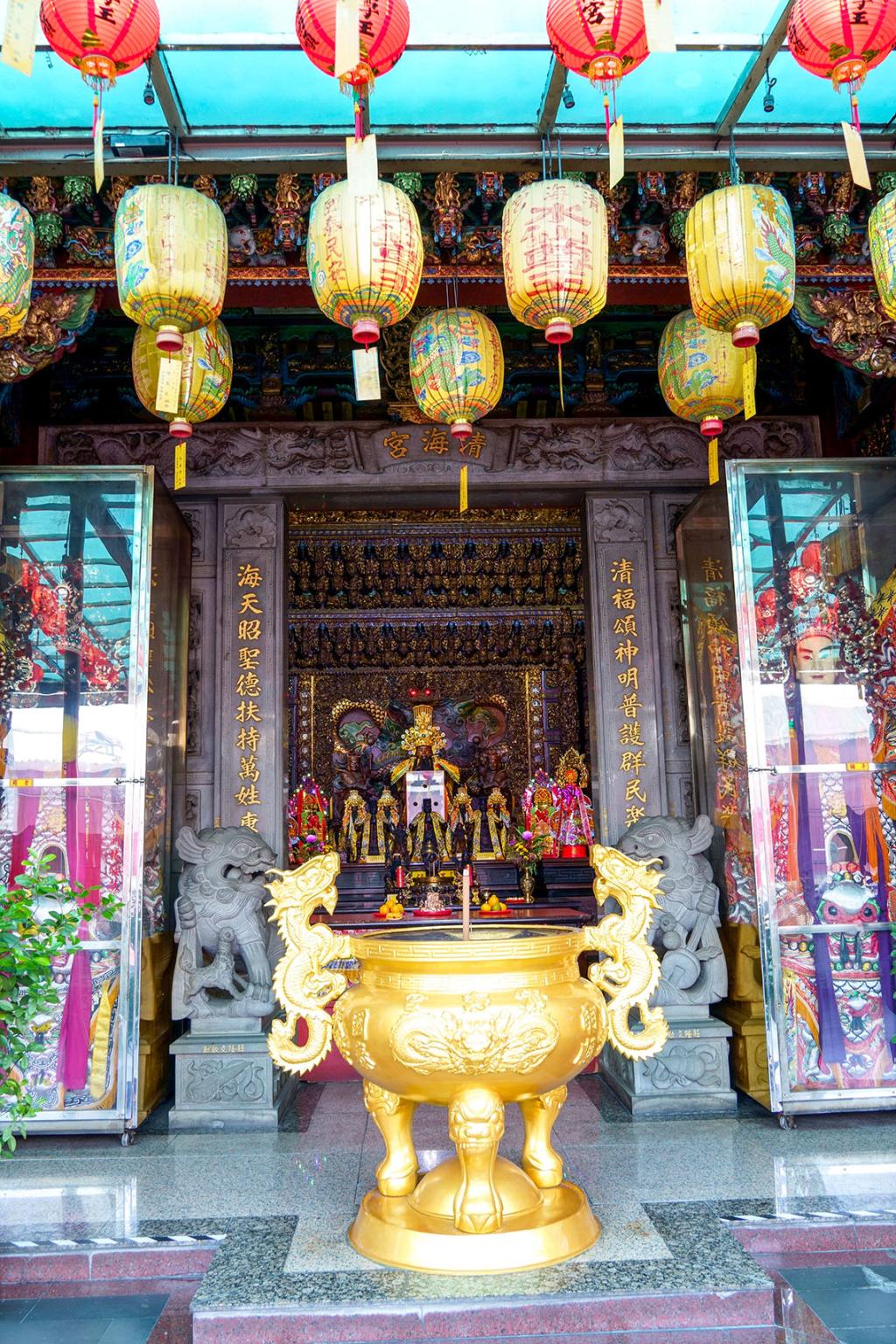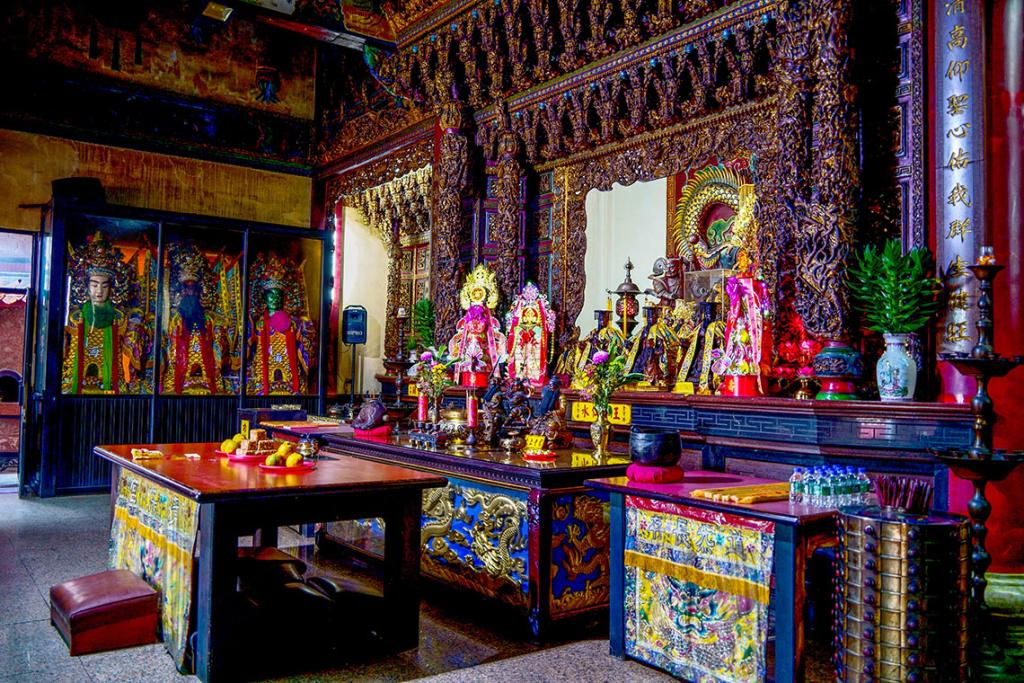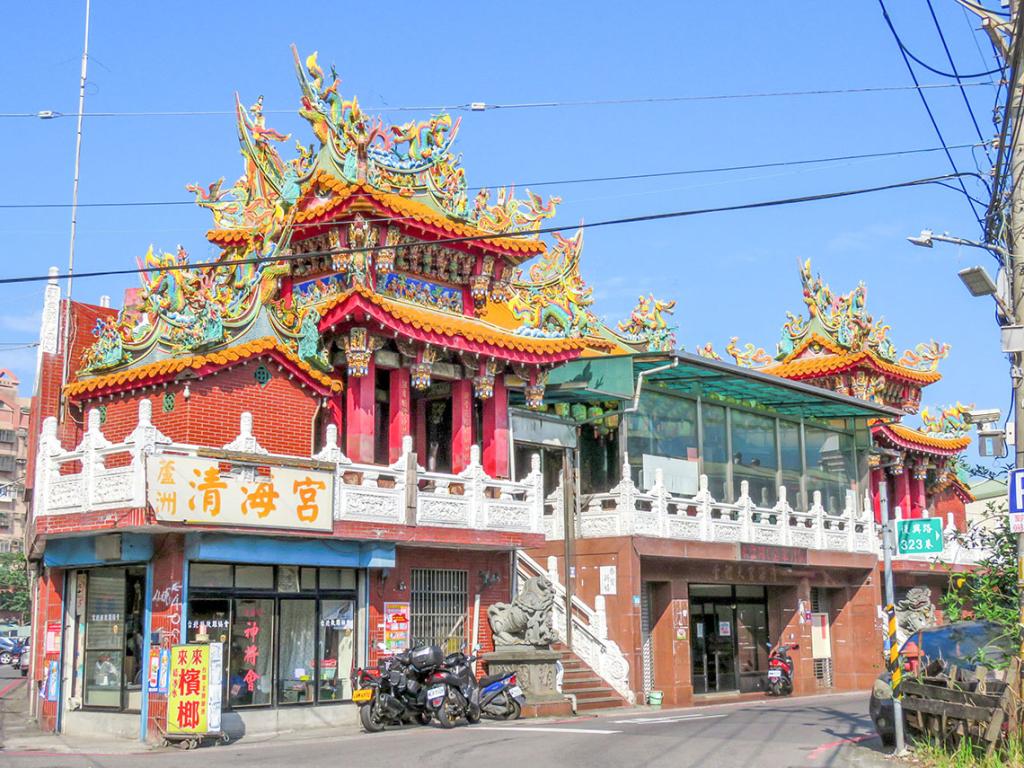
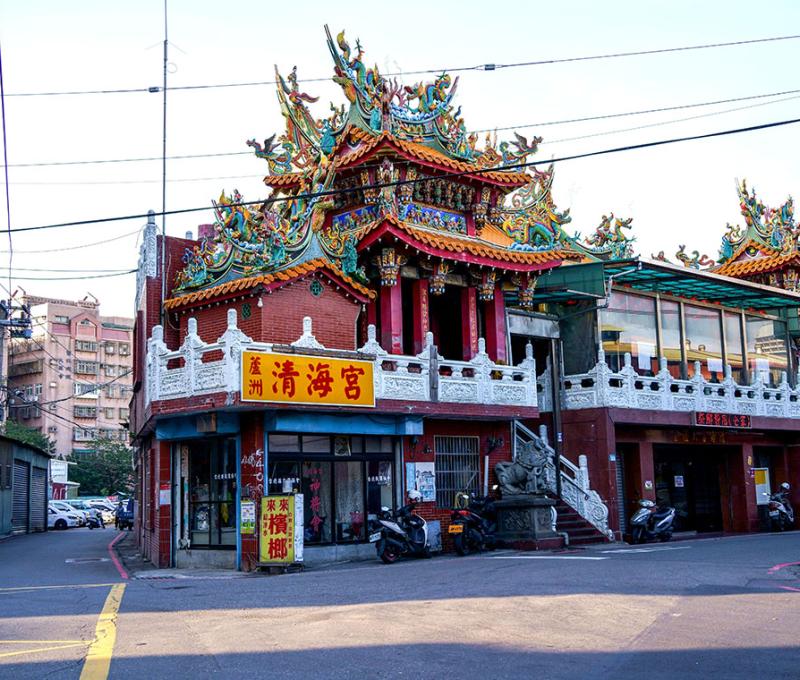
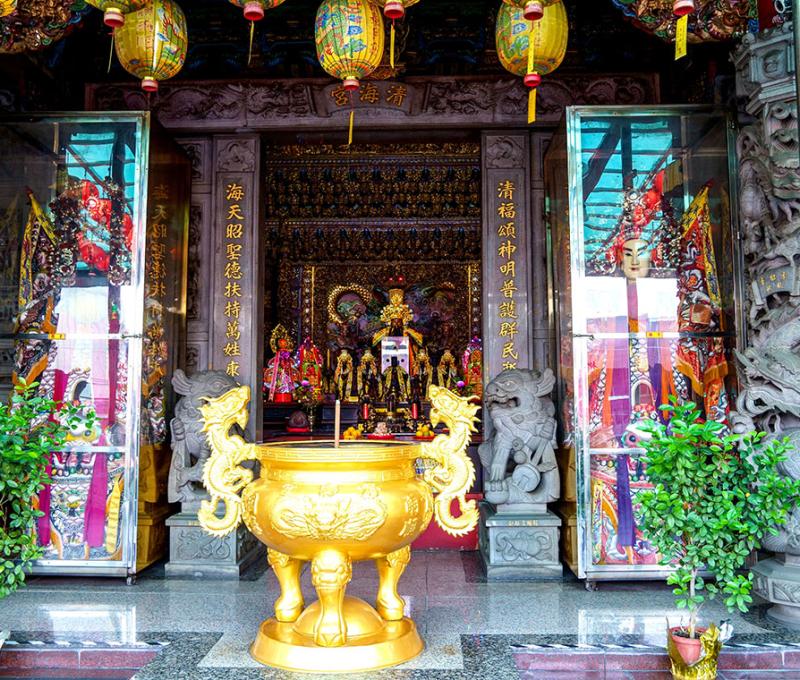
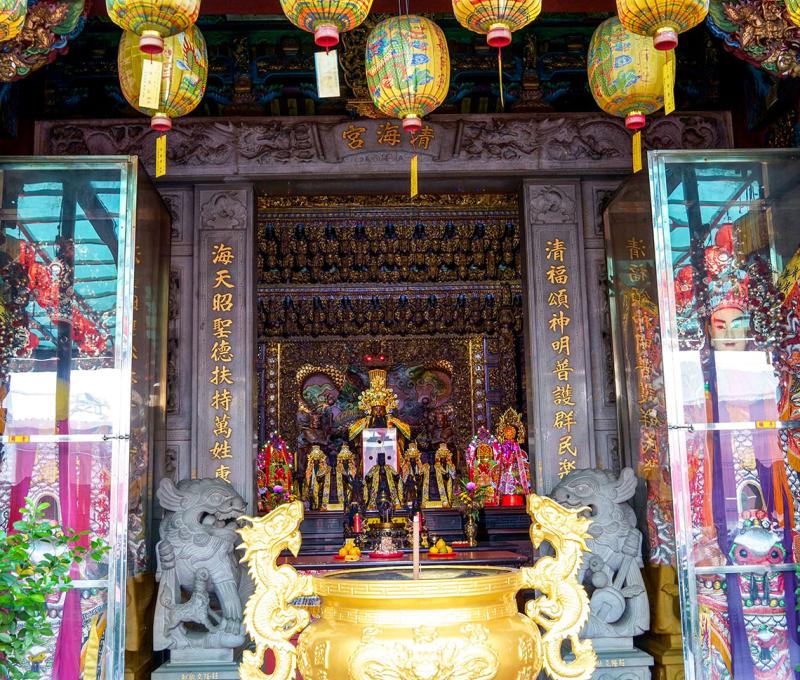
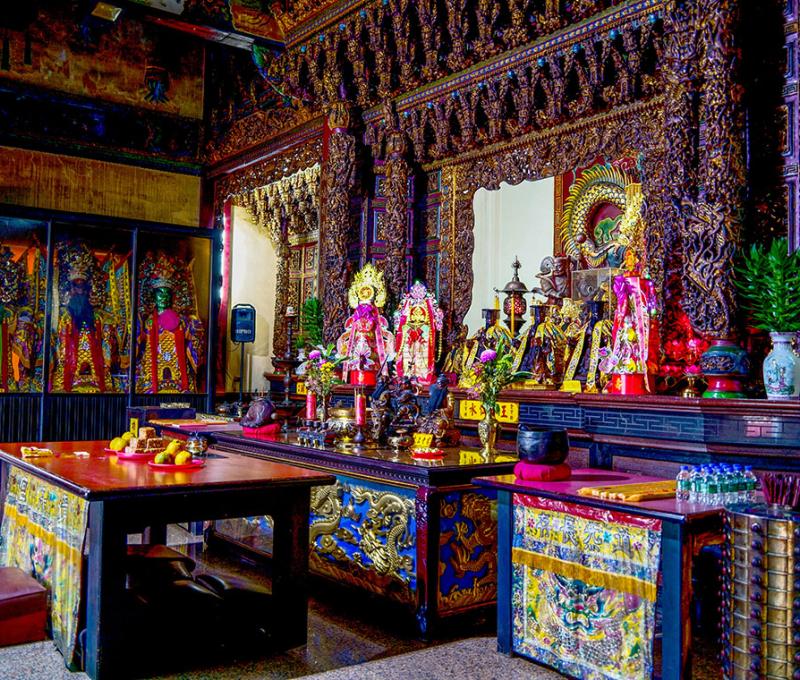
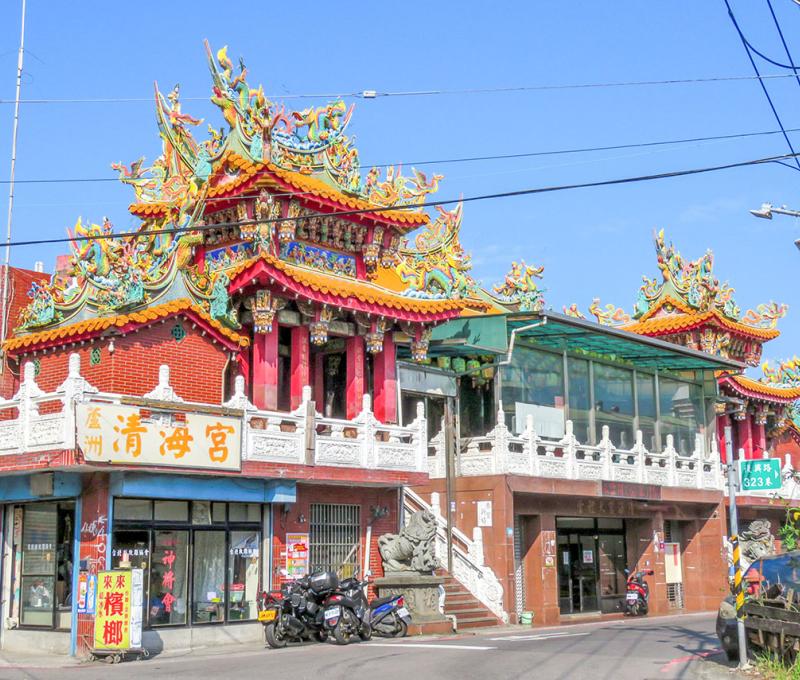
蘆洲清海宮主祀爲水仙尊王,陪祀則是文昌帝君與關聖帝君。
清乾隆中葉年間,福建先祖欲渡海來臺開墾,當時受限於航海技術與黑水溝的地形影響,來臺的過程艱難重重,因而奉水仙尊王聖像祈求平安過海。
早期蘆洲水湳地區、中洲埔、浮州仔三地輪流供奉這尊主管江河之神的水仙尊王,後水湳地區分得水仙王金尊,從此以擲頭家爐主的方式輪祀在信眾家中,最後在民國79年的時候,清海宮落成,而遷入廟中供奉至今。
蘆洲清海宮,主神是水仙尊王(俗稱水仙王),陪祀文昌帝君、關聖帝君,水仙王乃是唐山過臺灣的佛公(神尊的俗稱),佇清朝中葉年間,先民為著欲順利渡過黑水溝,按唐山搬請水仙王隨身來臺開墾,祈求平安順序(sūn-sī)。
早期水仙王是蘆洲水湳庄、中洲埔佮浮洲仔(這二个所在佇這馬的臺北市士林區社仔島)輪流奉祀,尾仔水湳庄分著水仙王的金身,彼當時開始佇庄內博頭家爐主,輪流奉祀佇爐主厝,民國79年清海宮落成,水仙王正式入火安坐奉祀。
Chinghai Temple in Lujhou primarily enshrines the Water Immortal King, with accompanying worship of the Emperor Wen Chang and the Saintly Emperor Guan.
During the mid-Qianlong period in the Qing Dynasty, our Fujian ancestors aimed to cross the sea to Taiwan for cultivation. Hindered by limitations in navigation technology and the challenging terrain of the Blackwater Channel, the journey to Taiwan was arduous. Consequently, they prayed for a safe sea passage, seeking the divine protection of the Water Immortal King.
In the early days, the communities of Shui-nan, Zhong-zhou-pu, and Fu-zhou-zi in Lujhou took turns worshiping the Water Immortal King, the god in charge of rivers. Later, the Shui-nan area exclusively received the Water Immortal King’s golden statue, and the practice evolved to rotate the deity among households through the casting of lots. Finally, in the 79th year of the Republic of China, Clear Sea Temple was completed, and the deity was officially enshrined there, where it has been worshipped ever since.