08開化寺
1.開彰第一寺
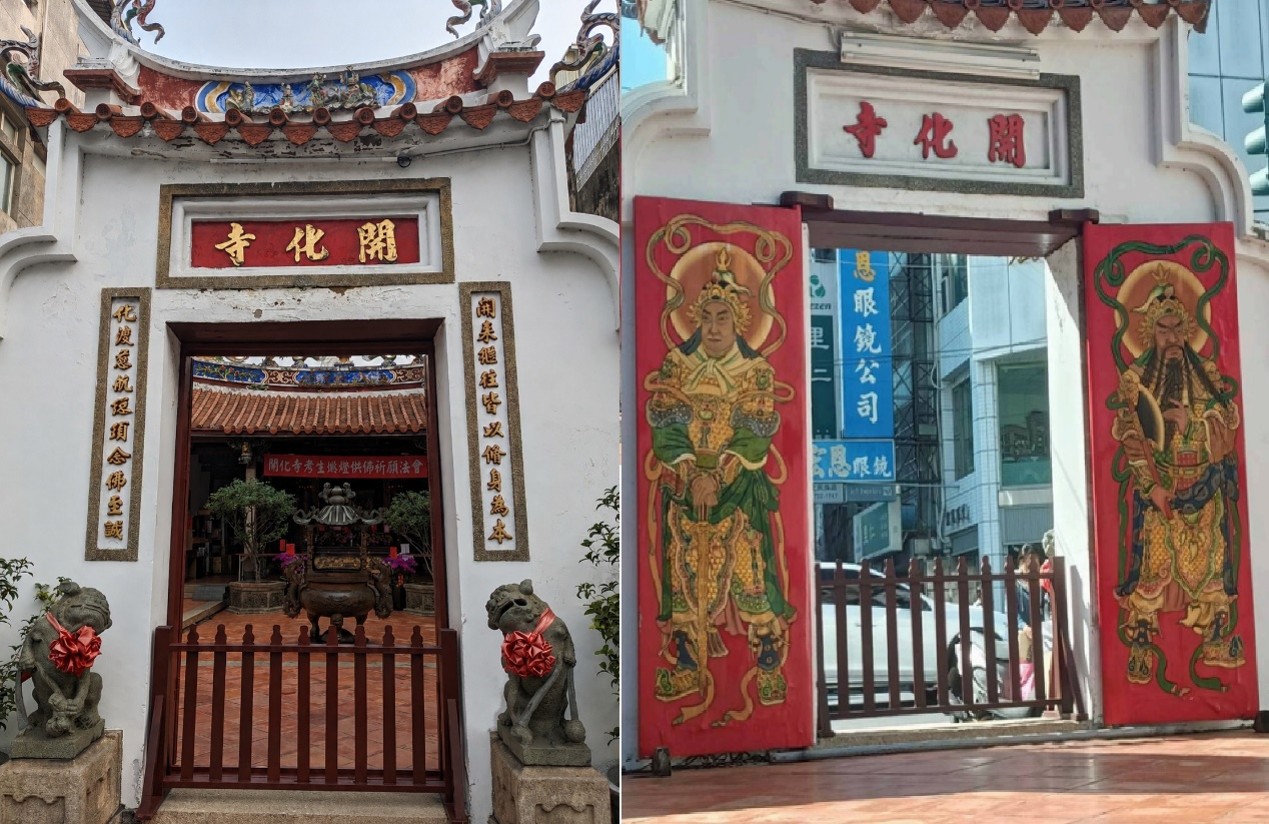
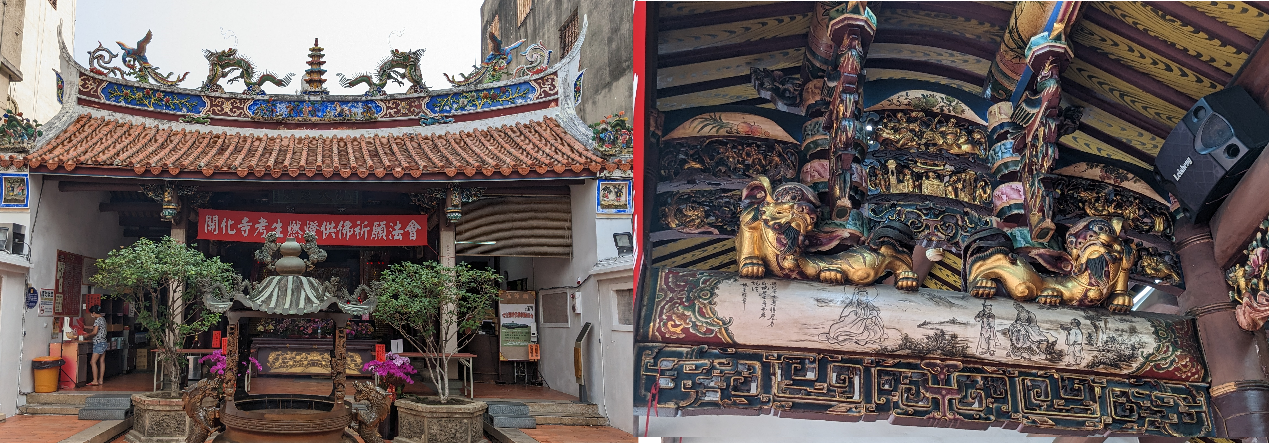
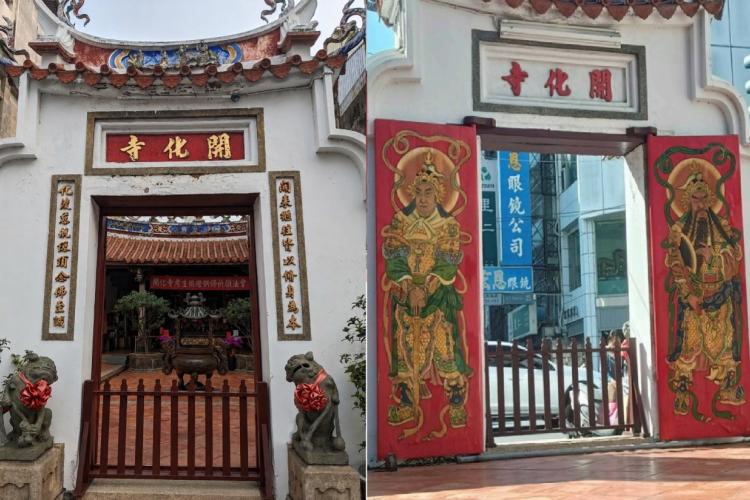
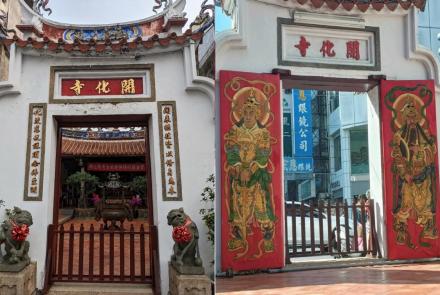
清雍正元年(1723)彰化設縣,次年,首任彰化知縣談經正倡建開化寺並命名,意為開彰第一佛寺,主祀觀世音菩薩,當時,左側的彰化縣衙都還未興建。正門為古縣城南街盡頭,門前一對青斗石獅子是清中葉南方石獅佳作,置於葫蘆型階梯狀山門前,告知眾人越過此處即邁入佛境,左側公獅在二戰末期遭轟炸折損前爪,民國九十一年921大地震後本寺重修,獅爪及廟宇均修復完成,廟為今貌;兩側邊門各有一對花岡岩門枕石,由左至右雕飾菊、蓮、山茶、石榴,俗名「乞丐椅」,紳士淑女不宜坐臥喔!
彰化縣居臺灣西部要道中段,清代時逢戰亂即淪陷,縣城中心的開化寺因此每遭損毀,寺中三進二院格局奠定於道光20年(1840)重修,經地震、大火、民亂毀壞,同治八年(1869)重修後,大致如今貌。日治時期市區改正、道路規劃政策,大正八年(1919)拆除本寺三川殿,改建為中部流行的門罩式山門。二次世界大戰時,日本總督府在臺灣各地成立「寺廟整理委員會」控制宗教,本寺被市役所徵收、管轄,延續至今由彰化市公所管理。
2.開化寺正殿觀世音菩薩與寺頂地標―觀音巨像
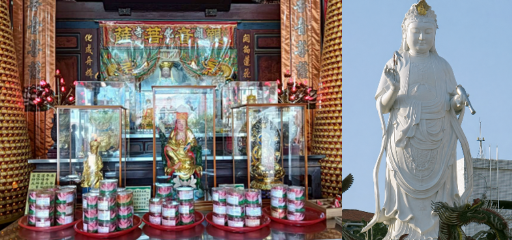
開化寺位於彰化市中心,為縣定古蹟,原名「觀音亭」,為傳統「街屋式廟宇」,寺內觀世音菩薩及諸神是民眾求學、求子、求健康、美容的守護神,靈驗事蹟甚多。本寺重要節日多與主神觀世音菩薩有關,如農曆二月十九日聖誕、六月十九日成道、九月十九日出家等三盛典,農曆四月八日浴佛節則為主節日,另有年初燃燈禮懺法會和四季法會,近年市公所發揮文化創意,結合時事辦理祈福典禮,如民國114年(2025) 6月首度舉辦「臨試抱佛腳」活動,開放寺頂讓考生登高「抱佛腳」,親近8公尺高觀世音大神像,透過團拜祈福、寫心經、加持靈印等流程,讓觀世音、文昌帝君保佑考生金榜題名;115年1月因應大學學測、中學指定考試、各類國家考試接續來臨,再度舉辦開放60人登頂抱佛腳,讓信仰深入人心,民眾反應熱烈。
3.後殿痘公、痘婆
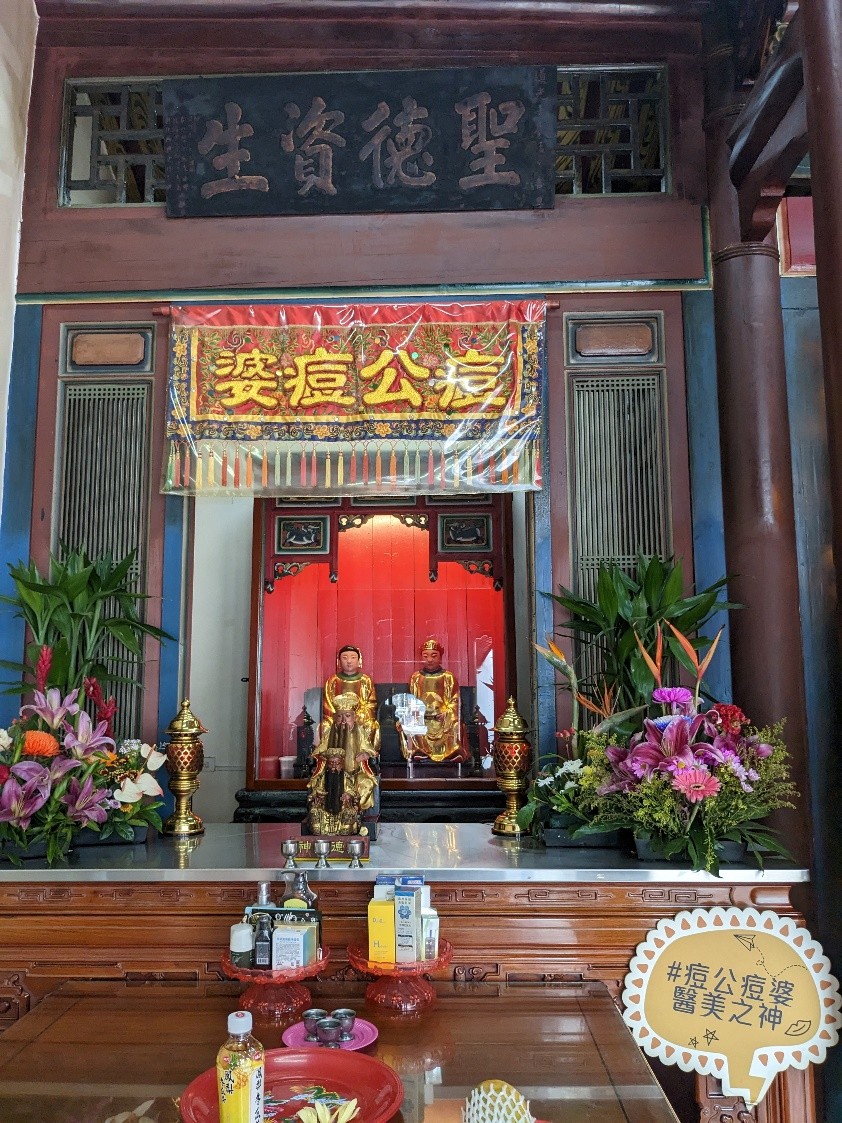
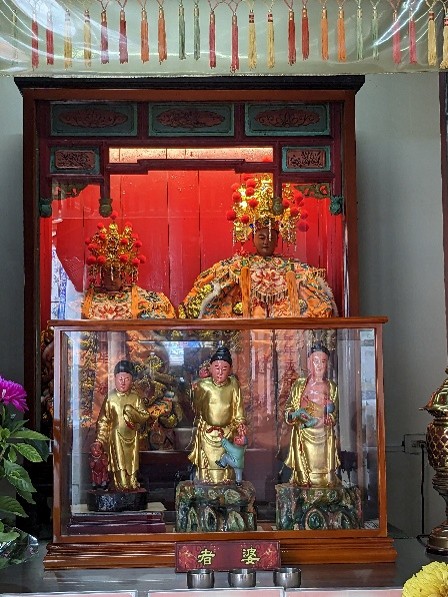
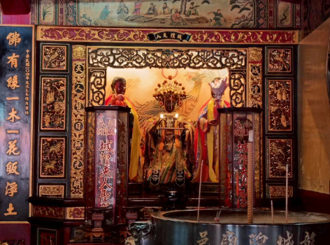
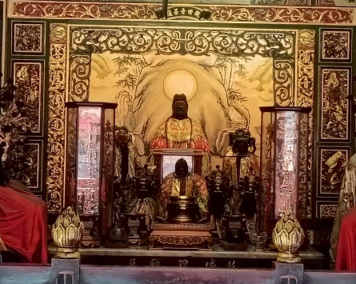
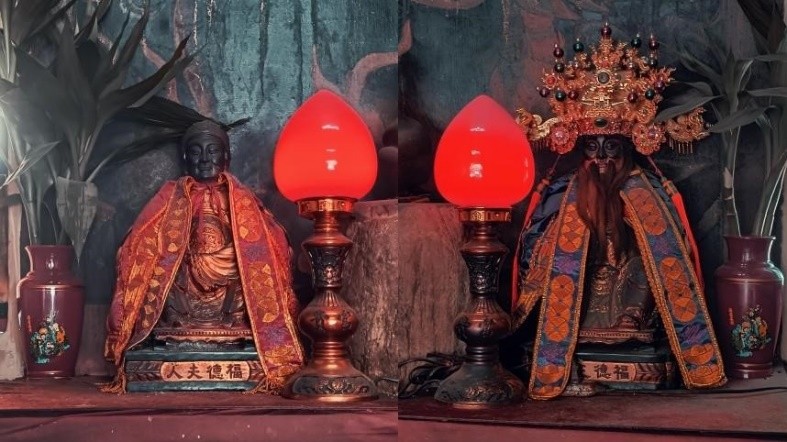
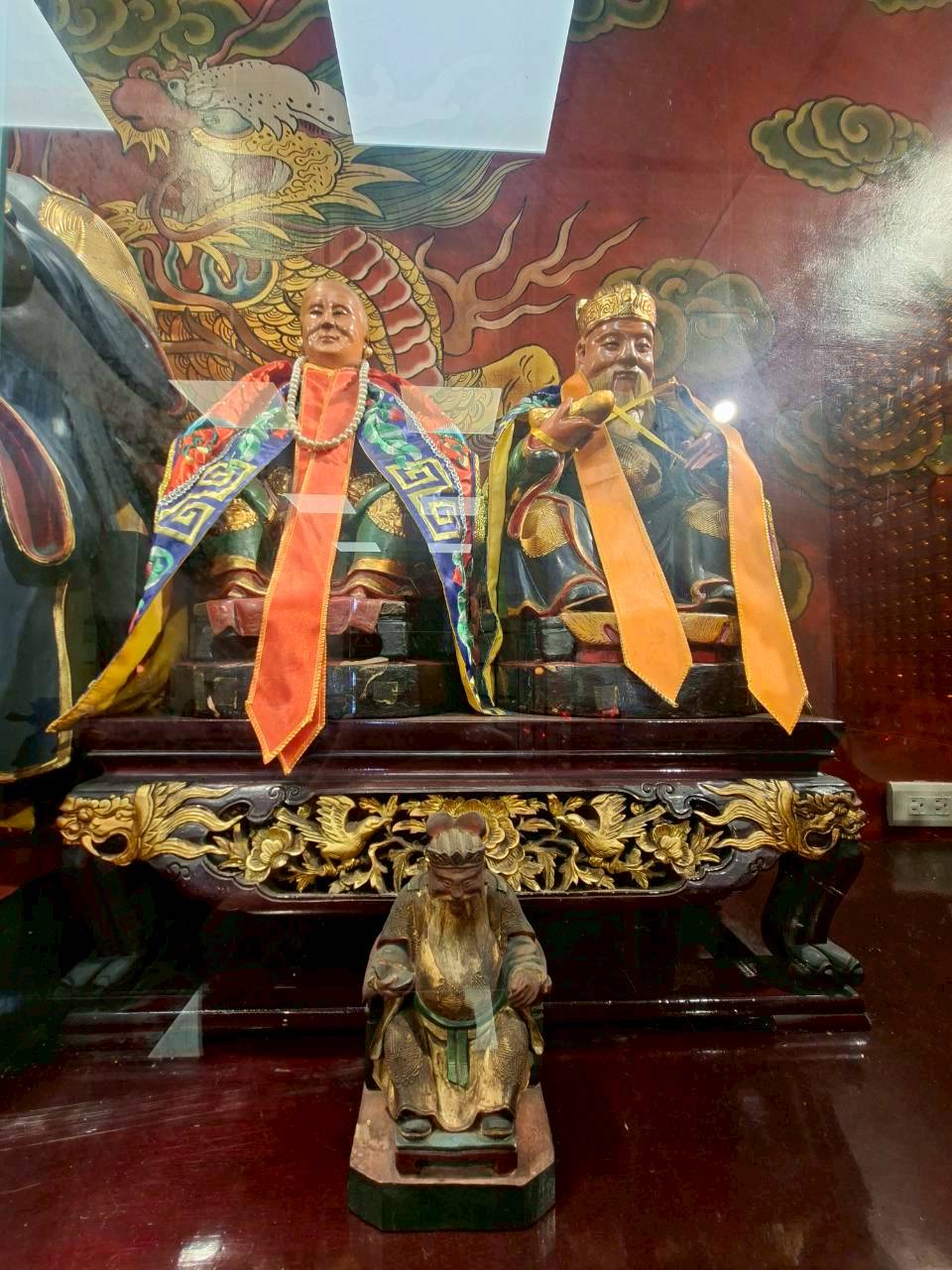
開化寺後殿右側虎邊奉祀痘公痘婆,據傳源於清代時有對醫術高明的夫妻,曾在彰化流行天花時治癒一眾縣民,住民感念恩德而於寺中供奉他們。時至今日,民眾會帶口紅、保養品、化妝品等物至此請痘公痘婆「加持」,祈求回去使用後,能讓皮膚嬌潤抗痘,也有美容師到此求旺業績。其上「聖德資生」匾額為道光12年(1832) 前後任彰化知縣周璽、李廷璧等所獻,周璽因到任途中遇民亂,因此去職,被後任知縣李廷璧留在彰化,纂修成首部《彰化縣志》。
4.註生娘娘神像
開化寺後殿左側龍邊側供奉註生娘娘,以求子女靈驗聞名,信眾擲筊求取「好孕花(求男取白花、求女取紅花)」和「好孕金鏟」並祈福,自身也結合排卵試紙等現代科技,致力以「神助+人助」方式早生貴子,是彰化代表性的求子廟宇。
5.地藏王菩薩神像
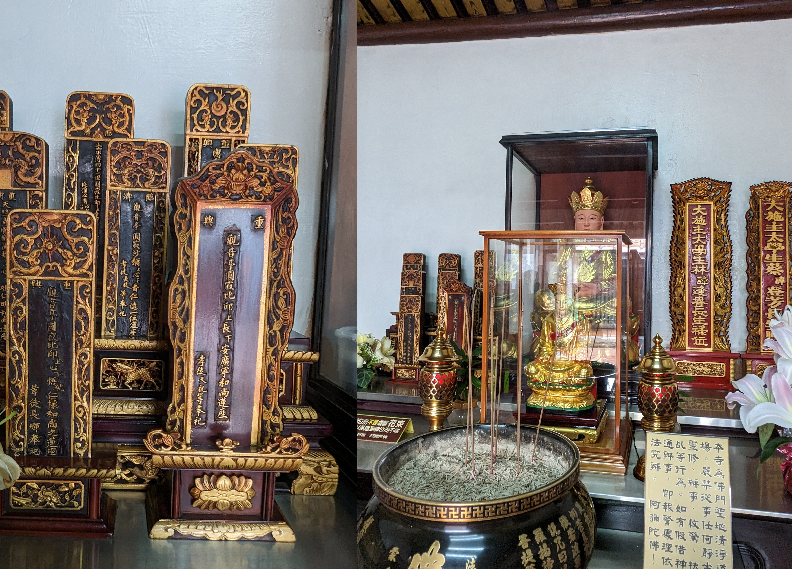
後殿龍邊耳房奉有地藏王菩薩神像,其左側是清代開化寺兩大施主―太學生蔡登芳、林逢春的長生祿位,右側是八位比丘尼神位,牌位上寫「觀音亭圓寂比丘」等字樣,顯示開化寺原名與曾有駐寺佛教出家人的事實。虎邊耳房奉祀的城隍原為客神,還曾一度被認作文昌帝君。
6.「渡世慈航」、「慈航普渡」、「現大慈悲」古匾
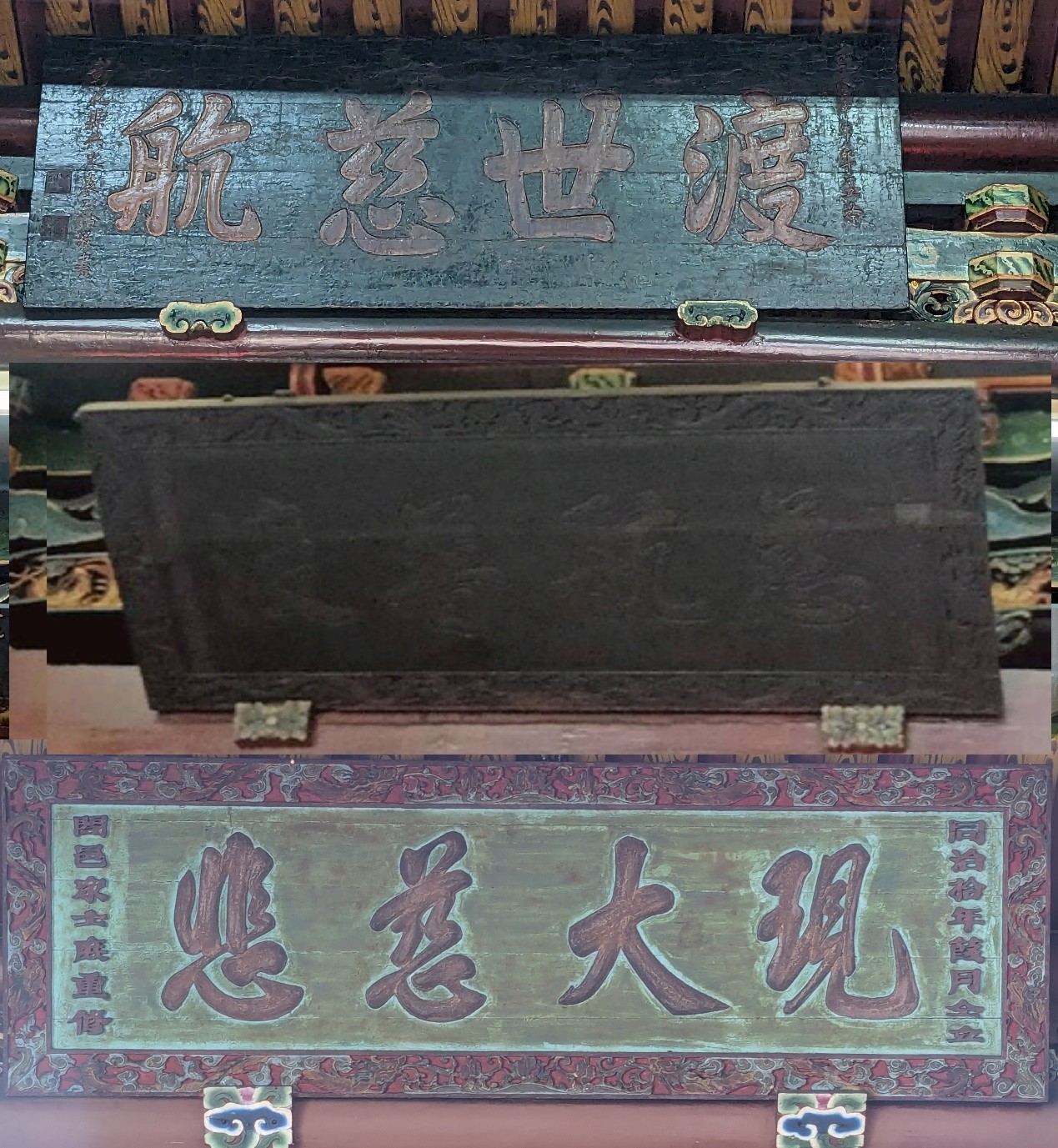
本寺正殿的「渡世慈航」為最古匾額,是乾隆三十九年(1774)彰化縣典史裘以論所獻;光緒十二年(1886)管帶春字前營湖南補用口口世襲雲騎尉岳陽弟子陶廷樑敬獻「慈航普渡」匾,他疑似是1895年6月1日乙未抗日時在九份的同名參將,也是臺灣民主國首位殉職的軍官。前庭有同治十年(1877)閤邑信眾所獻「現大慈悲」匾,正值戴潮春亂平後,地方恢復之際,顯示出縣民祈求平安的企盼。另有後殿乾隆五十九年(1794)董事王光寅敬獻「寶殿圓通」匾。
7.作工精細的拜殿
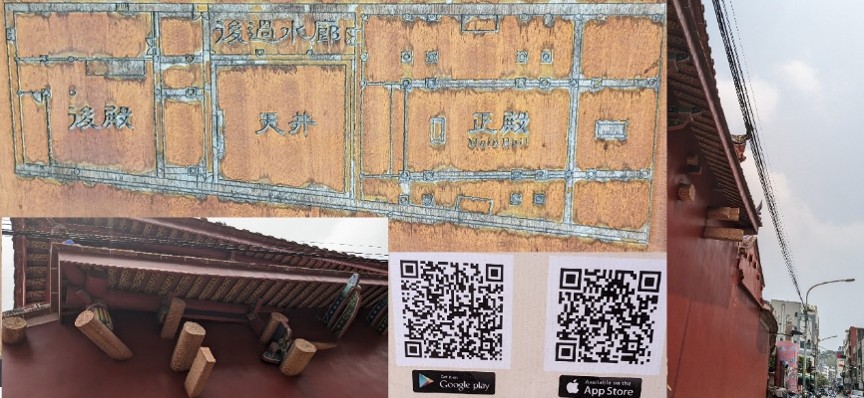
拜殿正脊較正殿的高大,脊內交趾剪黏飾繽紛豔麗,兩側燕尾也較正殿突出。拜殿為四架二柱捲棚燕尾頂,棟架採木、磚兩種材料組合,用「減柱法」增加跨距,結構紮實,雕繪繁複。
8.三通五瓜的正殿
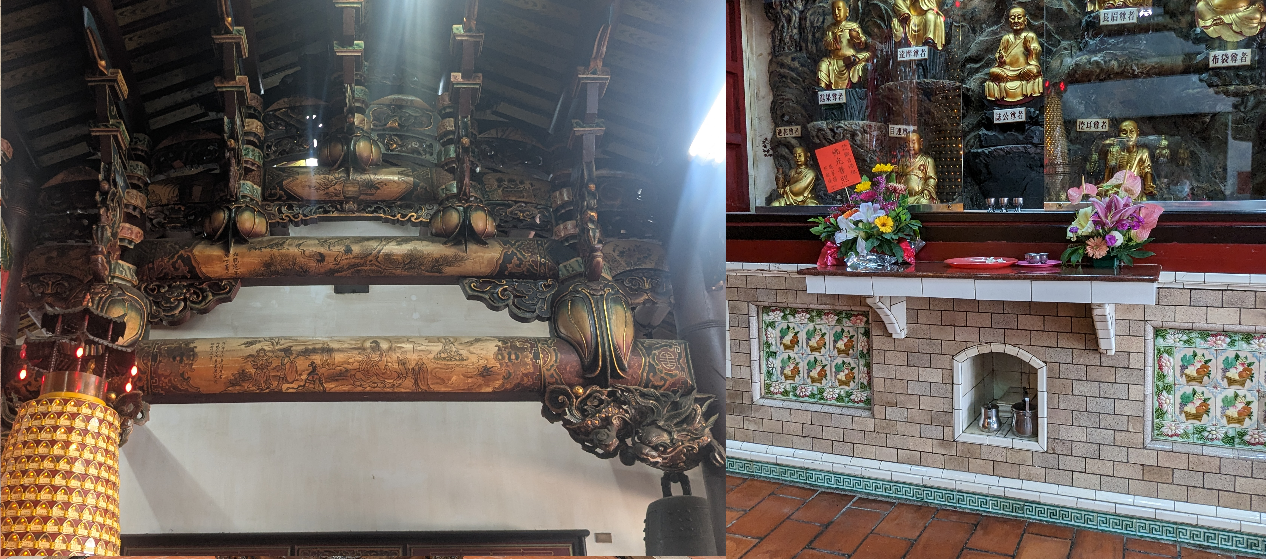
正殿四柱內是「三通五瓜」式棟架,大通樑用瘦長的木瓜筒(趖瓜筒)如手指般握住樑,樑是從橫向慢慢套入瓜筒的;側樑五瓜則有圓肥的金瓜筒(趴筒)交錯銜接立柱與桁木,形成開化寺穩固的木造結構,也顯示出棟架粗、結構密、雕琢繁的漳州派大木匠師特徵。正殿兩旁羅漢龕下的彩色面磚,是民國三十五年(1946)重修時採用,為日治末期的時髦建材。
07城隍廟
1.彰邑城隍廟
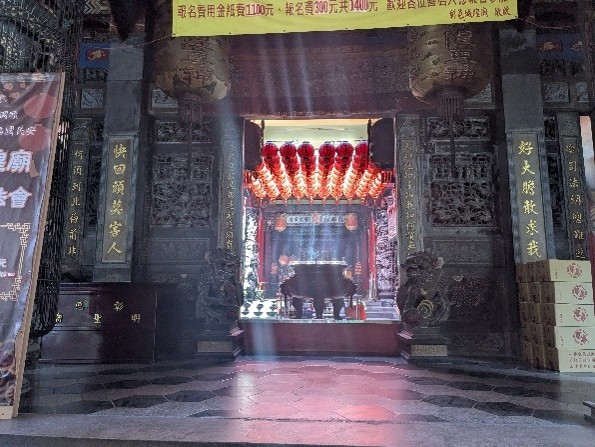
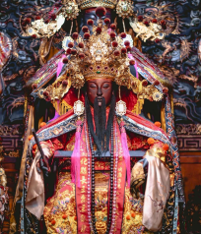
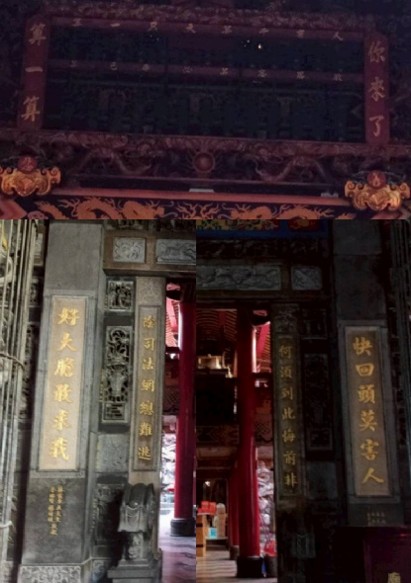
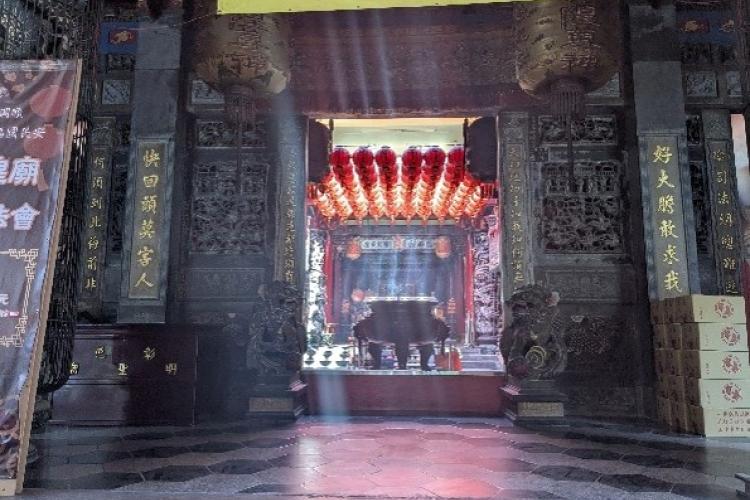
彰邑城隍廟,就是彰化縣城內的城隍廟,《彰化縣志》記錄它在縣治東門內,座北朝南,雍正11年(1734)彰化知縣秦士望捐俸倡建,後來,乾隆22年(1757)知縣朱山、嘉慶5年(1800)知縣胡應魁均曾重修。本廟城隍爺在清代為官祀,屬於縣城隍,循明清制度封為四品顯佑伯,民國90年(2001)則因信眾尊崇神明,請示城隍爺獲得同意,向上天稟告後,宣告升格為仁愛侯。城隍廟正殿奉祀城隍爺,城隍爺是從「城牆」與「護城河」的護民形象演變而來的自然神,逐漸升格為「人格神」,兼有陰間行政官、司法官職責。城隍爺屬於地方神,故廟中題字用詞偏向白話,重在教民守分,如「爾來了」,或大門門聯「好大膽敢求我,快回頭莫害人」,俗俚易懂又鏗鏘有力,好不懾人。
2.彰邑城隍爺
光復初期,城隍廟年久失修、香火不盛,於民國58年重建(1969)為今貌,經費則為當時城隍爺出巡募款所得,此次出巡活動曾獲臺南西羅殿協助,兩廟至今仍會互相進香聯誼。民國60年成立重建委員會,次年就地重建,64年竣工落成為今貌。早年,彰邑城隍爺每隔一甲子60年擲筊決定是否出巡,民國85年(1996)起改為每12年擲筊一次,最近是民國109年(2020)2月8日由彰化縣長擲出立筊聖杯,應允出巡,8月1日在廟中舉行城隍爺登轎大典和5天慶典,2日夜間暗訪、3日出巡、4日車巡,9月3-4日祝壽。
3.城隍爺職司「理幽贊明」
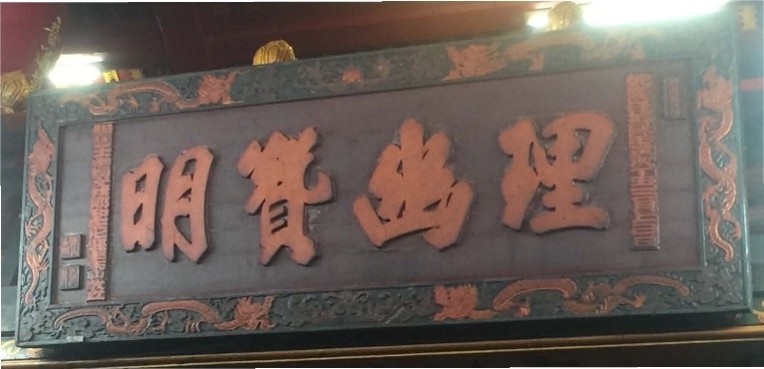
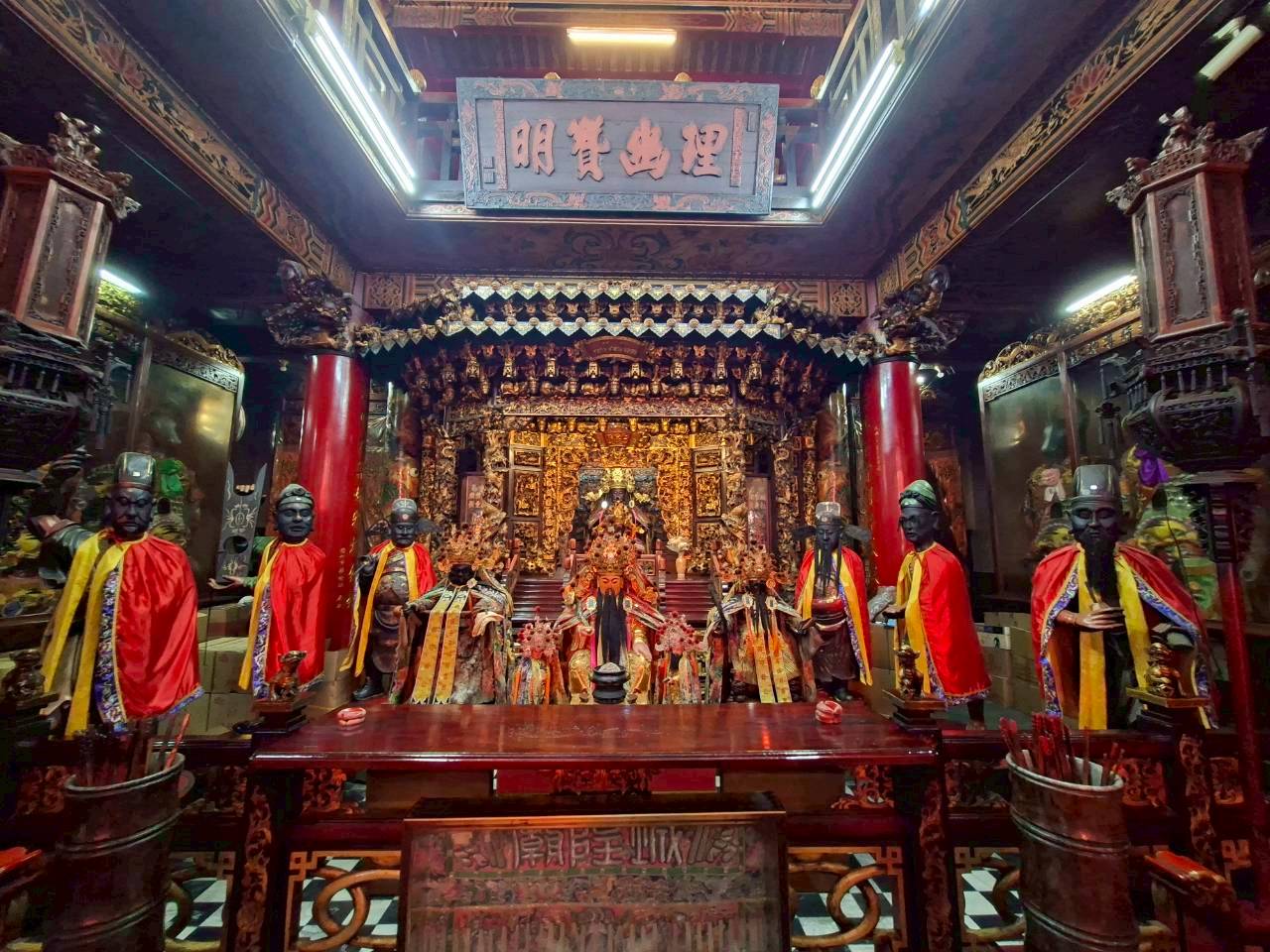
彰邑城隍廟正殿懸有乾隆22年(1757)彰化知縣朱山敬立的「理幽贊明」古匾。日治時期,日本總督府為有效控制臺灣人民,除了日常食衣住行皆有限制之外,對信仰也加以控管,禁止民眾祭拜城隍,彰化市尹安詮院貞熊也將廟中所有神像收入市役所倉庫。二戰後國民政府來臺,原廟地被民眾占用,象徵一城守護神的城隍廟,曾一度凋零;光復後,民國34年(1945)10月開放民眾自由祭拜,但彰化市對各廟宇的管理仍未解除。
4.溫柔的支柱―城隍夫人
城隍廟中二樓左側龍邊奉祀城隍夫人,為輔佐城隍爺的要角。城隍夫人象徵公正、慈和的存在,協助城隍爺處理陰司事務,也被信眾視為家庭與情感的守護者,其形象結合威儀與溫柔,展現城隍信仰中剛柔並濟的精神內涵。
5.城隍最佳護衛與助手―范、謝將軍
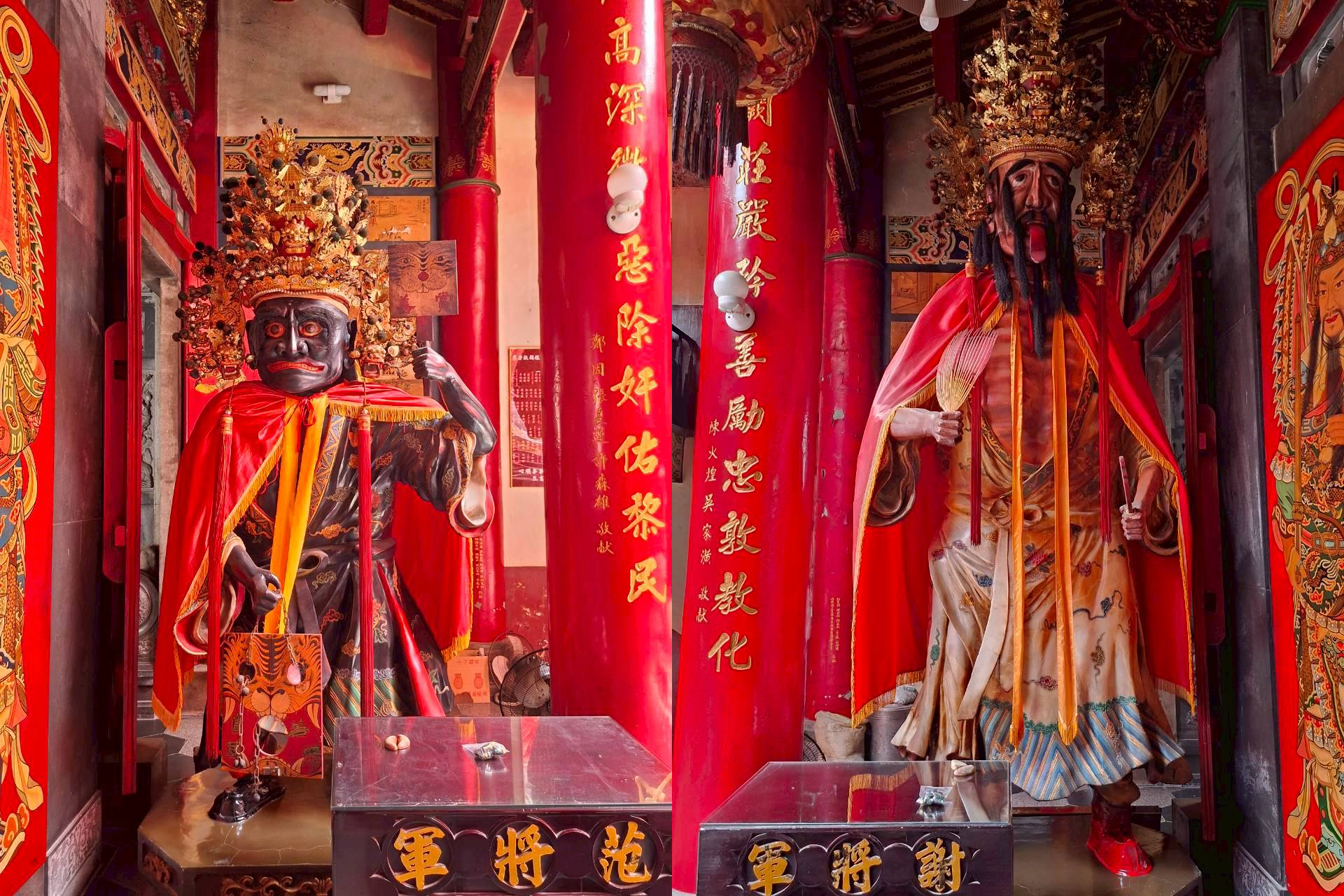
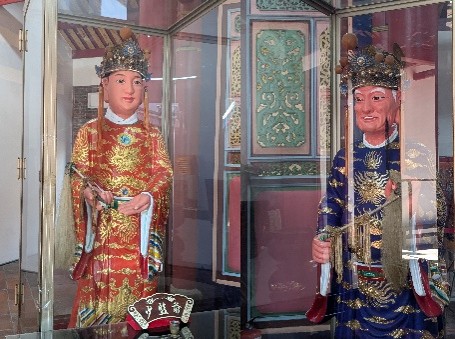
城隍廟大門內兩旁立有范、謝二將軍,他們如同古時候官衙的捕快,手執手銬、腳鐐,專司緝拿惡鬼、協助賞善罰惡,常作為城隍爺等具有司法職能神祇的部將。范、謝將軍俗稱七爺、八爺,身著衣服不一定是黑色與白色,但手持物品多以羽扇、綸巾為主;兩神的帽子型式又分為將軍帽及捕快帽,警惕眾生切莫為惡。
6.城隍廟師爺―文武判官群
城隍廟正殿內左右兩側,分立著文判官與武判官,象徵城隍爺主持正義、審善罰惡的堅強團隊陣容。民間傳說中,各地城隍座下均設有文武判官二職,文判官粉面,著官服,右手拿毛筆,左手執生死簿,一筆筆嚴謹紀錄每個人的善惡行為;武判官通常著官服,手持「金瓜(金瓜錘)」、「鐧錐(九節鞭)」、或持「筆撾(判官筆)」,負責押解亡魂,查銷生死簿,有的武判官額頭上會有一個太極印記。
7.觀音菩薩柔和協濟城隍理事
城隍廟二樓奉祀觀音菩薩,象徵慈悲與救苦救難的精神。觀音菩薩以聆聽眾生苦難、普度眾生聞名,與城隍爺的公正審判形成剛柔並濟的信仰結構。此配置展現城隍廟不僅具有司法象徵,也承載撫慰人心、安定社會的宗教功能。廟前左方原有一方「古月井碑記」,是清代嘉慶年間彰化知縣胡應魁勒石碑記,現在已經遷移至古月民俗館內。
8.清朝同知孤女劉滿姑
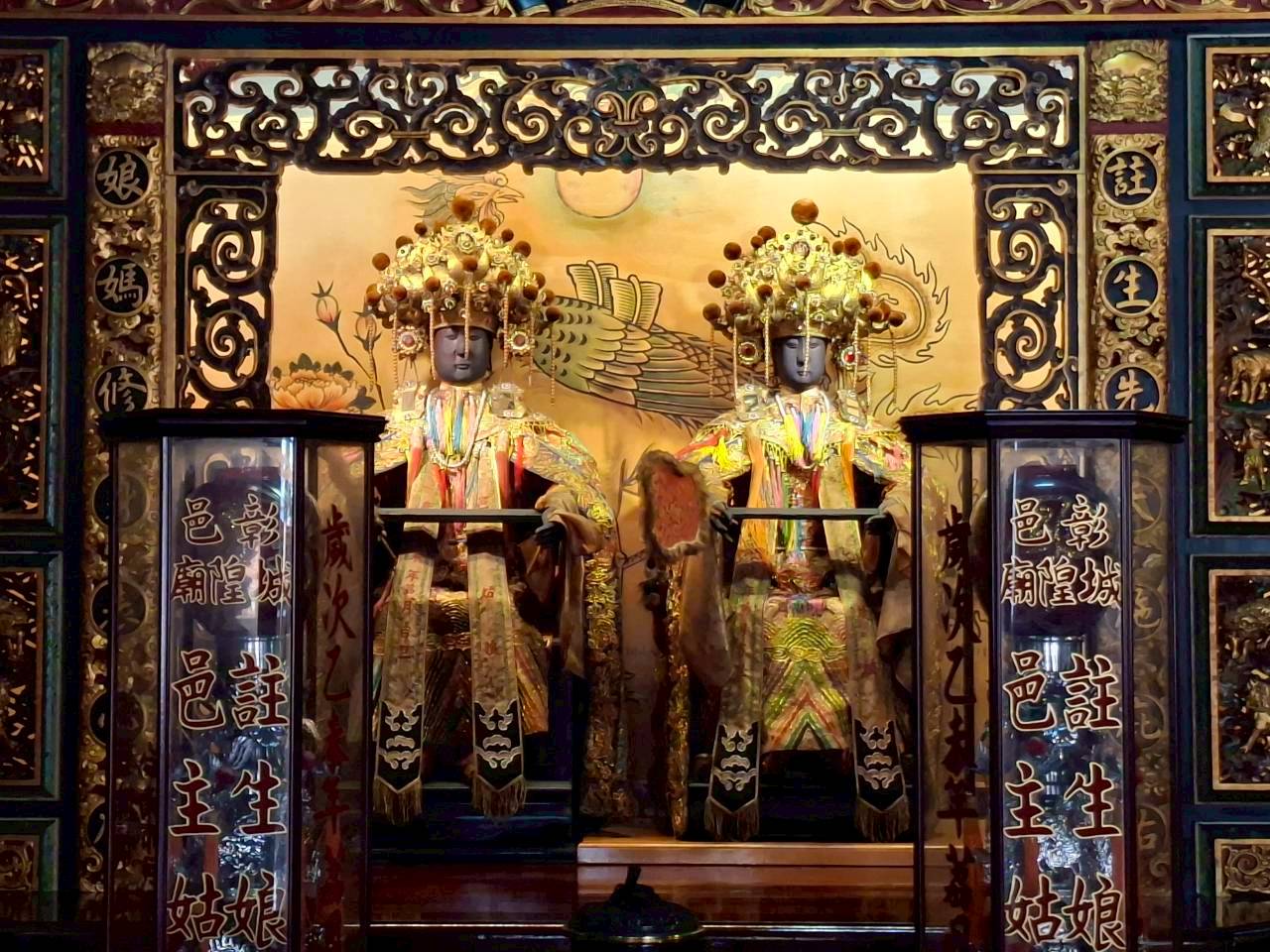
彰邑城隍廟內陪祀有劉滿姑神像,這位小姑娘為湖南湘潭人,是清朝臺灣府北路理番同知劉亨基之女,17歲時隨父親到彰化任職,乾隆51年(1786)林爽文起事攻陷彰化城,劉亨基死,滿姑懼怕受辱,投池水淺未死,起事黨徒拉起她,勸令跟從,遭到劉滿姑厲罵,遂將她支解。事平後,朝廷賜她祭葬,在原籍建坊紀念,也飭臺灣官員在郡邑烈女祠設位致祭。本廟二樓的劉滿姑塑像為罕見之大型軟身烈女神尊,原是日治時期安祀於彰化龍鳳寺的邑主姑娘,今移奉本廟,與註生娘娘同祀,位於虎龕註生娘娘左側。
9.城隍爺的教具與警語
城隍廟建築中最具特色者,為殿內高懸的木製大算盤,象徵天地有數、善惡皆會被記錄,呼應城隍信仰中的審判與公正精神。大門門柱刻有警世標語的對聯,語句直白,提醒世人行善避惡、因果不爽,透過建築與文字的結合,強化城隍廟作為道德教化空間的意義。
06福德爺正神廟
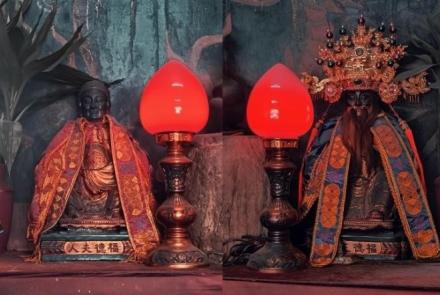
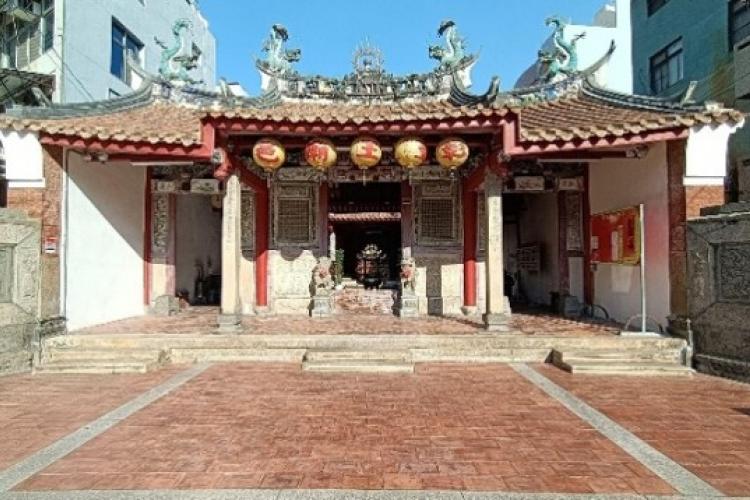
1.福德爺廟的福德正神與夫人
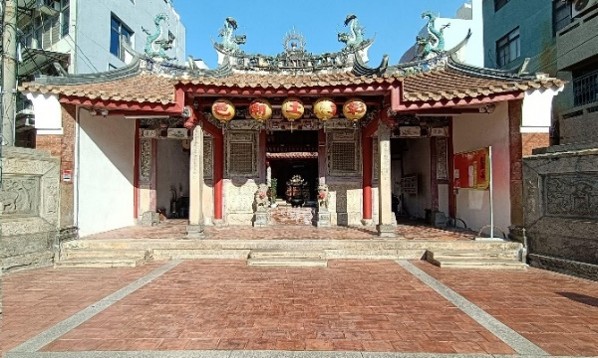
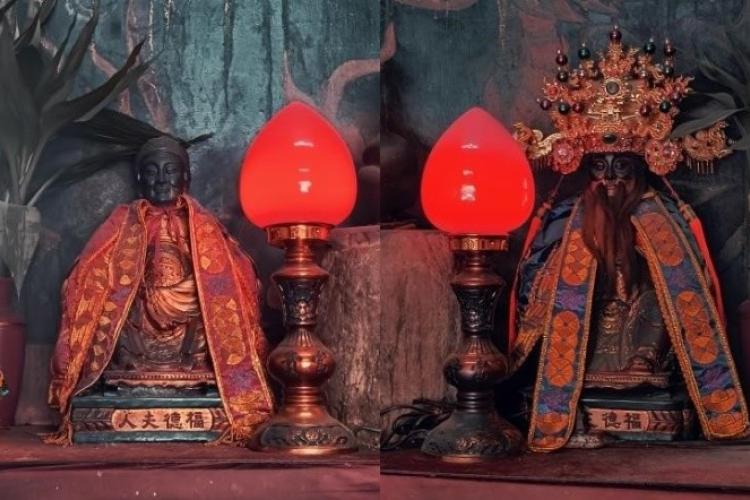
福德爺廟位在快官庄水圳旁,今日廟體建於西元1983年,主祀福德正神、福德夫人,確切位置在彰化市彰南路4段413巷160-20號。福德正神廟位於彰化往南投之中繼站,清代的貓羅保快官莊之地。清朝統治末期到日治初期,快官地區是一處街莊,稱作「快官莊」,也作「快官庄」,隸屬於貓羅堡,堡通保,源於清代地方的保甲組織。日治明治34年(1901)11月,快官庄隸屬於彰化廳,明治42年10月改隸屬於臺中廳,大正9年(1920)快官庄改制為「快官」大字,隸屬於臺中州彰化郡大竹庄,本廟應是在此時期內收歸由政府公部門管理。
2.石塑土地公神像
福德爺廟中另供奉有石塑土地公神像,或許為早期的主神像。本廟所在的快官為交通要道,商旅往來頻繁,相傳曾有婦人在此設攤,生意興隆,便以這位婦人名字當作地名;另一地名由來則是清朝光緒元年(1875)這裡設埔裏社廳,因此地為重要交通點,往來客商多,特設捕快於此保境維安,因此稱作「快官」。
3.總督府堤敷界
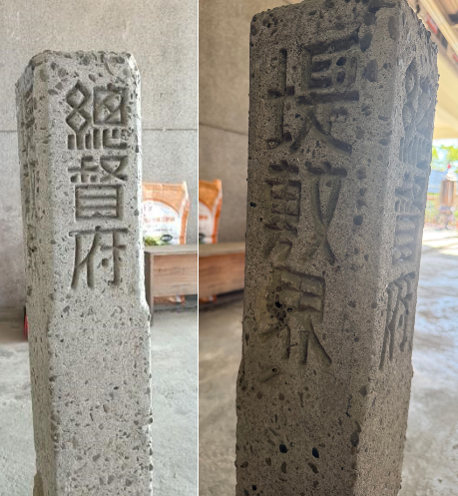
廟旁立有水泥石柱,其中兩個立面上刻有「總督府」、「堤敷界」字樣,為日治時期所立界石,標誌堤防敷地(堤防使用地)的界線,也就是這附近在當時有堤防,而這個水泥石柱是用來定位、測量的基樁。堤敷界水泥柱有的有編號,如烏溪大橋的總督府U6號堤敷界水泥柱;有的沒有編號,如福德爺廟旁這水泥柱。
4.「福佑黎民」匾
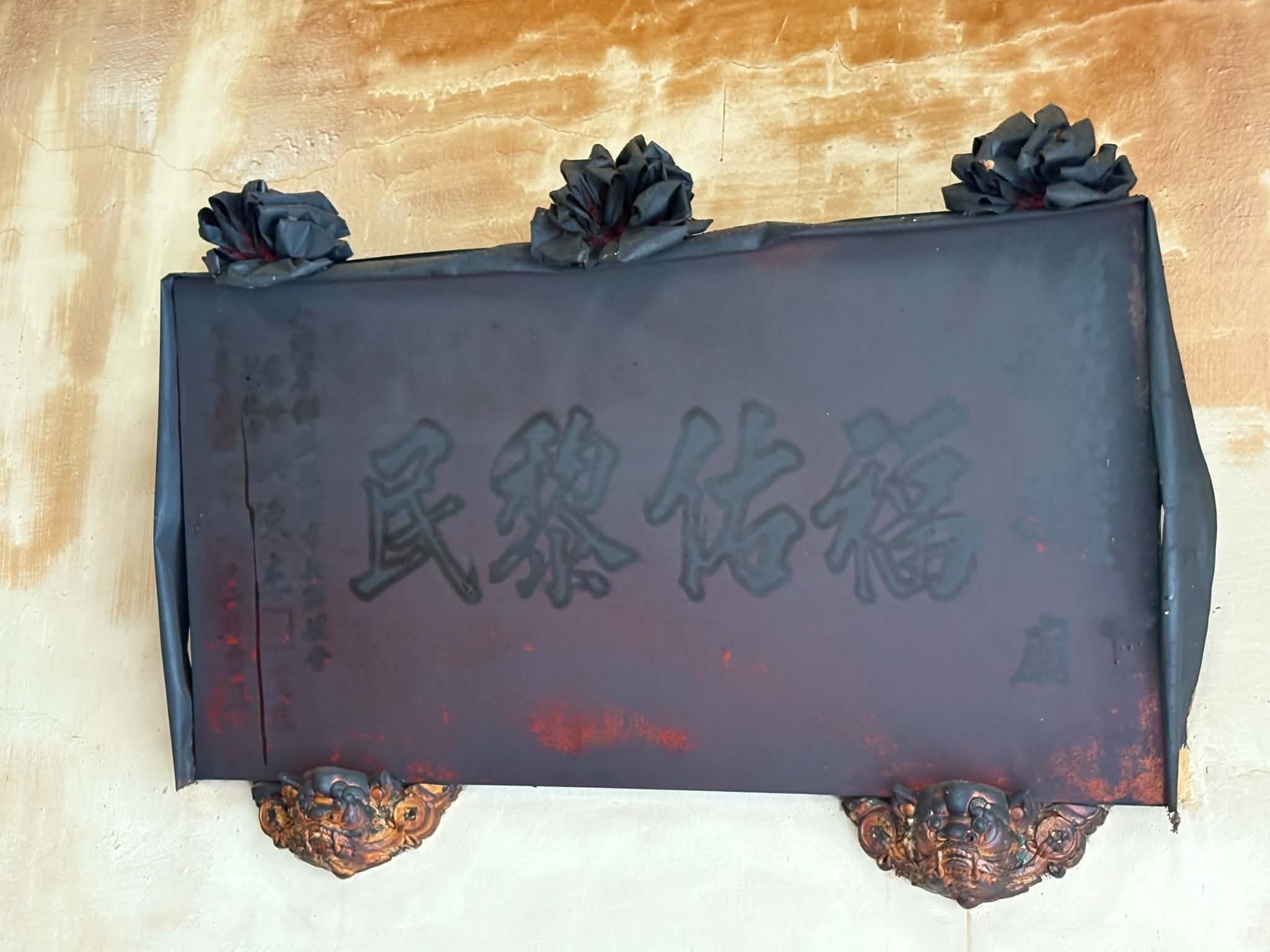
「福佑黎民」匾額由時任台灣省鄉鎮市長聯誼會總會長陳杰所贈,雖然落款年的註記已悉數剝落,幾不可認,不過從陳前總會長的任期與殘印,推估應為民國九十年或九十一年的十二月。周朝廉吏張福德是福德正神最為公認的真身,據傳他常資助百姓,也因此在身後受感念而神格化。以此而言,「福佑黎民」確實與傳說契合,「福德」正神庇佑廣大的平民百姓,即「黎民」。
05聖王廟
1.聖王廟。
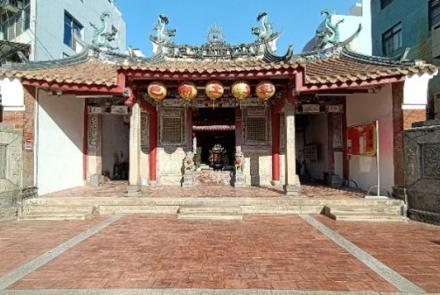
聖王廟(威惠宮),主祀開漳聖王陳元光將軍,道光版《彰化縣志》記錄其建於清代乾隆26年(1761)彰化縣城西門附近,日治時期《寺廟台帳》說它始建於清雍正11年(1733),由福建漳州府七縣移民共同捐資興建,為彰化縣城漳州移民的重要信仰中心,是臺灣80多座開漳聖王廟之一,建廟時聘用粵東匠師,故本廟如正殿三通五瓜等木構件呈粵派特色,但中央明間屋頂向上抬升、兩側間屋頂下降,形成「硬山升簷式」各自獨立屋面,是漳州常見建築法。今為文化部管轄國定古蹟,每年農曆二月十五日為陳聖王壽誕,會舉辦盛大法會,祈福演戲,熱鬧非凡。
2.聖王廟右側虎邊與左側龍邊照壁(八字牆)。
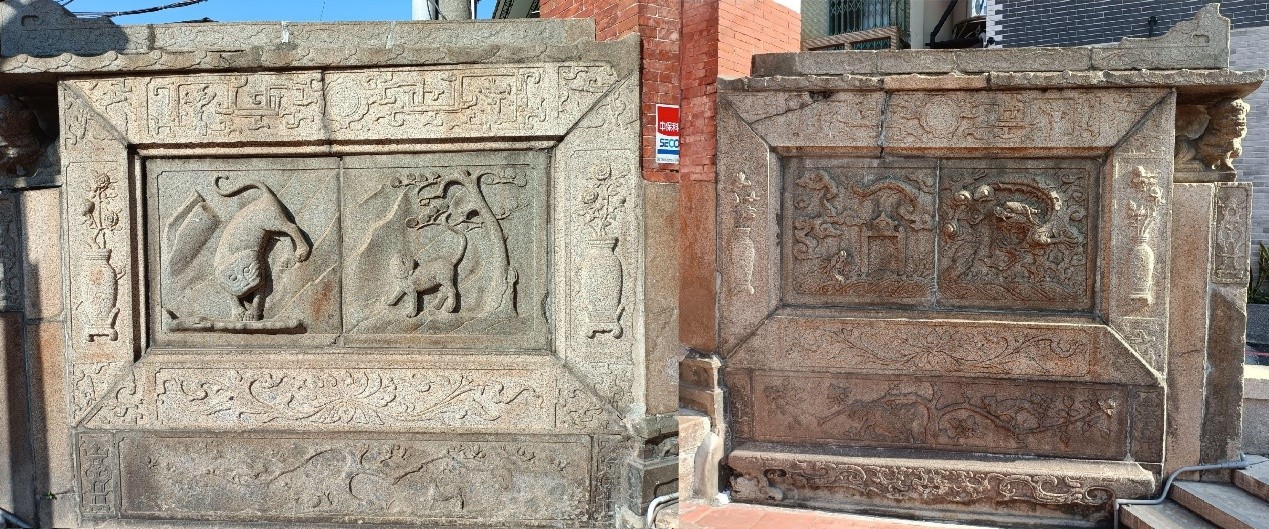
聖王廟正門外八字牆,號稱「全臺最美八字牆」,採用高級青斗石材雕刻,循左青龍、右白虎傳統布局,左右對稱、斜斜向外開展,俯瞰是一個「八」字型照壁,有擴展廟前視野、張臂迎人作用,泉州人之元清觀也有八字牆。龍邊牆面雕的是鯉魚躍龍門,下方襯刻麒麟、鳳凰、牡丹三王圖,寓意吉祥;虎邊牆較見磨損,上方刻的是母虎與小虎嬉戲,下方浮雕可能是「四季平安圖」。兩側邊框上下分別雕拐子龍、花草,左右框雕象徵平安的花瓶。
3.圓形磚柱
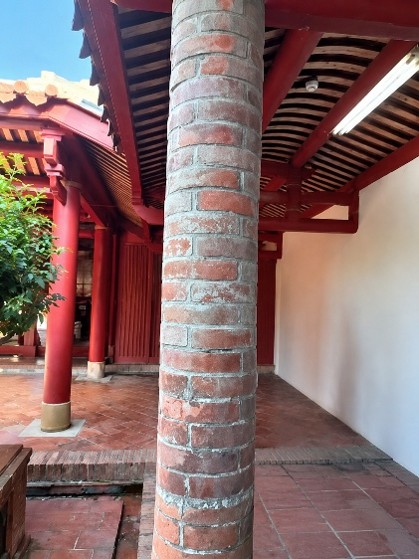
聖王廟今三開間、四進、兩廊的縱深格局,是乾隆60年(1795)陳周全民變損及本廟,於嘉慶12年(1807)和光緒年間重修後所形成。後殿翼廊有六根紅磚圓柱,是日治時期大正元年(1912)大修繕時特別用圓磚疊砌而成,建築素材大異於常見的木柱、石柱,也是舊日彰化縣城同類型建築構件的僅存原物,此建築工藝是專門採用弧形木製成專斗,再填土製成粗胚而構成。
4.後殿小院和院中古井
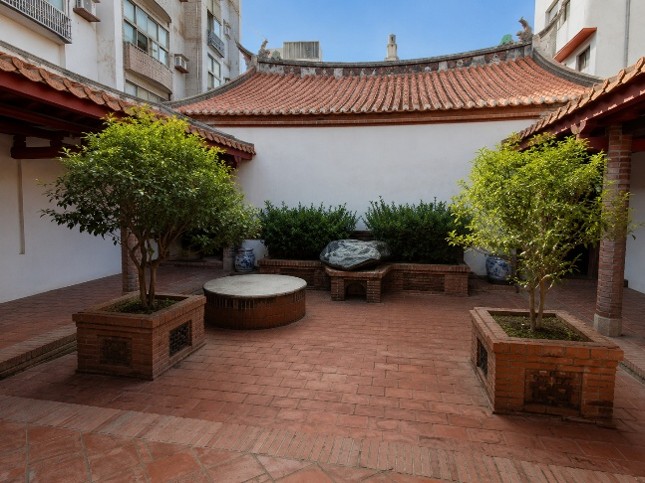
聖王廟後殿小院中有一百年古井,井中內壁以石頭、紅磚為建材,採取傳統「六粒一」工法壘砌而成,使用至今,提醒人們飲水思源。漳州人建的聖王廟,興工便採「五落起」四殿二院形式,是彰化城內格局僅次於孔廟的大廟,以與泉州人先建並自誇「皇宮起」的元清觀別苗頭。
5.聖王廟正中大門和虎邊門神
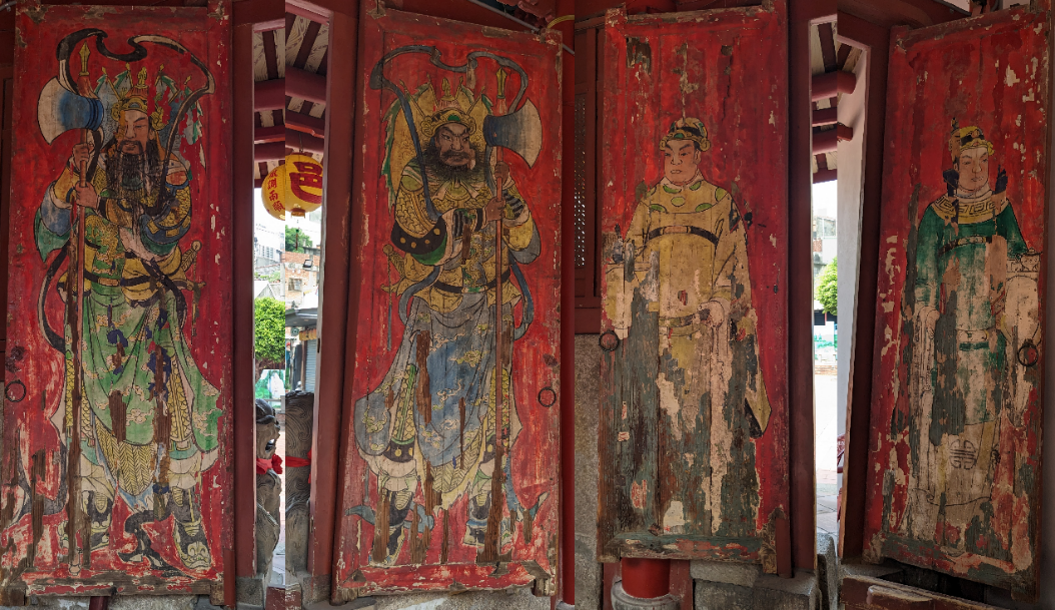
聖王廟大門門神有三層,最外層的彩繪完成於民國68年(1979),正中大門和虎邊門神如上圖,龍邊門神今斑駁嚴重,今六扇門神彩繪下面還有歷史更悠久的兩層彩繪,但難見其貌。日本昭和12年(1937)二次世界大戰期間,臺灣執行皇民化運動,寺廟整理與廢合政策壓制臺灣傳統宗教信仰,聖王廟廟產被日本人強制徵收,隸屬於彰化市寺廟整理委員會;光復後,民國40年(1951)市公所成立,因本廟屬「荒廢寺廟」,歸市公所管理,香火稀淡,民國60年曾出租設立威惠托兒所,亦有三次小規模殿宇整修。
6.開漳聖王神像
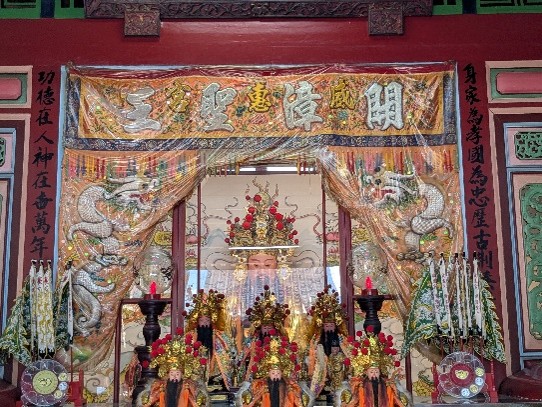
正殿開漳聖王即唐代嶺南將軍陳元光,字廷炬,號龍湖。他21歲繼承父親陳政(河南潁川人)職務,率3000府兵和家族帶來的58姓軍隊鎮守漳浦,平服今福建、廣東交界處的畬、苗、瑤等原住民族,奏請武則天在此設官治理,垂拱四年(688)漳州建置,是本地首個官署,陳元光擔任漳州刺史兼漳浦縣令,引進中原耕作技術和稻麻蔗蕉等作物,屯墾耕戰、招撫土著、通商教化,使漳州、潮州一帶漸成安居樂土;景雲二年(711)潮州苗、雷等土著氏族反抗,他作戰陣亡,被唐玄宗追贈為豹韜衛大將軍、臨漳侯,漳浦縣城郊敕建「忠烈祠」,春秋官祭,唐德宗加封其「靈著順應昭烈廣濟王」,宋徽宗封其「開漳主聖王」、賜「威惠廟」匾額,明代封他昭烈侯,漳州人民則尊其為開漳聖王。
7.正殿開漳聖王隨侍
聖王廟正殿開漳聖王神像兩旁,雕塑有一老一少太監侍者,栩栩如生,眼神如真人直視參拜者,蔚為可觀。
8.開漳聖王夫人像
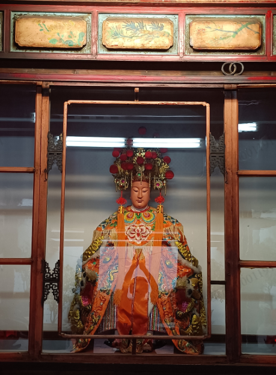
聖王廟後殿奉祀開漳聖王夫人:种氏夫人,她是陳元光開墾漳州艱辛工作的重要精神後盾,被尊為「王媽」,以彰顯其德行和貢獻。聖王廟各殿建材斷面和雕刻主題,很類似鄰近的關帝廟,應出自同一批匠師之手。
9.優美的聖王廟古匾
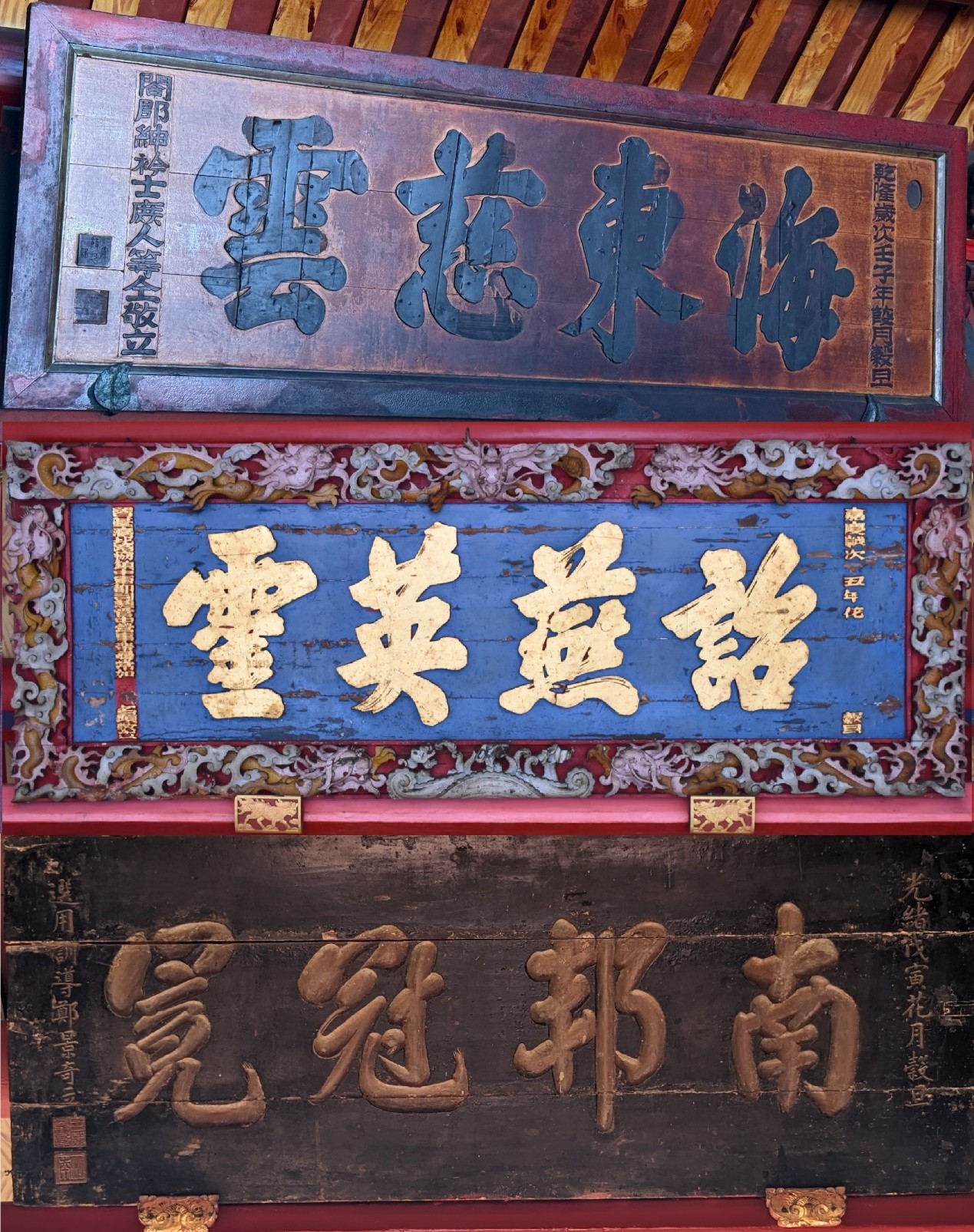
聖王廟中懸掛匾額顯示其年代久遠。最古老的「海東慈雲」匾,為清朝乾隆57年11月(壬子年,1792;葭月是農曆十一月,因為冬月的葭草才會冒「綠頭」)彰化紳民獻給聖王媽,「海東」指臺灣,「慈雲」指本匾所在之後殿的聖王媽母心慈佑;「詒燕英靈」是嘉慶22年(丁丑年,1817)署臺灣北路恊鎮中軍都司兼管中營事帶尋常加一級林名顯敬立,他是正四品官,漳州府漳浦縣人,正是建聖王廟的「漳州七邑」原鄉信眾,駐守臺灣期間,特至漳州人廟宇祭拜獻匾,題字或採自《詩經.大雅.文王有聲》:「詒厥孫謀,以燕翼子。」;「南邦冠冕」是清光緒4年(戊寅年,1878)選用訓導鄭景奇立,應為彰化人。
10.聖王廟1912年大修繕匾與主事者長生祿位
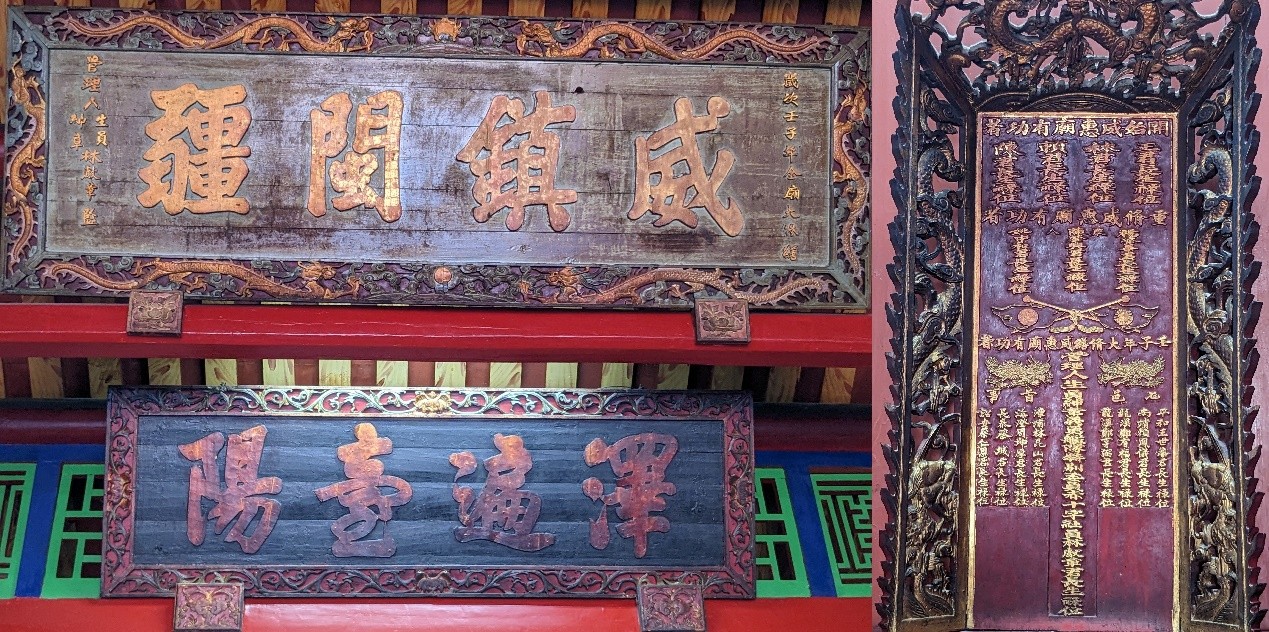
聖王廟後殿右室供奉創廟與歷次修建有功者長生祿位,表彰其功。初建由王、賴、林、陳四位士紳倡議,但未刻全名;道光28年(1848)11月8日中臺灣大地震,彰化、鹿港受創嚴重,許多廟宇因此毀損,聖王廟故於咸豐10年(1860)重修,由舉人陳肇興、仕紳楊添華、姚中和倡議促成;光緒21年(1895)日軍接收臺灣,本廟於臺民激烈反抗的八卦山之役中再遭破壞,大正元年(壬子年,1912)原捐獻人後代,管理人秀才林獻章(北門口人)、漳州七邑首事平和王世藩、南靖賴鳳儀、龍溪鄭有福和鄭享弼、漳浦林昆山、海澄周坤厚、長泰蔡城、詔安蔡仁恩等發起重建,購置廟田供應祭祀經費,即今廟貌,後於民國85年(1996)政府撥款大事修復保存至今。特別的是,林獻章亦為日治時期赤十字社員,即今紅十字會,救災濟難,明治35年(1902)獲日本總督府頒授紳章。
04元清觀
1.以「觀」為名的玉皇大帝廟
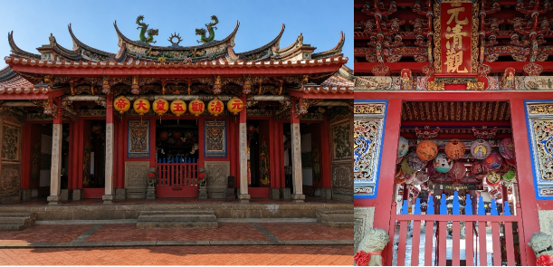
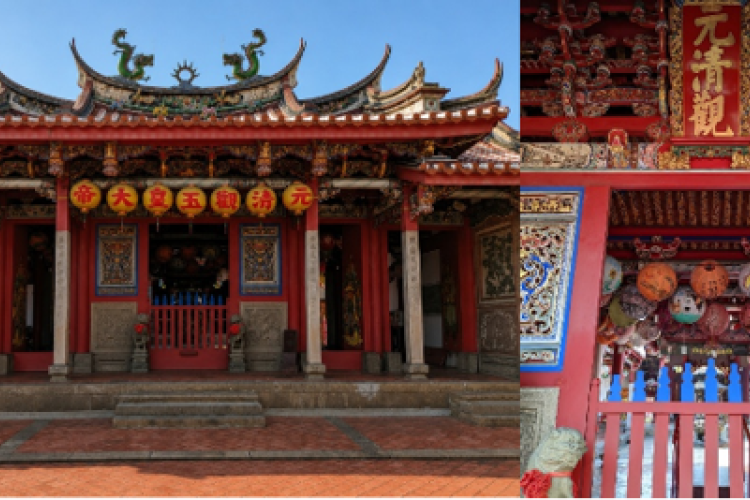
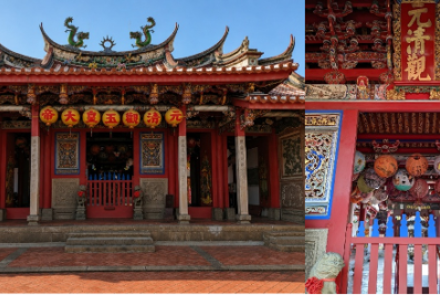
元清觀位於彰化縣彰化市,乾隆28年(1763)創建,以「觀」為名,是道教廟宇,主祀玉皇大帝,居民稱作天公壇。本觀由彰化縣城中的泉州人士集資興建,初期因資金有限,營建頗為艱辛,早年期由信眾自發組織神明會,維持祭典等活動。民國95年(2006)4月9日曾遭火災,99年初完成重建,保留部分原有文物與建築構建,展示出不同時期的工藝精緻與美感,值得細細品味。
2.元清觀大門五開間壁聯與柱聯
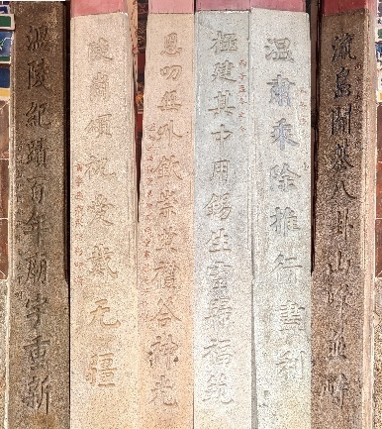
元清觀之悠久歷史可由其大門五開間之兩側壁聯與中間四柱對聯顯現。上圖兩側較暗之對聯,鑲於元清觀大門兩側牆壁上,旁即為麒麟與鳳凰磚雕壁圖,此對聯為丙子孟冬首事藍翎同知銜陳元吉寫,清同治5年(1866,丙寅年)他與楊祥光、世振治、蔡德芳等倡議重修元清觀,至光緒2年(1876,丙子年)農曆10月修成,費時甚久,工程細緻與不易可想見,壁聯中「八卦山」、「百年廟」清楚顯示出元清觀在八卦山腳下,光緒初年時已存在百年以上。四柱中外側一對首事張昭彩、中間一對藍翎五品銜廣東即用縣董事蔡德芳的柱聯,均顯示為丙子年工成。蔡德芳為同治13年(1874)甲戌科進士,故元清觀在光緒初年重修。
3.大門兩側精美鳳凰、麒麟磚雕
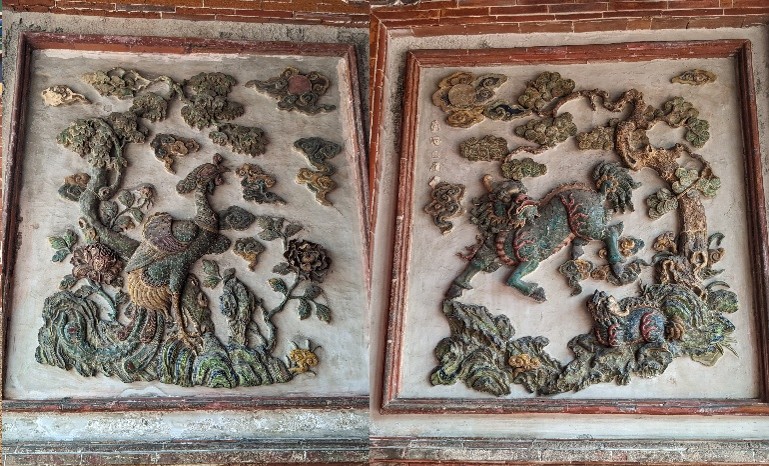
元清觀大門兩側牆壁上存有清代重修時的精緻彩繪磚雕,龍邊左側為麒麟,虎邊右側為鳳凰,花紋繁複、造型優雅,在民國95年正殿大火時倖存,襯著下方斑駁焦痕的紅磚,備顯古意。
4.戲臺脊樑裝飾的無極概念
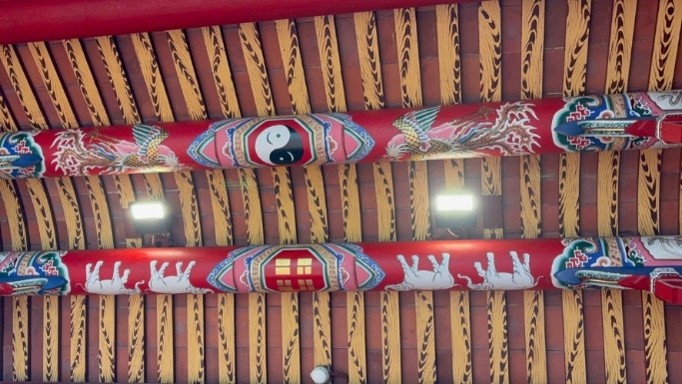
「無極生太極,太極生兩儀,兩儀生四象」的概念源自《周易》,在臺灣許多道教廟宇中,這個理念常被融入建築設計與裝飾之中。元清觀作為奉祀玉皇大帝的廟宇,與「無極至尊」的理念密切相關,因此整座廟宇的裝飾處處彰顯這一哲理。
5.石獅護衛大門
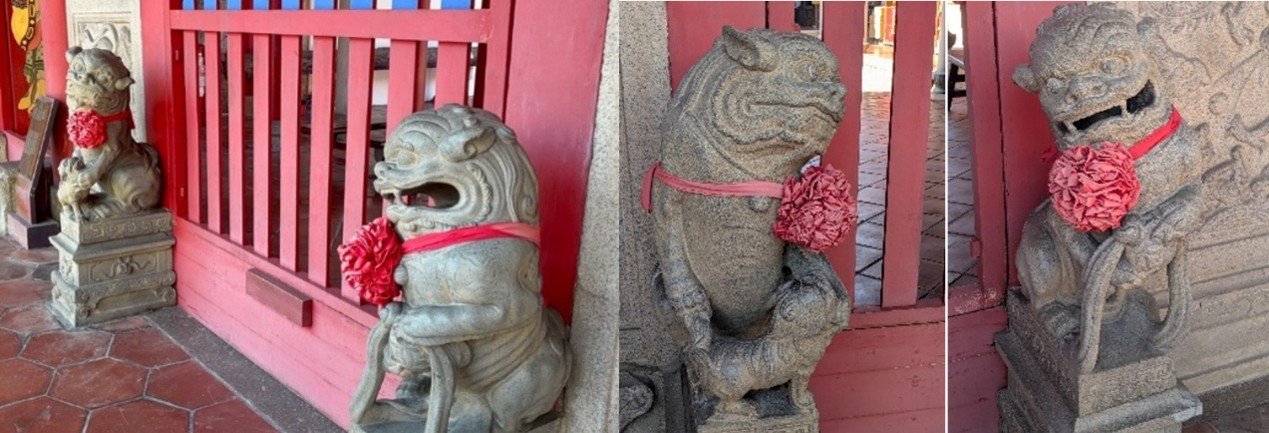
元清觀門口有一對青斗石打造的清代石獅,頗引人注目。石獅材質堅固,古樸生動,用來驅魔避邪、守護廟基,象徵神聖空間的守護者,歷經祝融之災也未損毀,完整保留元清觀創建時的原始樣貌。位於左邊嘴巴張開的公獅,口中含著一顆稱為「握球錢」的石球,象徵權力、財富與掌控對外事務,代表過去男性負責在外打拼、維繫家計的角色;右邊嘴巴閉合的母獅,腳下護著一隻小獅子,象徵女性安靜持家、默默付出、守護家庭與子女,反映早期社會中「男主外、女主內」的傳統性別分工。
6.儒雅玉帝托夢籲請修復座椅
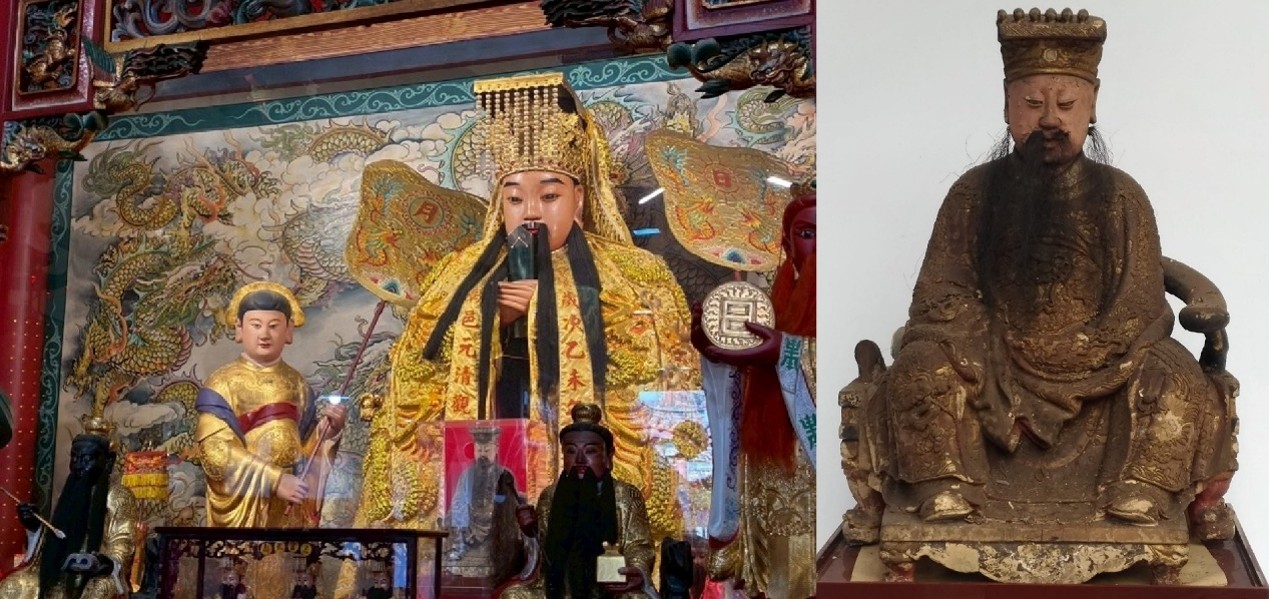
正殿主神玉皇大帝高約7.7尺,以樟木雕成,外層施以披土技法並貼上金箔,造型莊嚴宏偉,是元清觀主神。大尊玉帝像前方今有一尊體型較小的玉皇大帝,造型儒雅,原安奉在大尊神像腹內,民國95年(2006)元清觀遭火災損壞多處,至廟體修復完成,廟方人員夢見玉帝希望按原型整理容貌、修復座椅,不必塑金身,故於110年11月小尊古玉帝像被請出修復,隨後開放讓信眾近距離參拜。古神像請出展示後,廟方另行新刻一尊玉皇大帝小像,安奉於大尊神像內部,保持元清觀「大尊主神中仍安有小尊神像」的特殊傳統。
7.青斗石「雲龍御路」
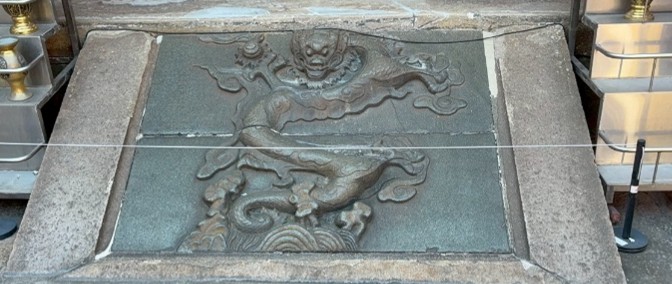
「雲龍御路」是專供神明或皇帝行走的道路,通常位於建築物正殿中道,顯示尊榮與神聖,在廟宇建築中,它不僅是通路,更是正殿的中軸線與分金線,承載著廟宇風水格局與宗教禮制。元清觀正殿前這條雲龍御路,是以高級材質的青斗石刻成,也是全廟前段少數倖免於民國95年大火的古代物件,今已圍繩封起保護,延續神明專用道路的傳統。
8.正殿橫樑之河圖洛書
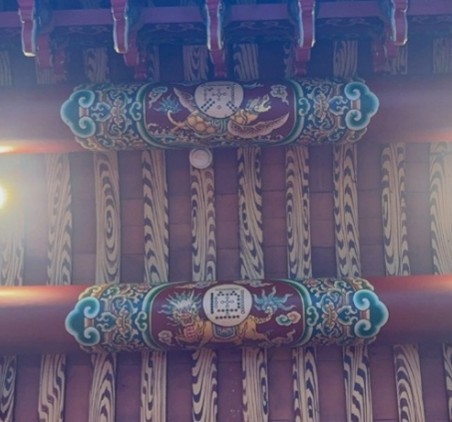
元清觀正殿屋頂上方可以看到「河圖洛書」彩繪圖案,此裝飾並非每間廟宇都能使用,因為玉皇大帝是道教神祇中位階最高的神明,只有供奉祂的廟宇才有資格在殿頂繪河圖洛書。河圖洛書源自《易經》:「河出圖,洛出書,聖人則之。」傳統文化中,河圖洛書被視為宇宙秩序與文字的原始密碼,象徵陰陽五行與天地運行的規律,也被認為是文字、曆法與典章制度的根源,彩繪於元清觀正殿樑上,正好呼應玉皇大帝統領天地、掌管萬法的崇高地位。
9.配合日治時期開路而拆除的後殿右側
日本統治臺灣初期即開始公告實施都市計畫,開闢或拓寬臺灣各主要城市原有街道,整理市容、建築、河道等公共建設,使趨於現代化,彰化都市計畫公告於1906年3月,陸續實施。元清觀的後殿在這波「市區改正」潮流中,因道路拓寬而必須拆除右側虎邊牆壁並內縮,讓出空間給今日之陳稜路,導致元清觀整體結構不再呈長方形,而是呈右側斜後內縮的梯型,後殿的牆壁外側顯露出屋頂之橫樑,留下歷史見證。
10.乾隆「海國同天」古匾
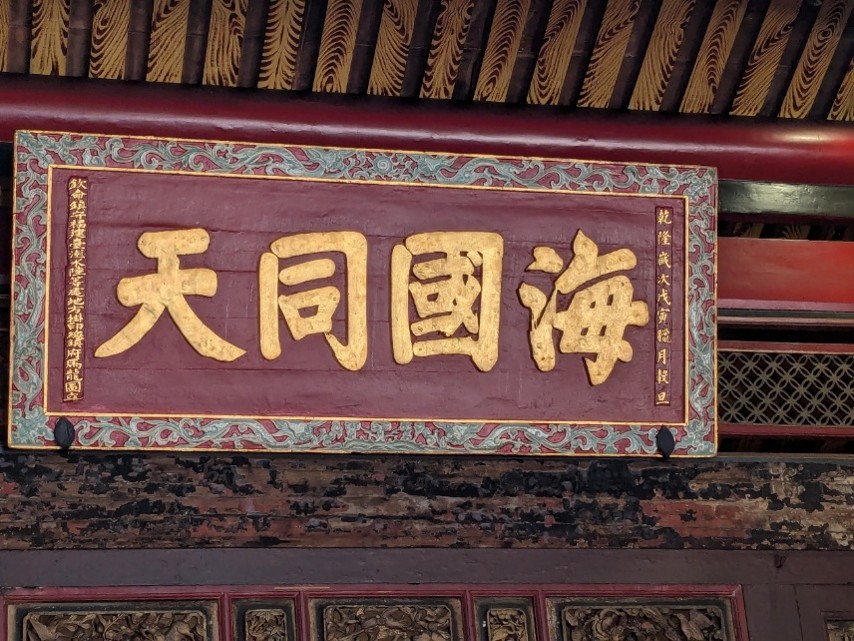
元清觀後殿懸有清代乾隆23年(1758,戊寅)「海國同天」古匾,由鎮守福建臺灣水陸總兵馬龍圖獻立,官職正二品,是當時臺灣響噹噹的高級官員,有權直接上奏皇帝報告臺灣情事,也顯出元清觀的重要性。
03大東門福德祠
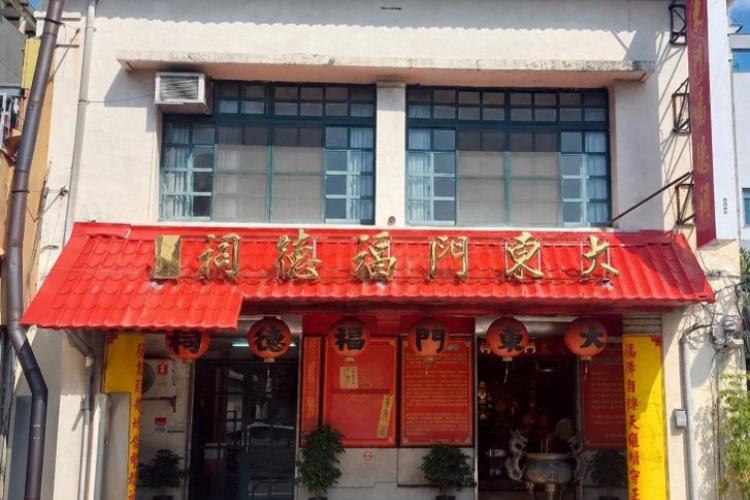
1.大東門福德祠復興源由
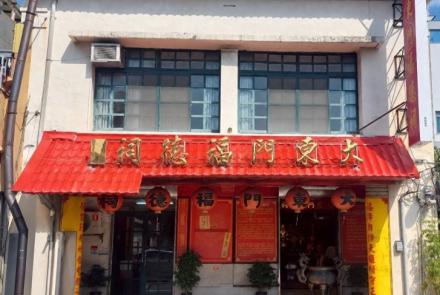
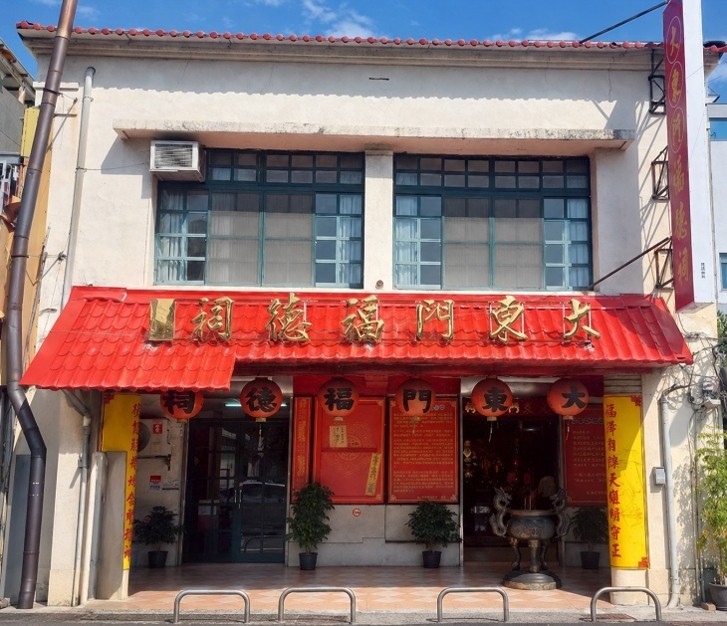
東門福德祠,原位於彰化孔廟右側舊幼稚園對面,為嘉慶20年(1815)彰化縣城所建四座城門及其內側的四座土地祠之一。日治大正年間1920年代執行市區改正政策,拓寬道路,南門、西門、北門依序遭到拆除,1922年為拓寬縱貫公路(臺1線)而拆除東門及其土地祠。民國84年5月新聞報導,彰化市有西門、北門、南門福德祠,獨缺東門福德祠。後來,彰化市長溫國銘到城隍廟參拜,得知東門土地公在此寄居多年,便尋求其適宜獨立居所,91年8月溫市長宣告以原縣警局交通隊舊址改建為東門福德祠,即今「大東門福德祠」所在,近清代原址,寺廟用地所有權分屬對街元清觀和慶安宮,均歸市公所管轄,今門柱對聯「福降自鑠天維明守正,德能配赫地合聖稱神」。
2.東門福德正神
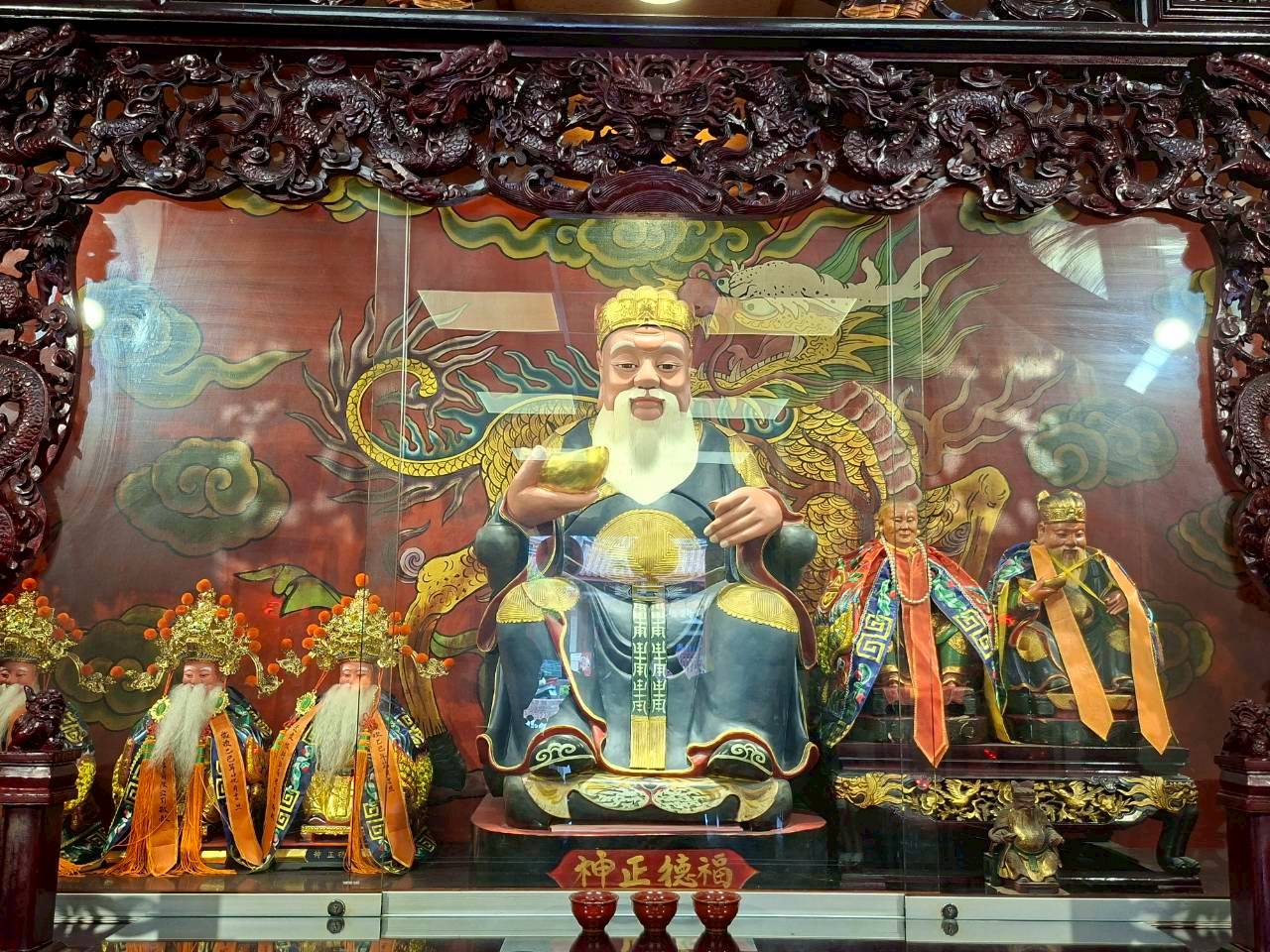
東門福德祠於民國94年(2005)整修完成,6月11日中午由市公所舉行大尊新神像開光點睛儀式;13日入火安座儀式。初由號稱「老怪」的彰化市第一義消分隊隊員黃介仁任管理員,歷屆市長為主任委員。
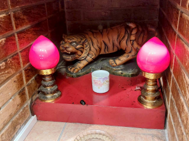
3.東門福德爺座騎─虎爺
大東門福德爺由彰化市公所寺廟室委託花壇鄉工藝家蘇永良雕刻,另以鉛繪四隻不同姿態之虎型,向福德爺擲筊請示,但連擲16次卻擲不出聖杯,有說福德爺看不懂鉛筆作畫,才無聖杯,遂請蘇永良改以泥塑兩尊虎像,民國91年3月4日擲筊即得聖杯,眾人稱奇。
國史館臺灣文獻館研究員林文龍指出,福德正神掌管財富,有以豺為坐騎的案例,「豺」音同「財」,能彰顯其神格地位,但未聽過土地公在「豺」之外還有其他坐騎,故請工藝家畫虎給土地公當坐騎,應是誤解了民俗涵義。
4.點財神燈業務及點燈要義
大東門福德祠提供點財神燈業務,財神主司財富,也為地方守護神,讓參拜民眾報財富旺。