02成功公園
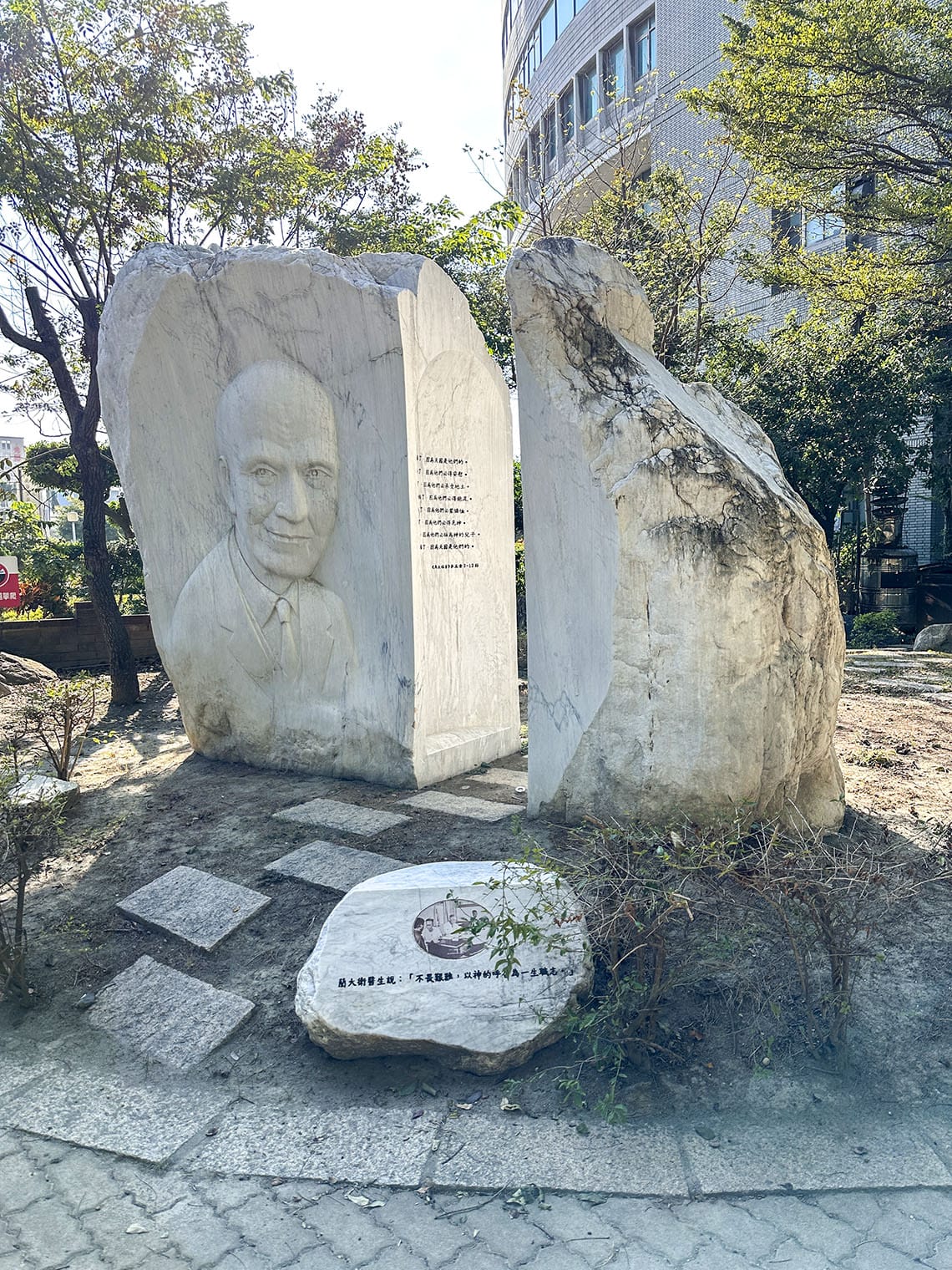
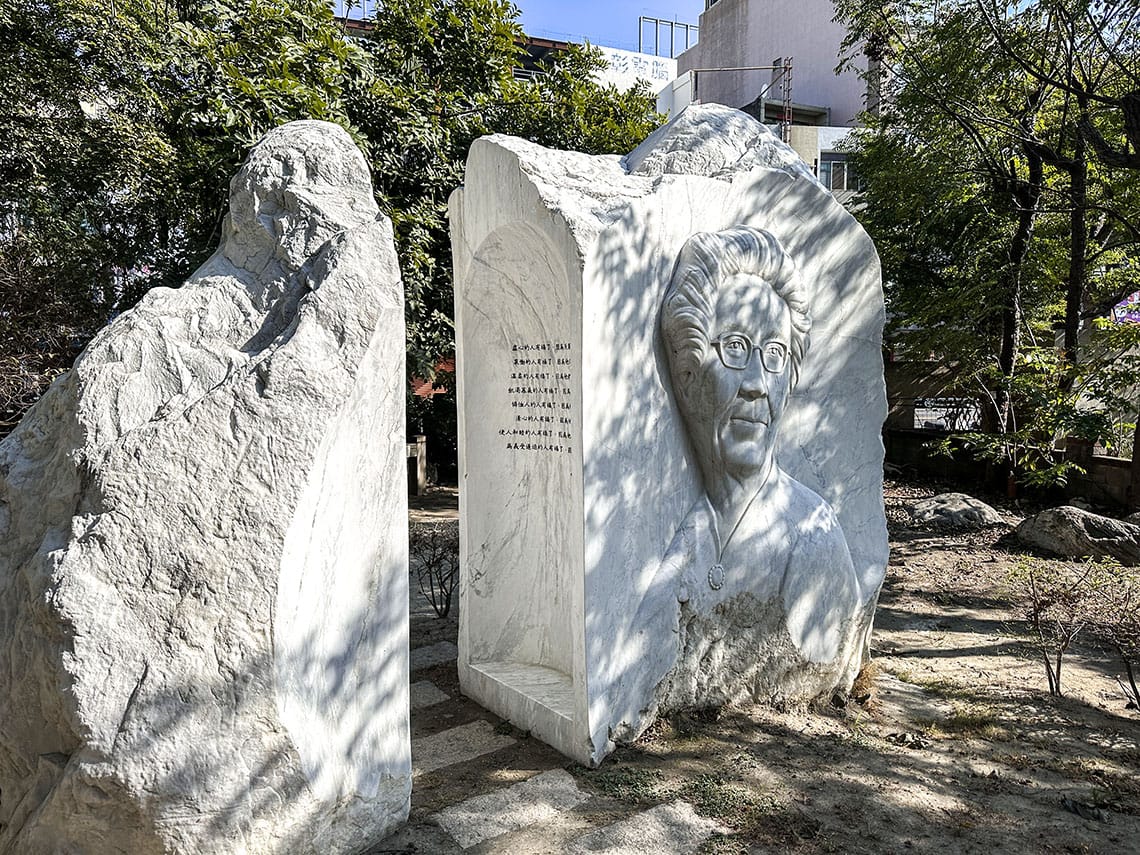
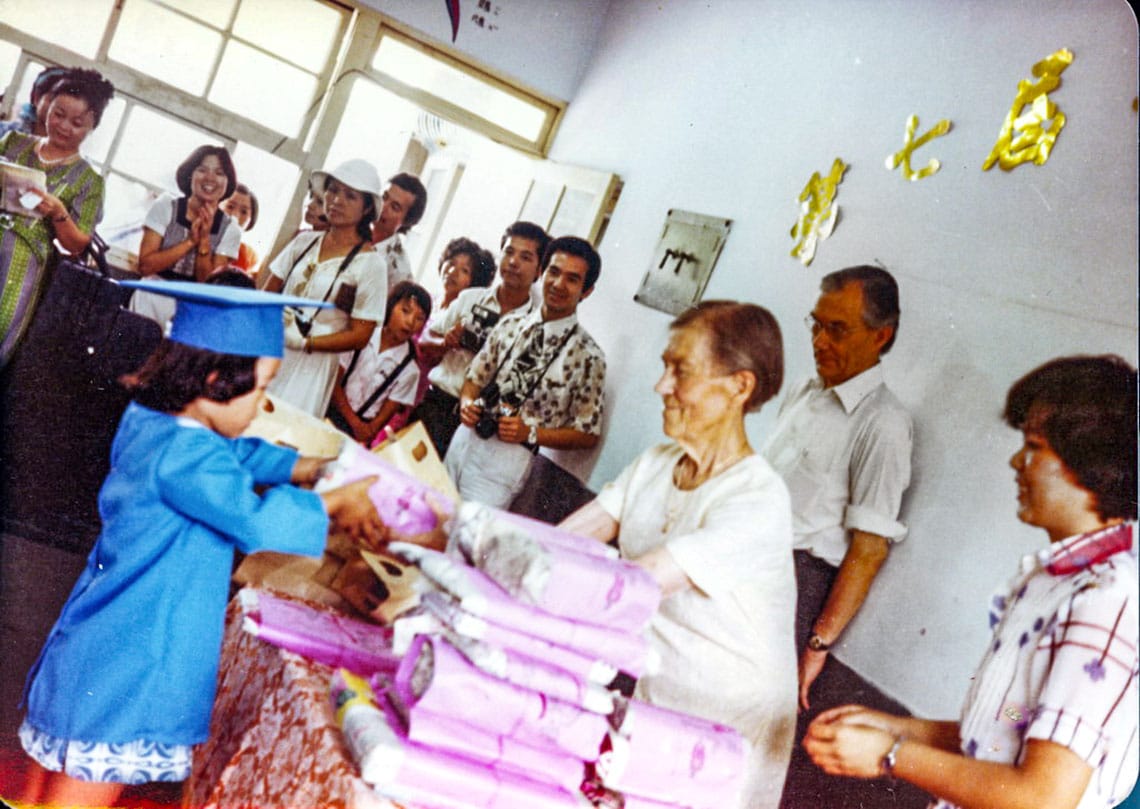
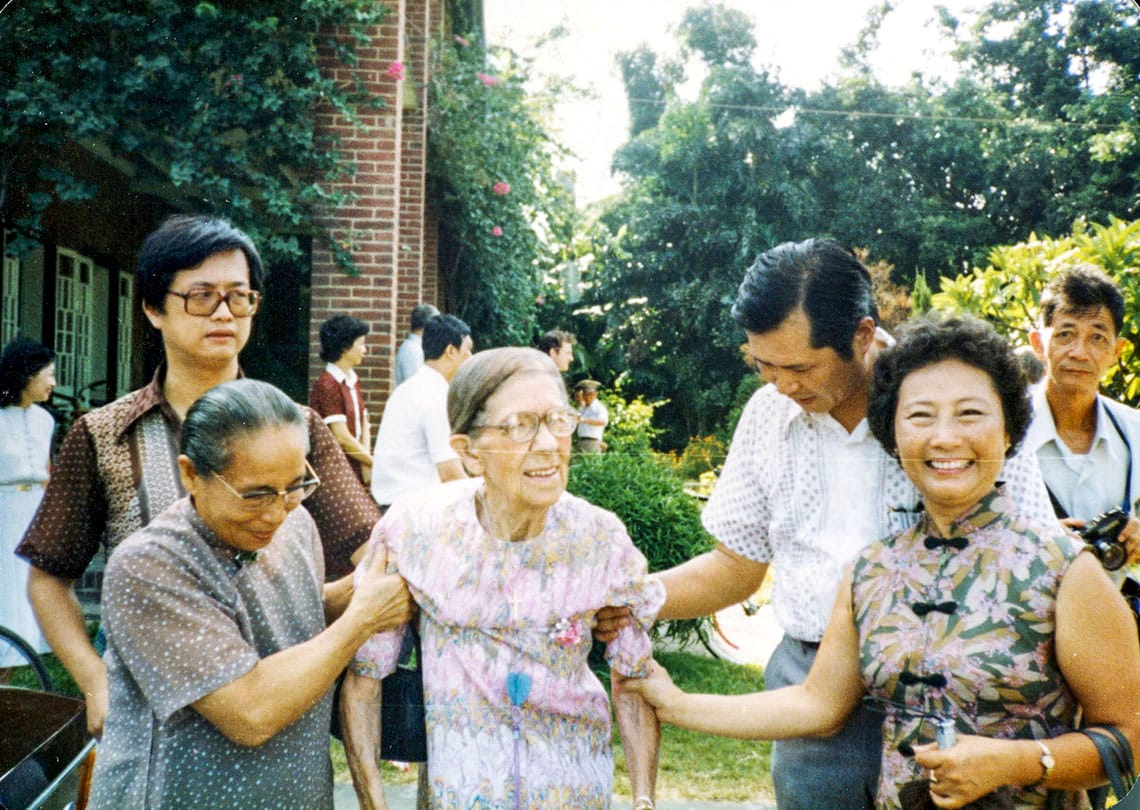
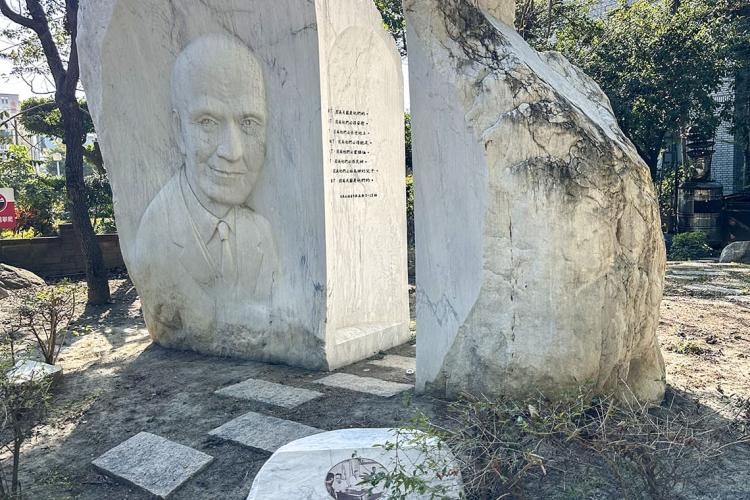
成功公園座落於彰化市內旭光路與民生南路交叉口,是一座鬧中取靜的城市公園。在公園內有一座「蘭大衛『切膚之愛』公共藝術」的陳列展示,為的是紀念蘭大衛醫師與連瑪玉醫師娘對彰化醫療的無私奉獻精神。這件公共藝術由國際知名藝術家林舜龍設計製作,將蘭大衛與連瑪玉夫婦的半身浮雕刻畫在藝術作品的兩側,石縫內左側雕刻圓角突起的十字架,右側則雕刻《聖經‧馬太福音》5章3~12節經文,也就是耶穌基督在「登山寶訓」中所提到的「八福」。
在整座公園中,還有蘭醫師的八句名言:
1.我期待自己成為一位喜愛人與受人們喜愛的人,更甚於成為一位傑出的醫師。
2.不畏艱難,以神的呼召為一生職志。
3.不管我們能力如何,都應該盡其所能。
4.解除人的創痛,讓他們浸沐在福音的戀愛中。
5.能愛人和受人疼愛的人,是真正快樂的人。
6.我們診療的最終目的,乃是帶領人們歸向救主耶穌基督。
7.把病人的艱苦當作自己的艱苦,用虔誠的心祈禱。
8.藉著人生無數的抉擇,型塑自己的人格。
此外,還有數幀蘭醫師行醫、推展醫學教育的照片。藉由公共藝術的展示讓參觀的民眾可以體會蘭醫師的信仰、精神理念、以及如何在他一生當中藉由行醫來實踐。創作這件公共藝術品的作家林舜龍先生從父親口中得知家族中唯一的基督徒曾祖父林懷義先生,在世時長年受眼疾所苦,後來是由蘭大衛醫師治癒而「重見光明」,而這件公共藝術亦是以「光」為元素進行設計,跨越時空的感動也在此交會。
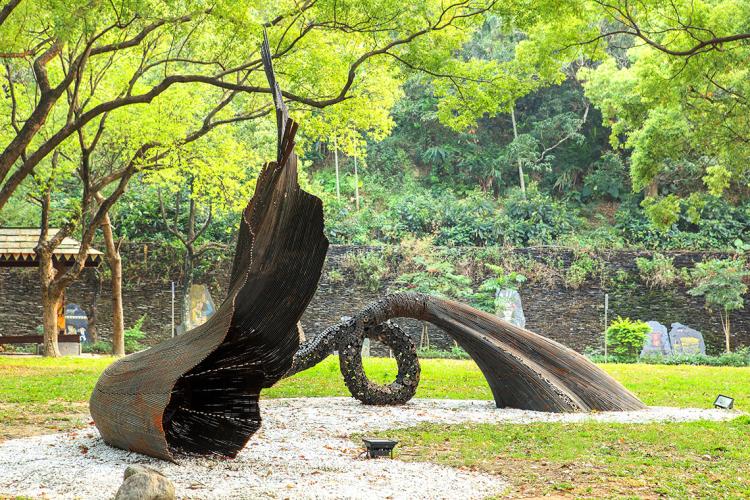
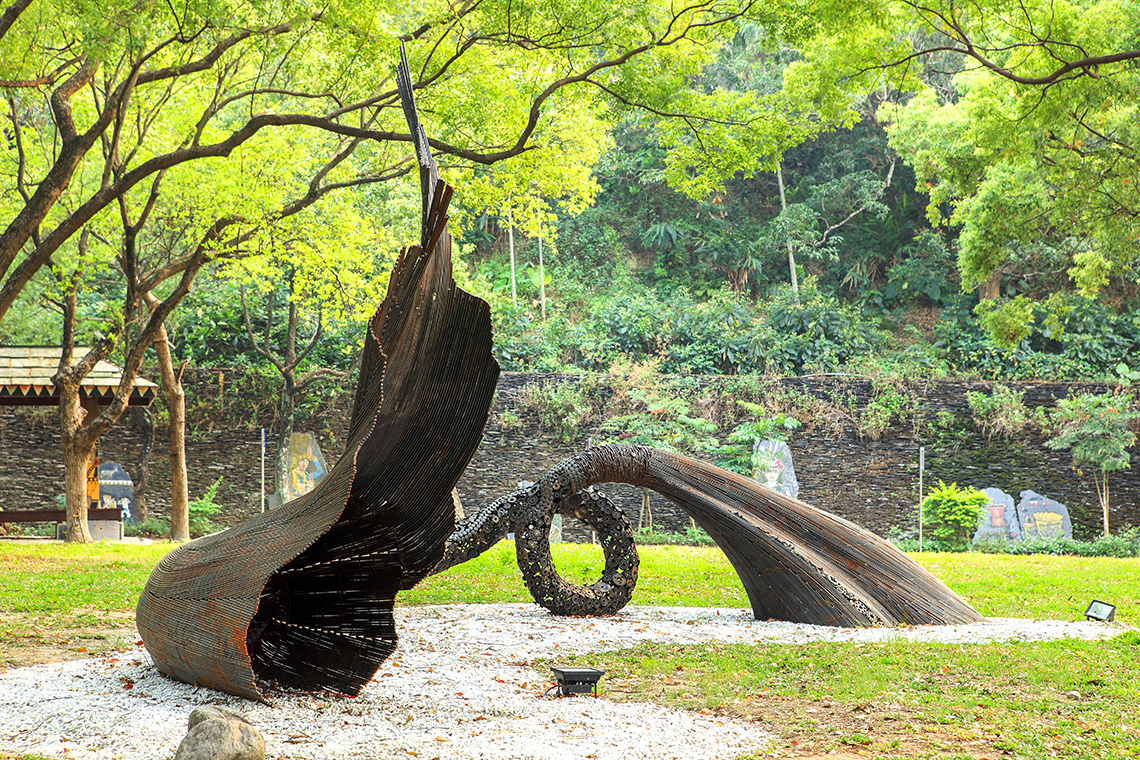
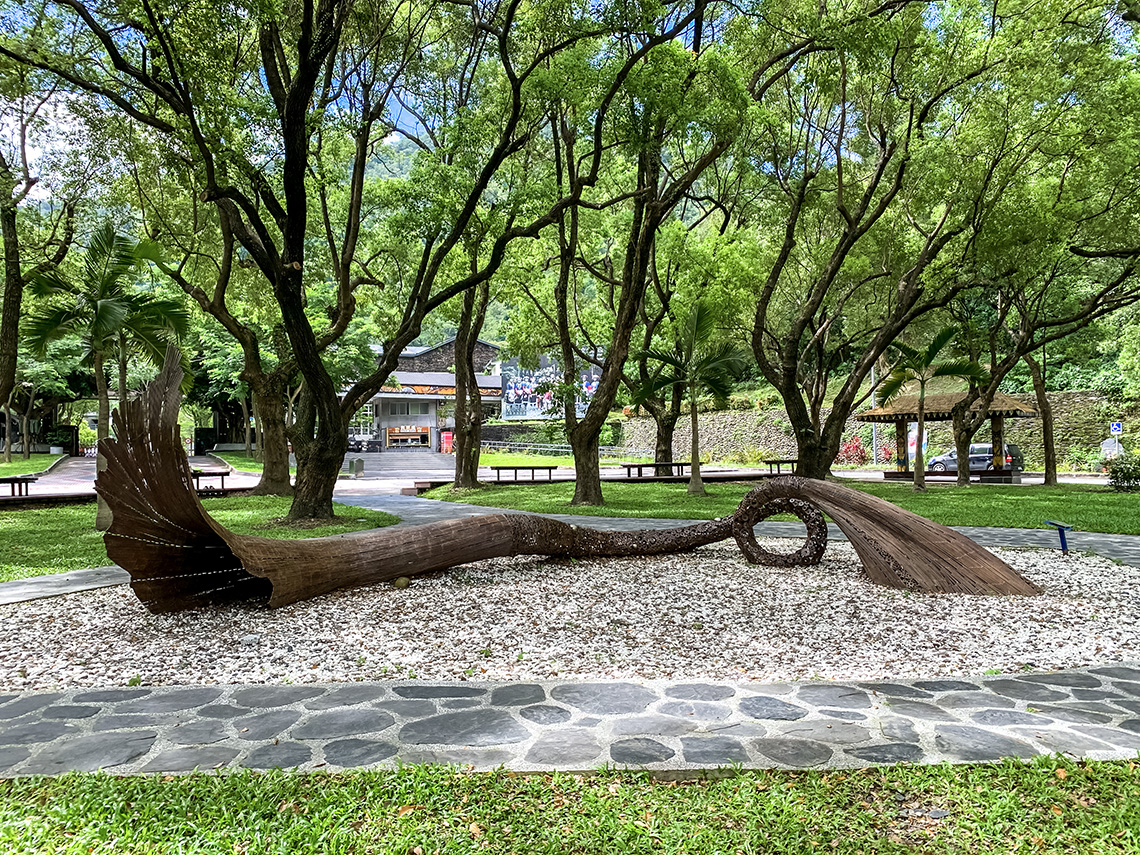
02項鍊 - 系列三 Necklace No. 3
藝術家: 達比烏蘭˙古勒勒 /排灣族
Artist: Tapiwulan‧Kulele /Paiwan
2014
這作品❰項鍊-系列三❱,延續了2009年於花蓮駐村時所創作的❰項鍊❱鐵雕,藉創作迎接出生的大女兒。當時他於花蓮港口部落駐村創作時,太太正值懷孕,而當孩子出生帶回港口部落時,部落的I-na(泛指與母親同輩之婦女),就幫孩子取名cangaw(項鍊),這便是作品❰項鍊❱的由來,代表古勒勒創作時最初的感動。
排灣族的琉璃頸鍊(veceqel)與項鍊為發現的項鍊系列作品,蘊含太陽、土地、水、大自然與地球萬物生命共同體的概念,詮釋跨族群、拉近人與人之間彼此的距離和自然環境生態循環的關係。
This is the third sculpture of the series. The first necklace was inspired by the birth of Kulele’s child, who was born in Hualien. The woman from that village named the child Cangaw, which means necklace in Amis language. Veceqel is the Paiwan word for a necklace that has many glass beads. Just like the other necklaces in the series, it contains the concept of homogeneity that the sun, earth, and mother nature coexist with all living creatures. Similarly, the deep relationship between ethnic blood and culture.
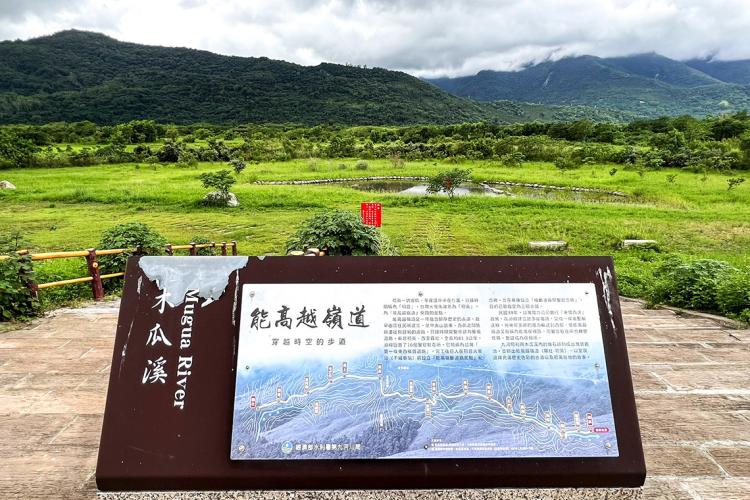
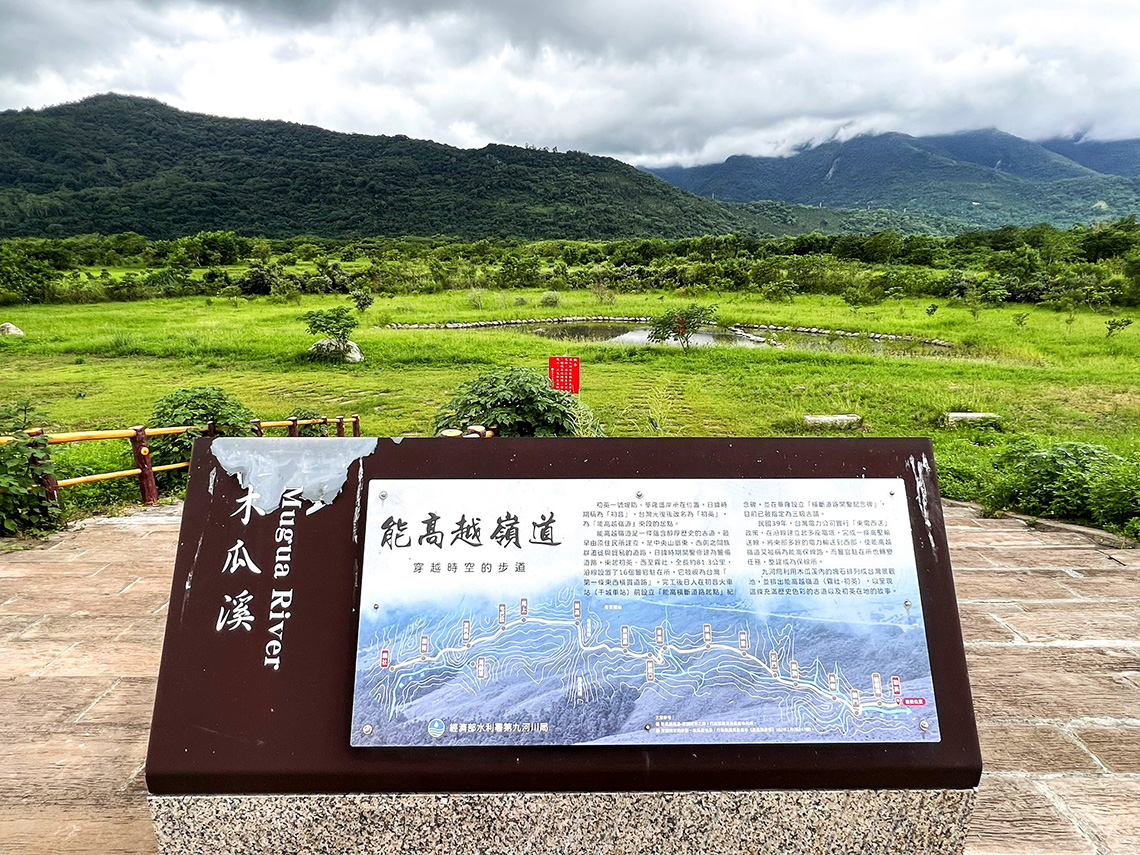
03木瓜溪的生命脈動—護岸界標與生態池之美
木瓜溪的「木瓜」並非源自水果,而是賽德克語「Mokui」的音譯。約200多年前,來自南投霧社的原住民遷徙到木瓜溪中、上游,並自稱「Mokui」,意思是「來自山後」。漢人根據這個發音將其稱為「木瓜」。木瓜群的額紋數量比太魯閣群多,這也是區分兩族群的特徵之一。
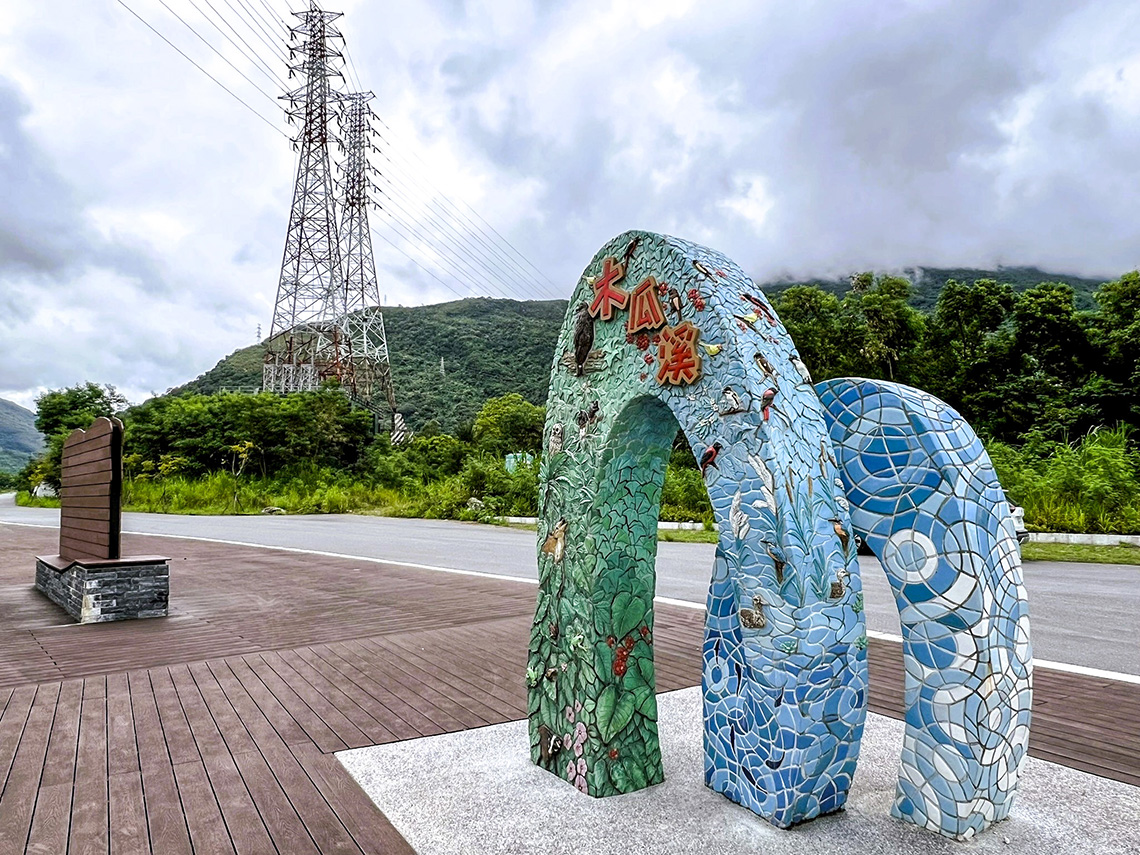
木瓜溪護岸工程結合了生態保護與河川環境改善,旨在創造自然與人類的和諧共生。華隆護岸與初英護岸的交會點處設立了「木瓜溪生態環」界標,這個標誌展示了從木瓜溪上游至出海口所發現的動植物。界標上描繪了白頭翁、朱鸝、貓頭鷹、山羌、白鼻心、野山羊等生物,以及周圍的植物,生動再現了木瓜溪的多樣生態。
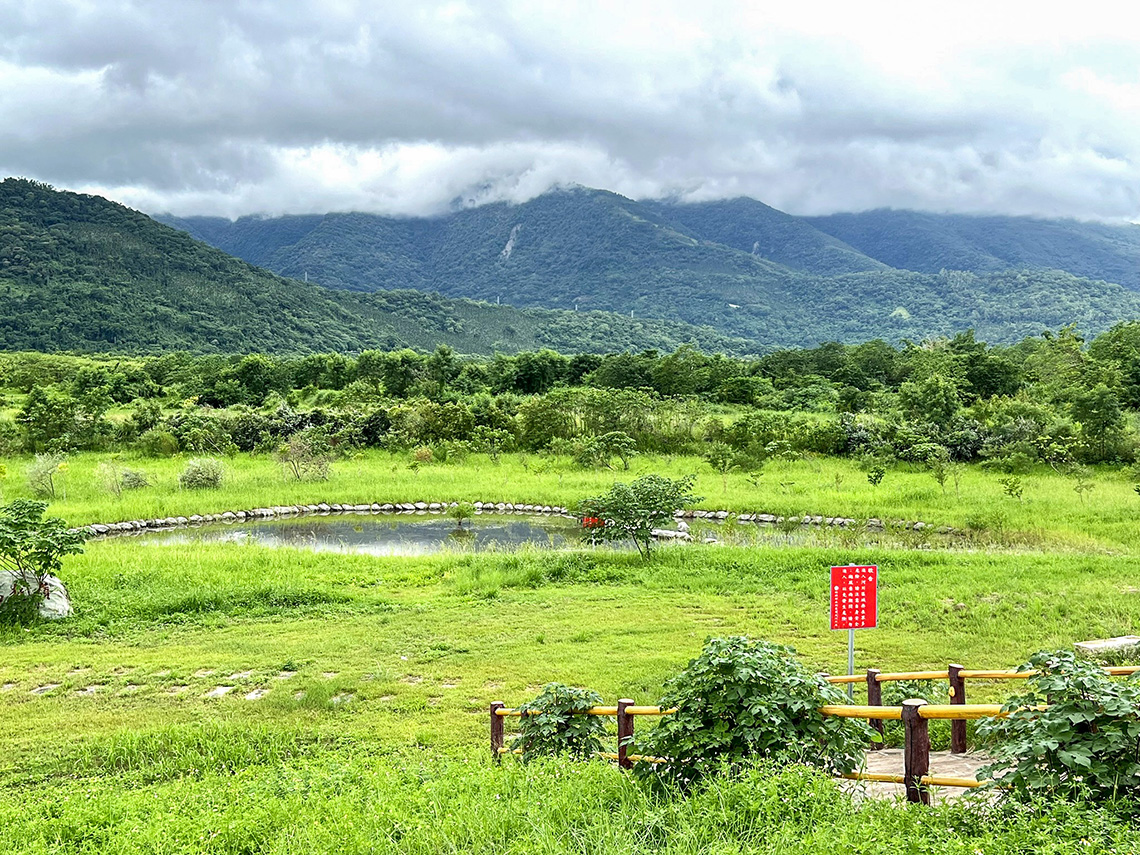
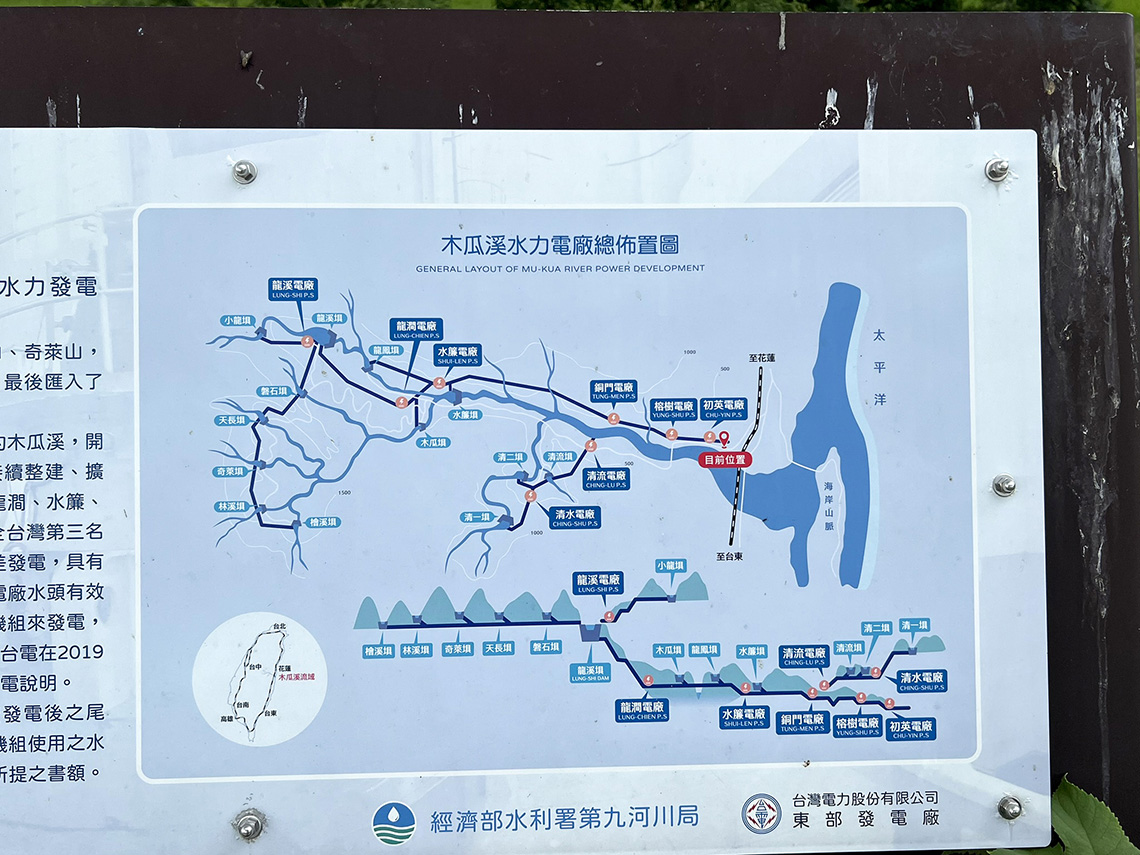
生態環的設計者將海洋生物用藍色呈現,陸地生物則以綠色表示,凸顯各種生物的立體特徵。這座生態環象徵了木瓜溪的自然故事,展現了森林、河川與海洋的生態連結。護岸的高灘地上另設有一座台灣形狀的生態池,象徵初音作為「能高越嶺道」東部起點的歷史意義。能高越嶺道原為原住民的遷徙和交易道路,連接中央山脈的東西兩側。日治時期,這條道路被整治為警備道路,成為台灣第一條東西橫貫公路,全長81.3公里,連接東部的初音與西部的霧社。這條道路不僅具有歷史意義,還成為1950年代台電輸送東部電力到西部的重要路徑。
04番仔挖二號
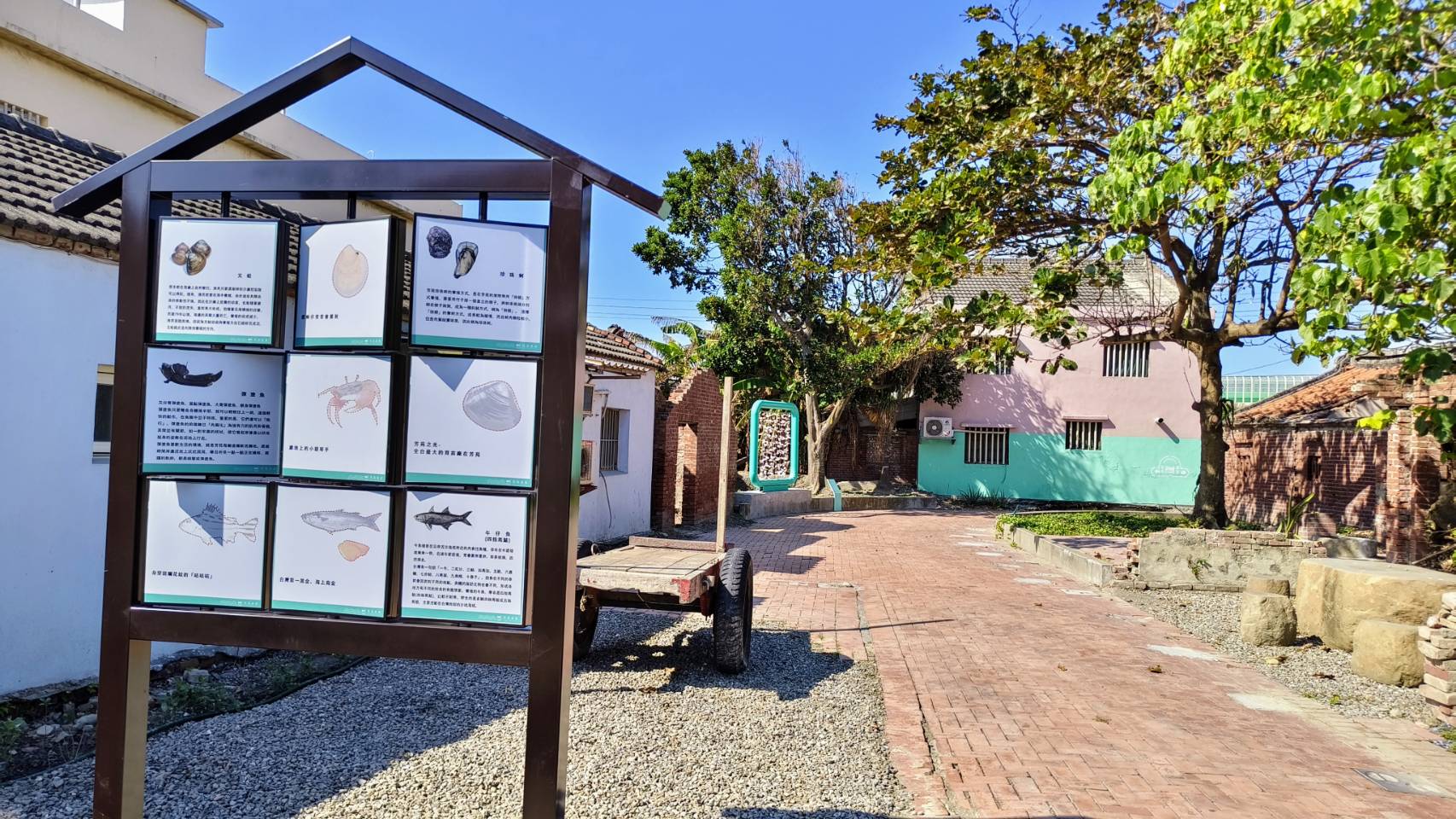
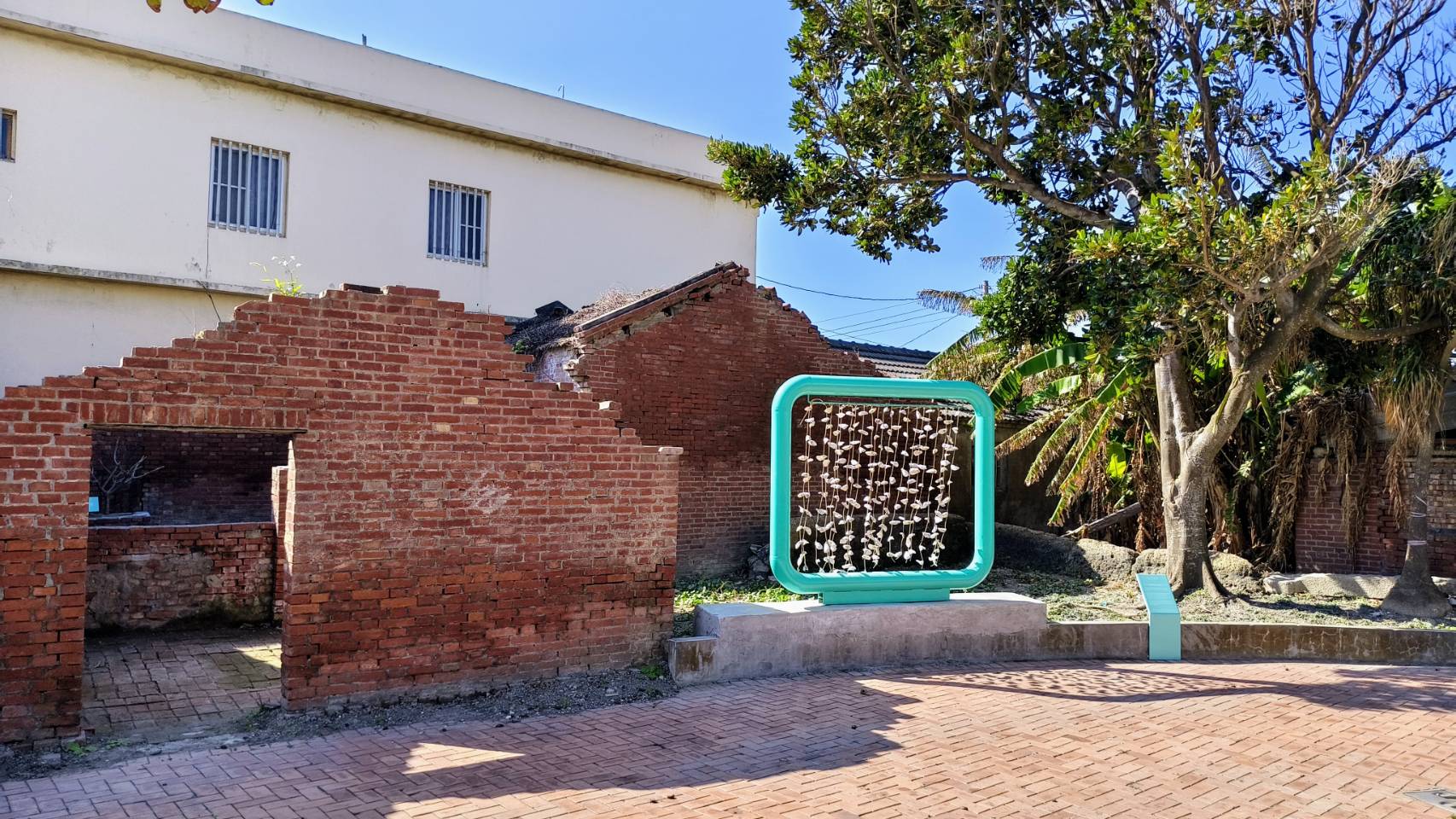
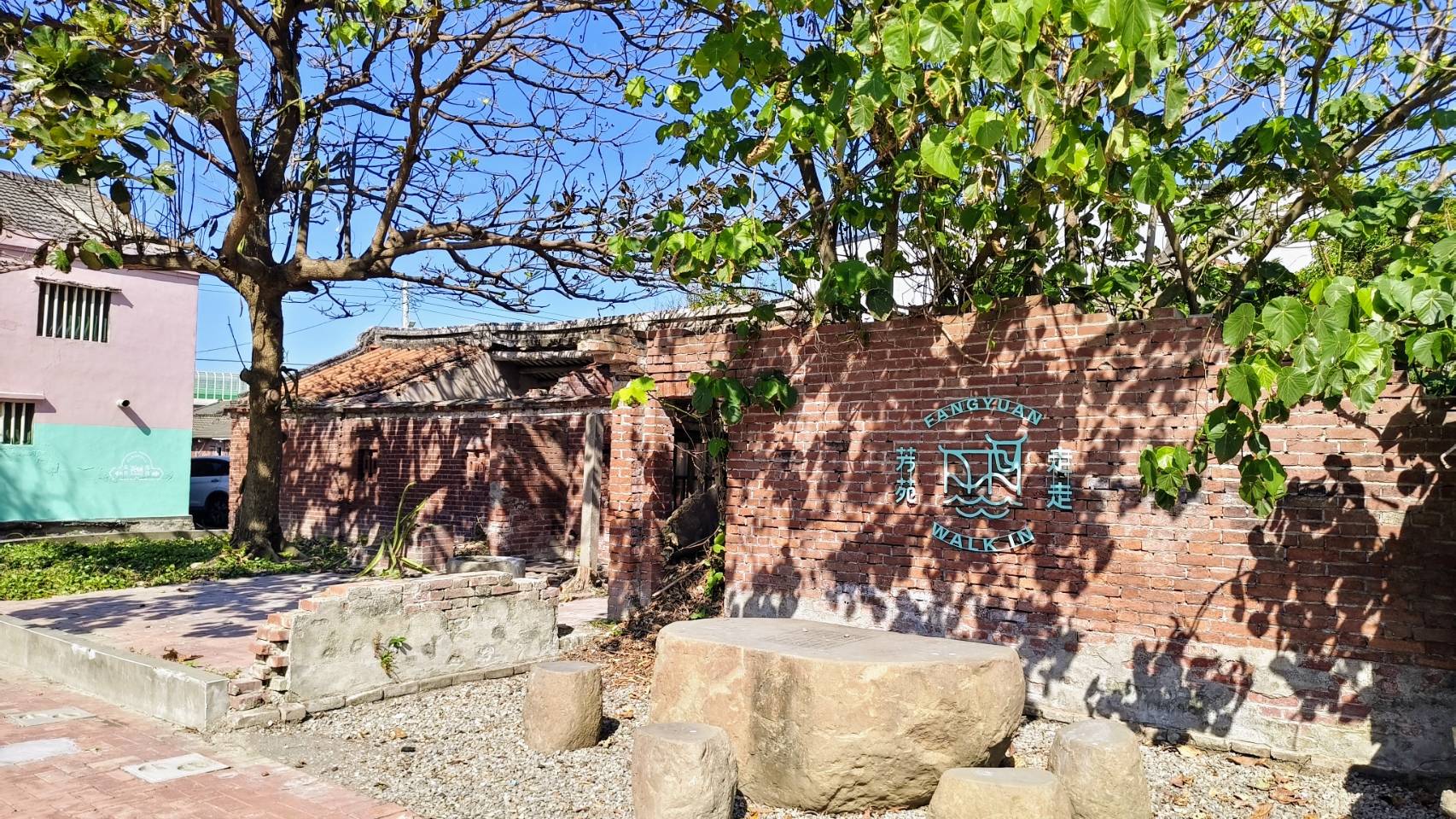
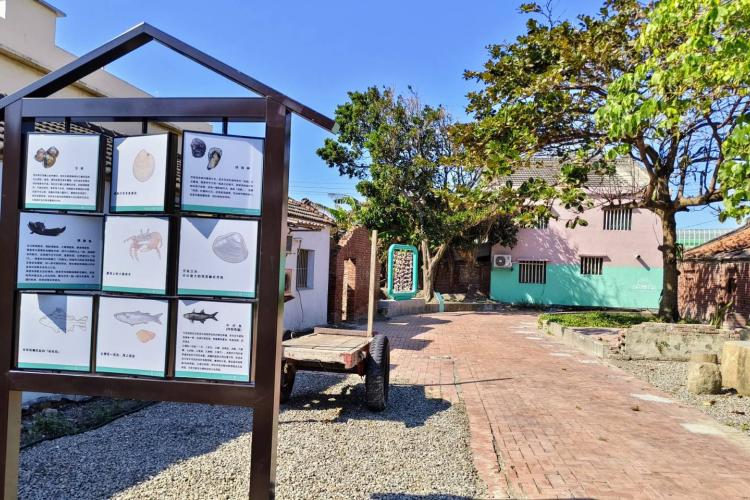
蚵寮是在地民衆早期聚會聊天休憩的地方,利用既有的場域空間打造户外解說空間,搭配藝術家的作品。以在地物種解說及芳苑產業翻板互動,有機會還能看到坐在蚵寮下阿姨們剝蚵,更能有深刻的體驗記憶。賦予蚵寮新氣象,除提供在地民衆新的休憩點之外,也可以給遊客重現蚵寮風情。
05在我熟悉的文化我是巨人 In My Familiar Culture, I Am a Giant
"藝術家:杜寒菘 /魯凱族
Artist: Pacake Taugadhu /Rukai
2017
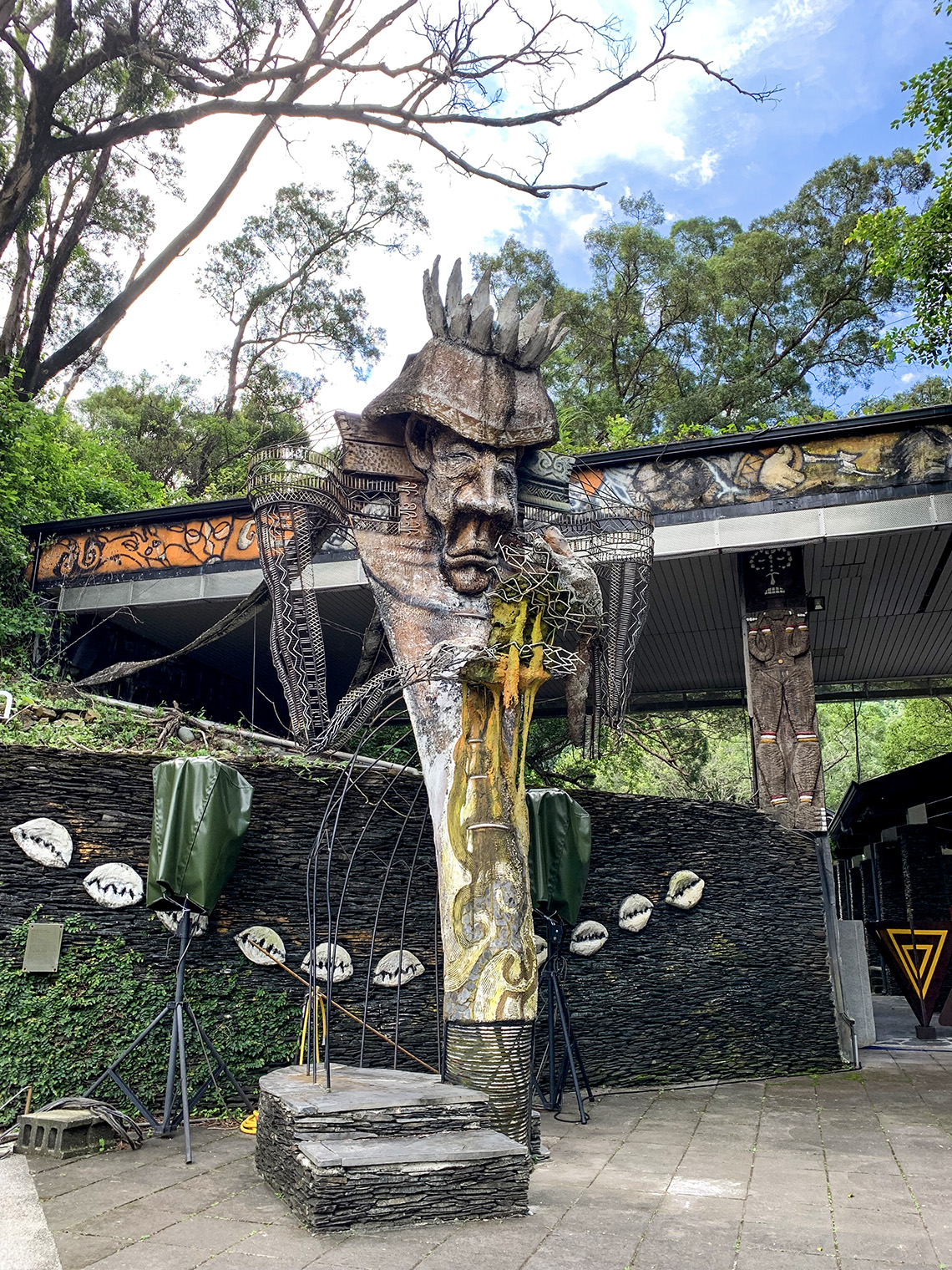
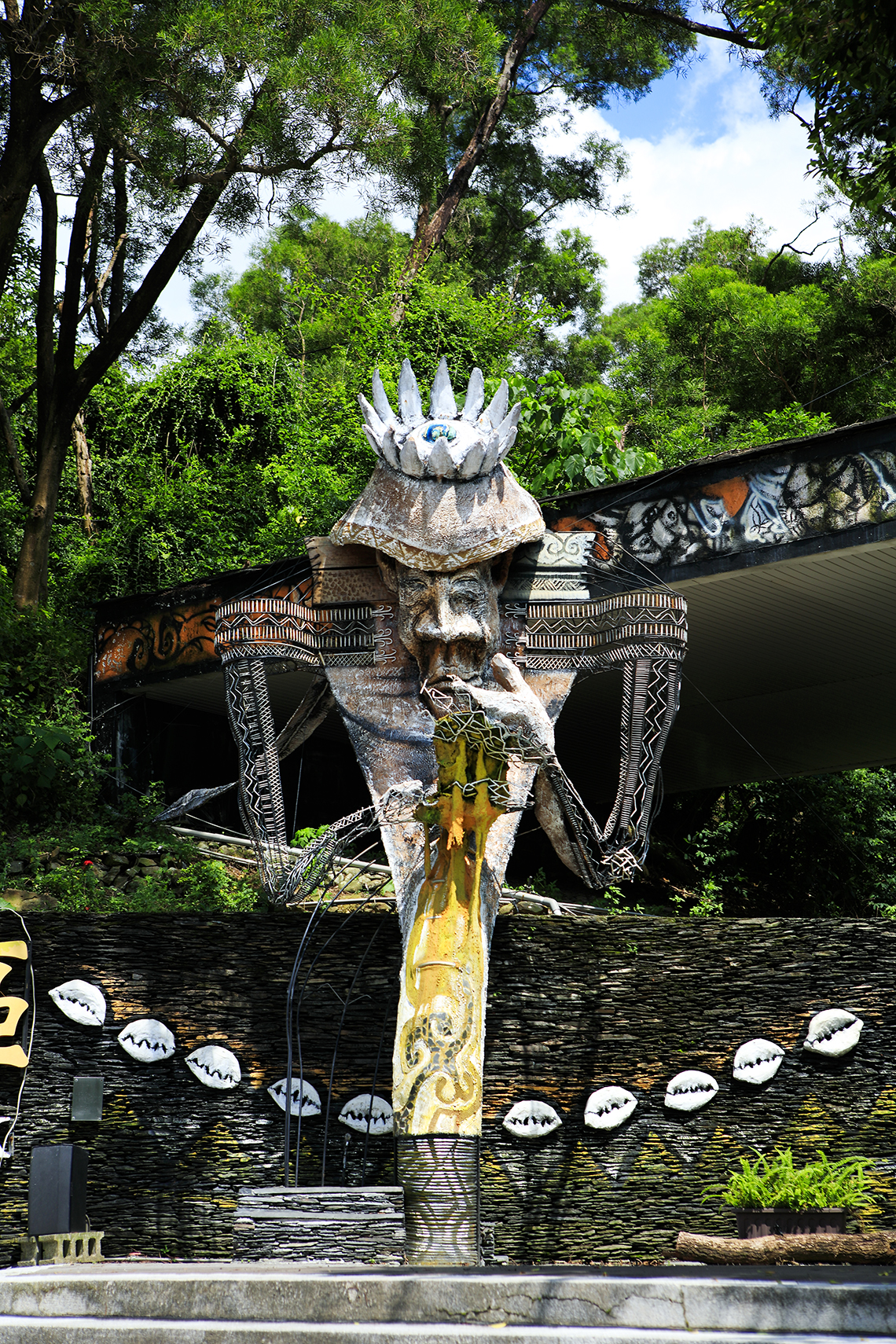
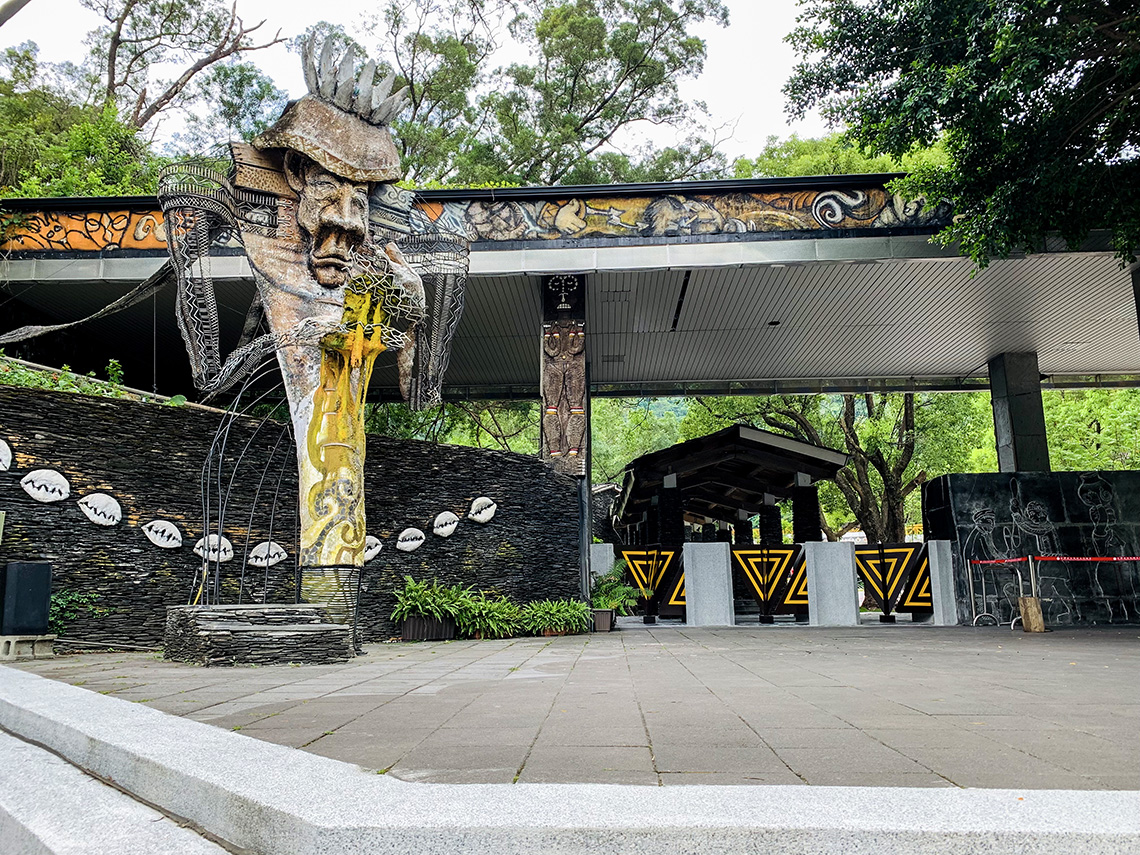
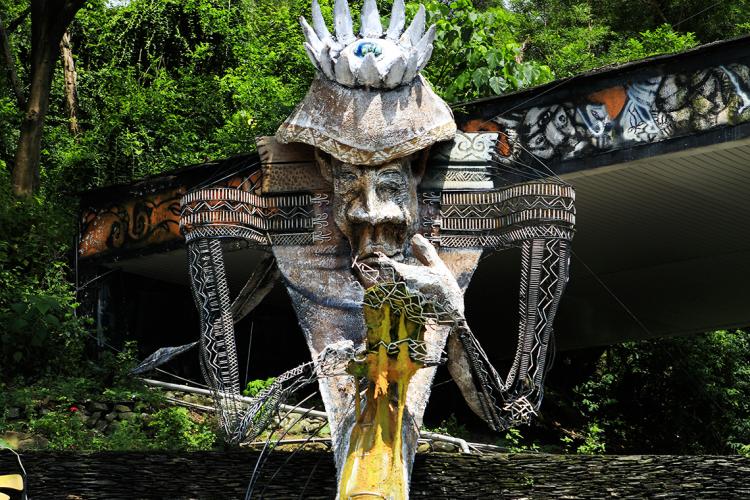
《在我熟悉的文化裡,我是巨人》位在園區大門口,巨大複合媒材作品非常亮眼,作品底座的檯階,是方便不分族群的朋友們上前和身上刺滿傳統圖案、象徵文化的長輩合影,意味著若不暸解自的文化與根在那裡,將更加顯露出自身的渺小。
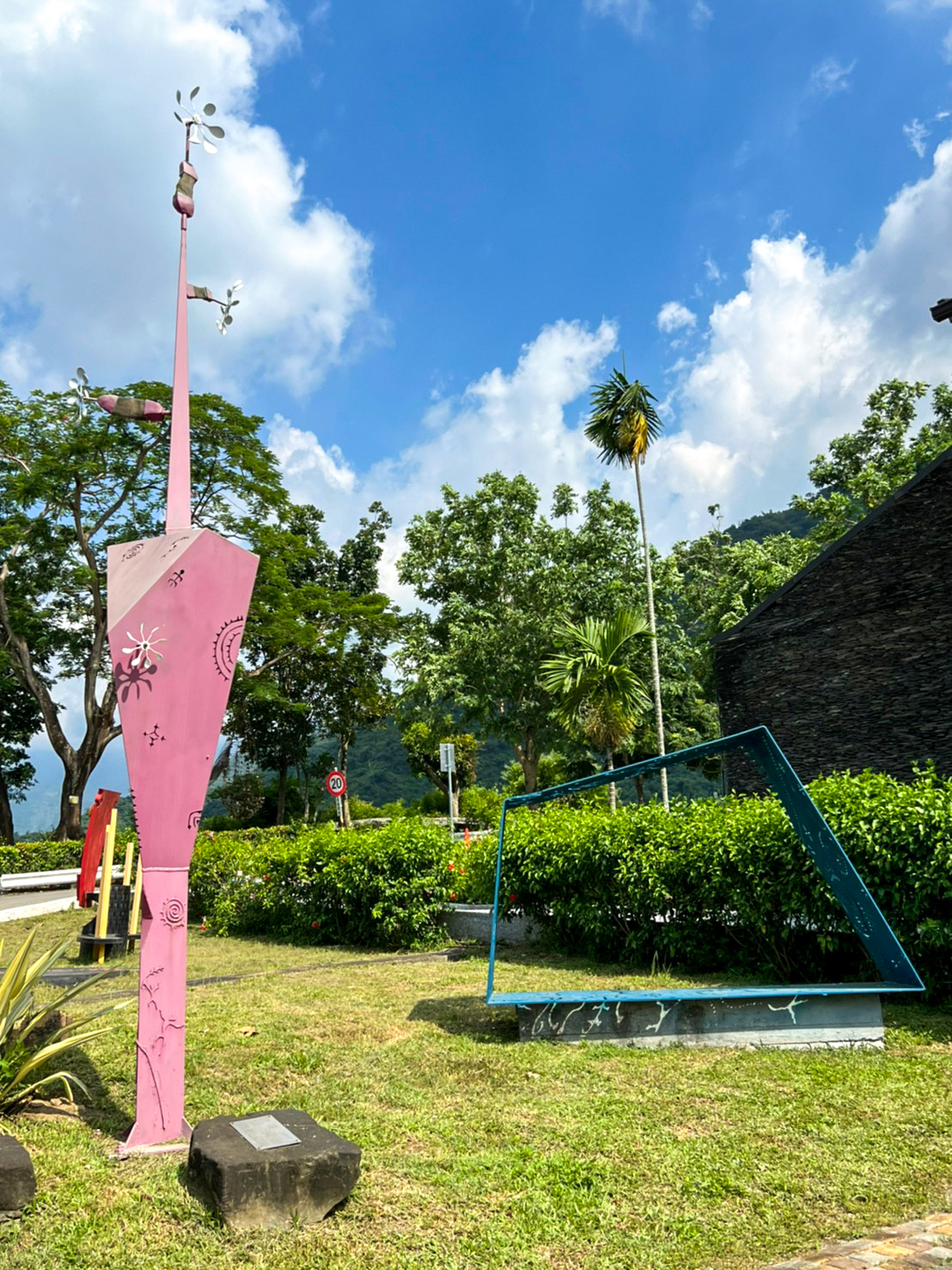
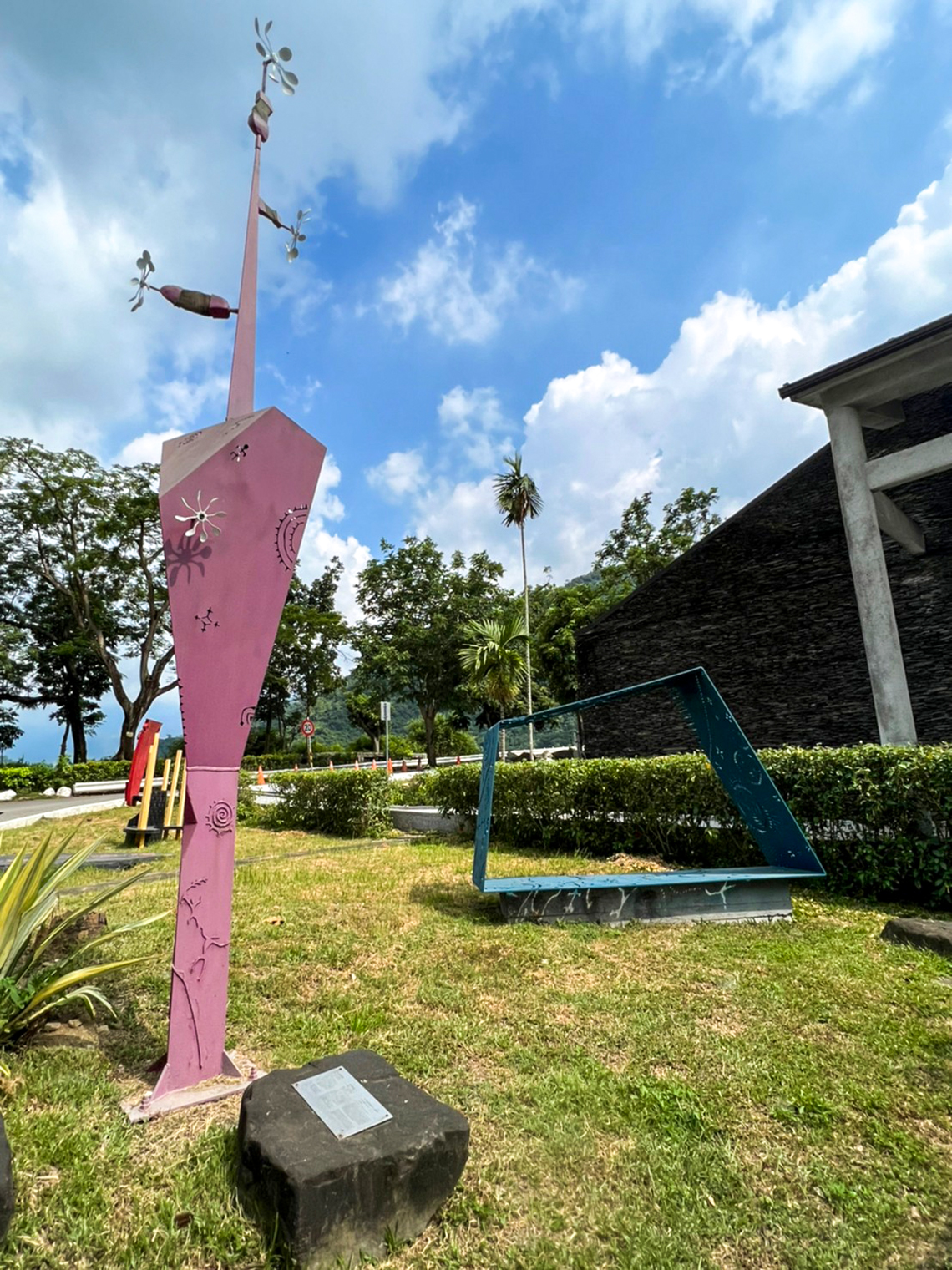
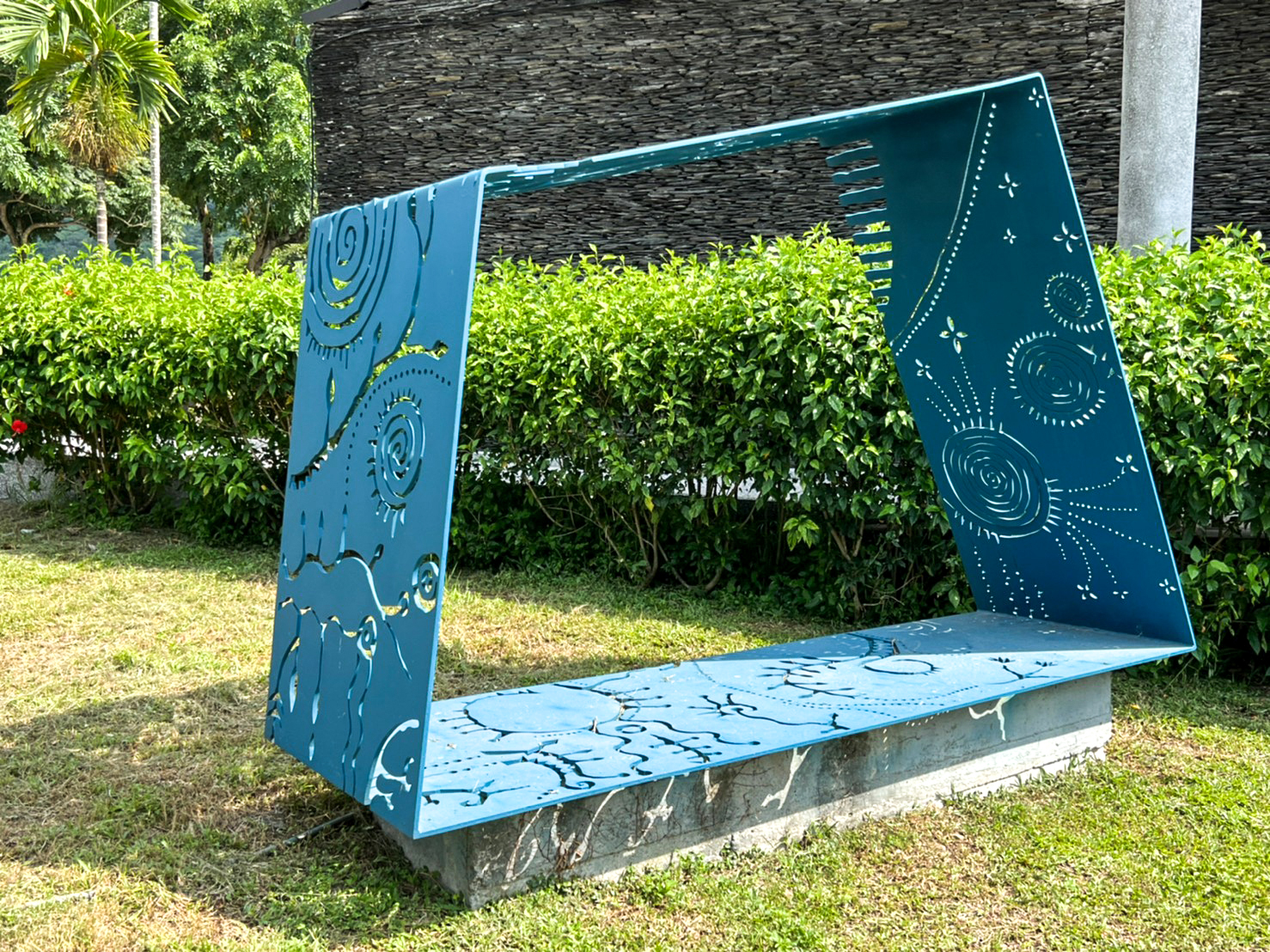
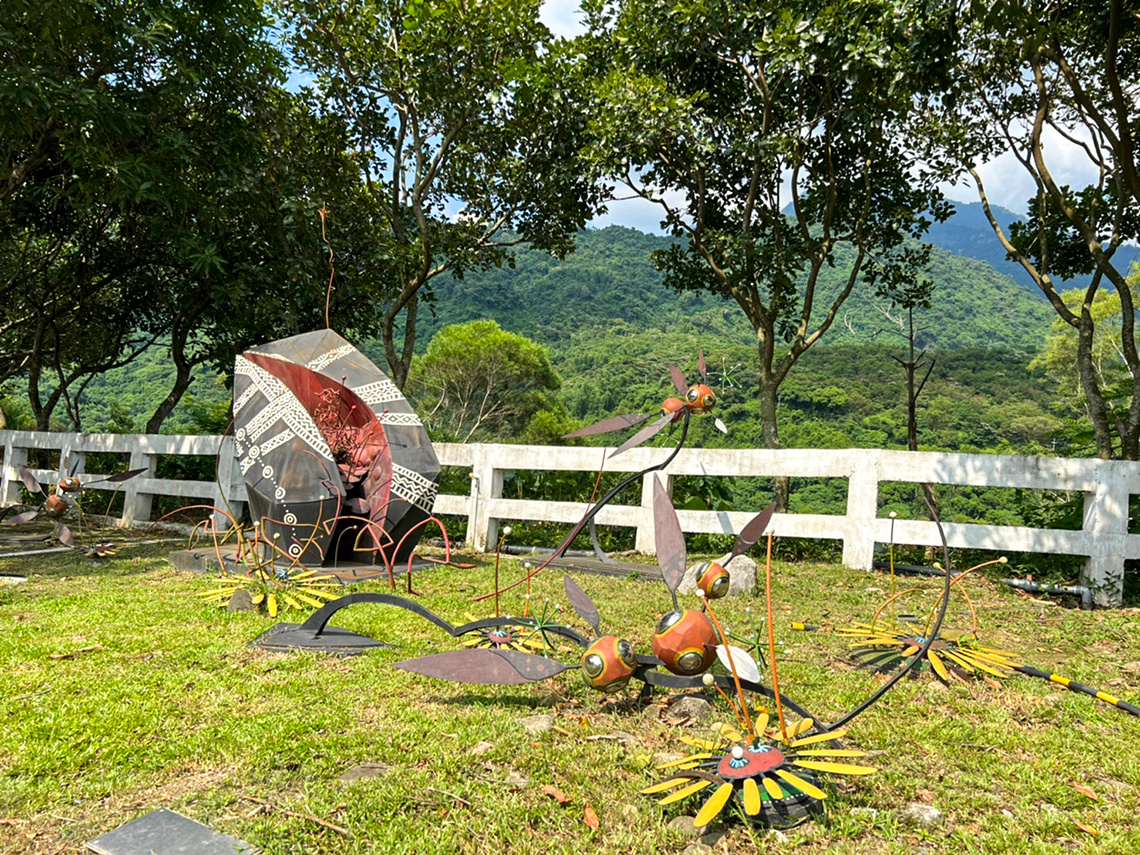
""In My Familiar Culture, I Am a Giant"" is located at the exit gate of the park. The huge composite media work is very eye-catching. The steps at the base of the artwork are for friends of all ethnic groups to come forward and take a picture together with the elder with a traditional tattoo on his body. This image symbolizes that if you don't understand your own culture and roots, you will be seen as even more insignificant.
"
06 看頭前藝術季
06 Look Ahead Art Festival
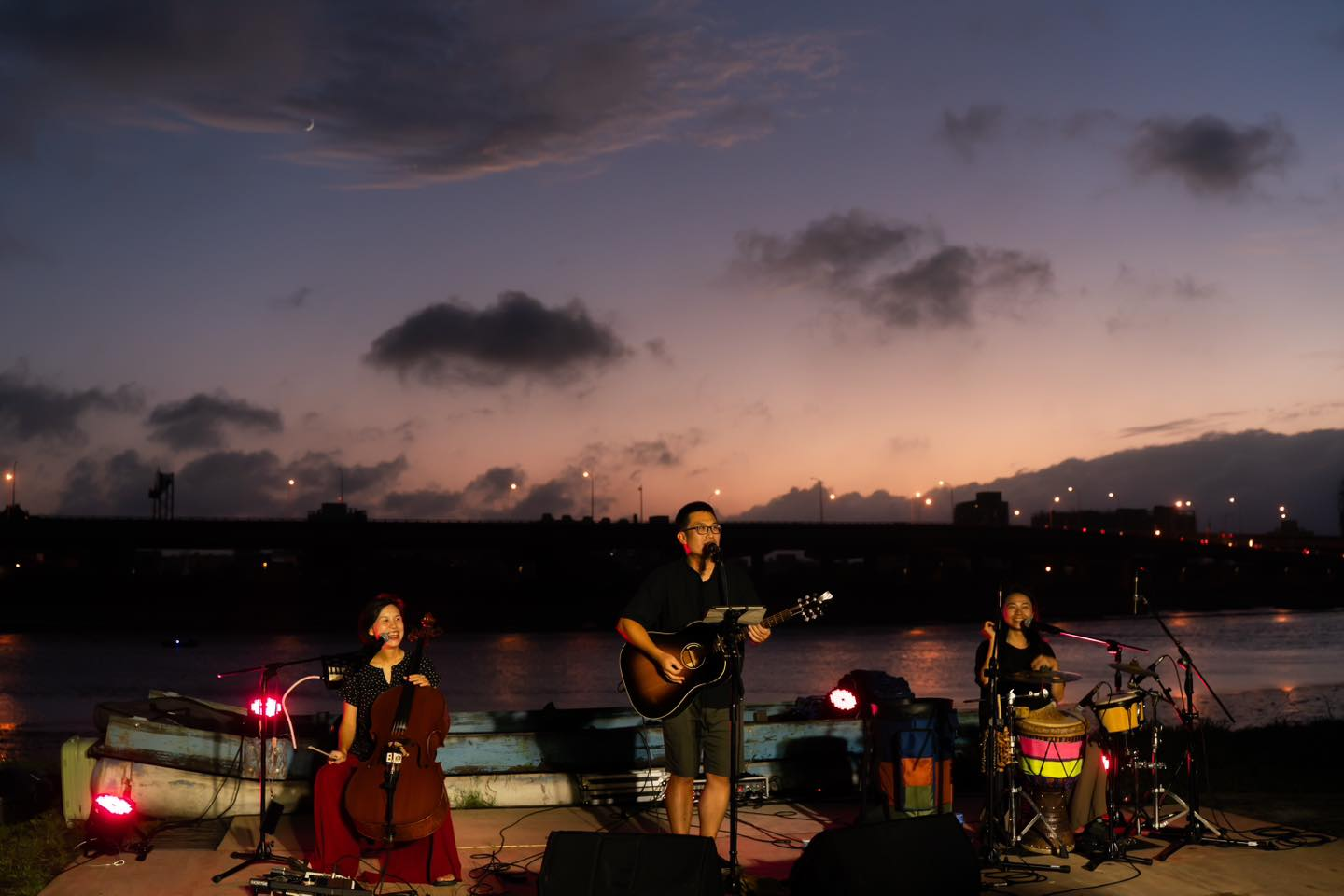
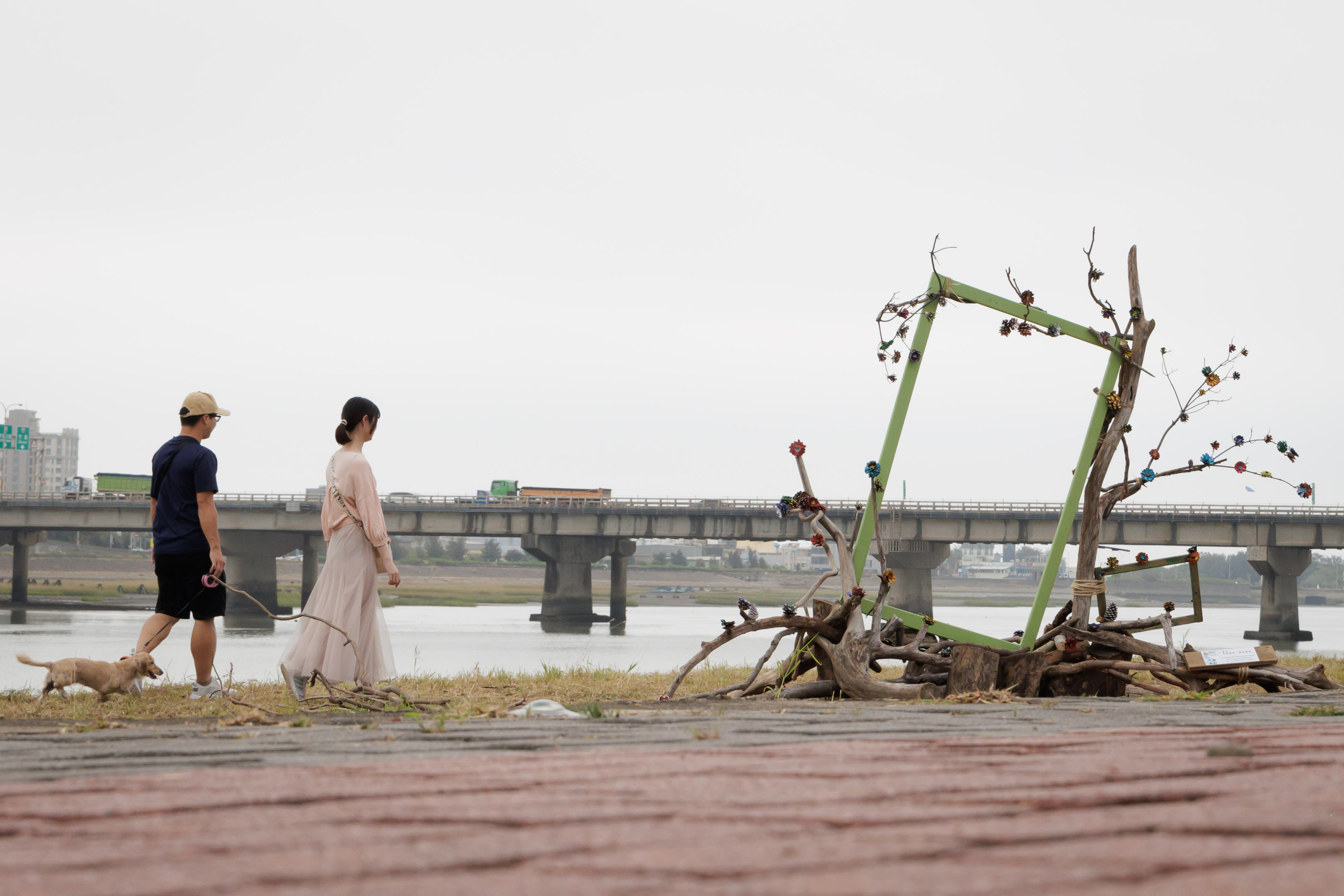
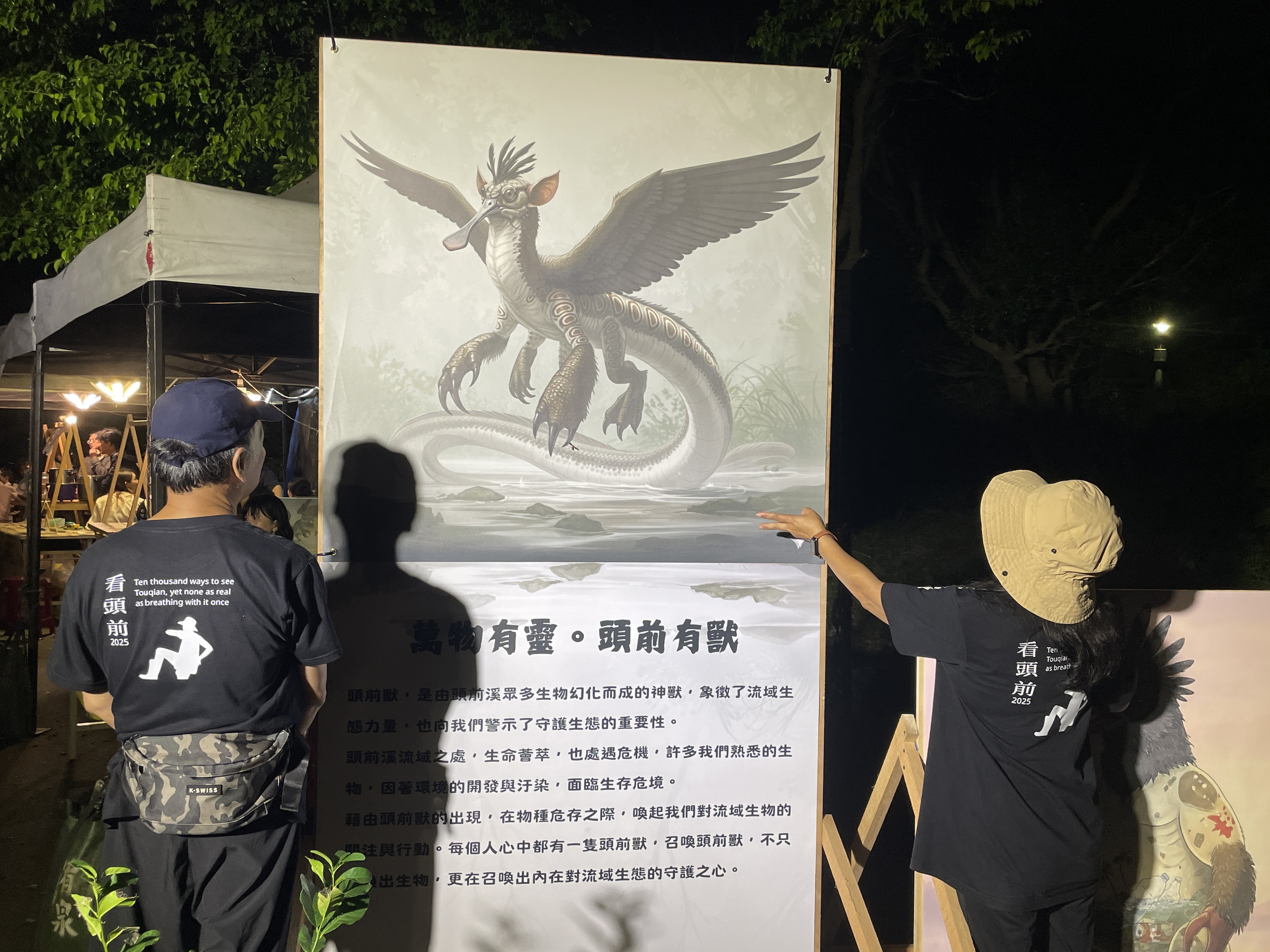
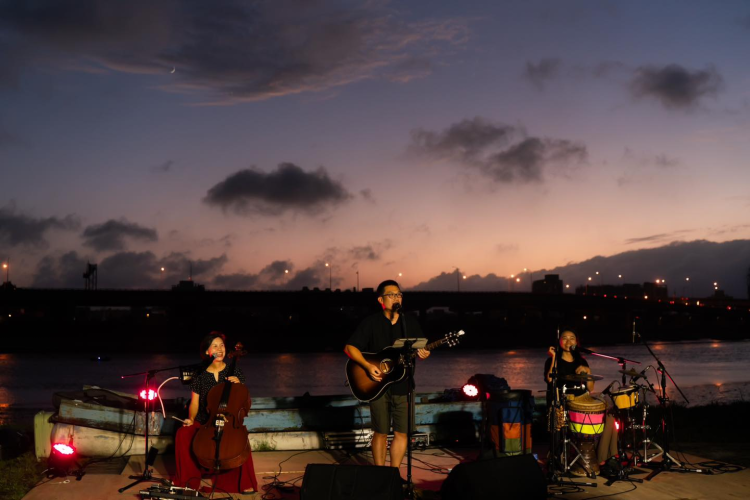
由島港豐巢團隊總籌,在舊港島上的頭前溪畔舉辦了議題性「看頭前」藝術季。藉由環境藝術裝置共同創作、論壇、走讀、溪畔音樂會,讓島民步出家門,讓公眾親臨溪畔, 讓千百隻眼睛匯集,單純地從記住一條溪流的美開始。
Organized by the Dao Gang Feng ChaoTeam, the "Look Ahead" Art Festival was held on the banks of Touqian Creek on Jiu-Gang Island. Through collaborative creation of environmental art installations, forums, walking tours, and riverside concerts, the festival encouraged islanders to step out of their homes, allowed the public to visit the creek, and drew thousands of eyes to simply remember the beauty of a stream.
08祕密花園 Secret Garden
"藝術家:安聖惠 /魯凱族
Artist: Eleng Luluan /Rukai
2020
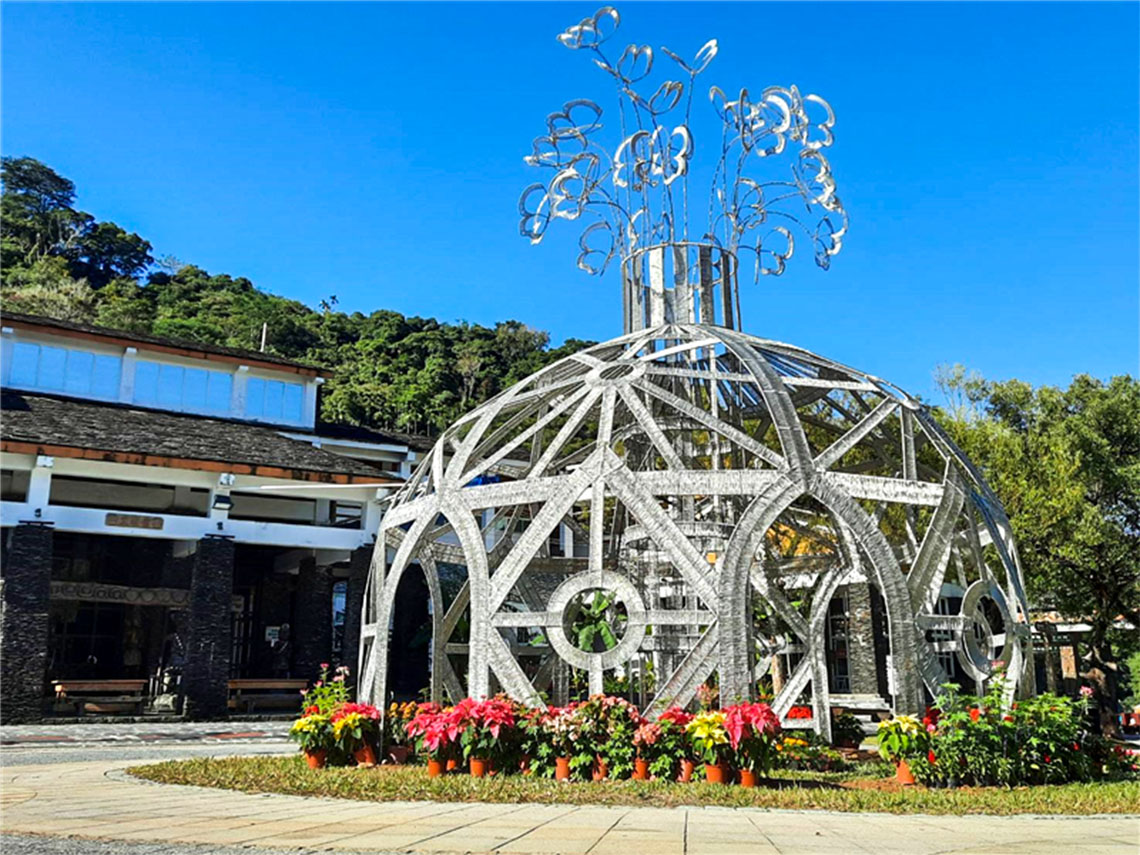
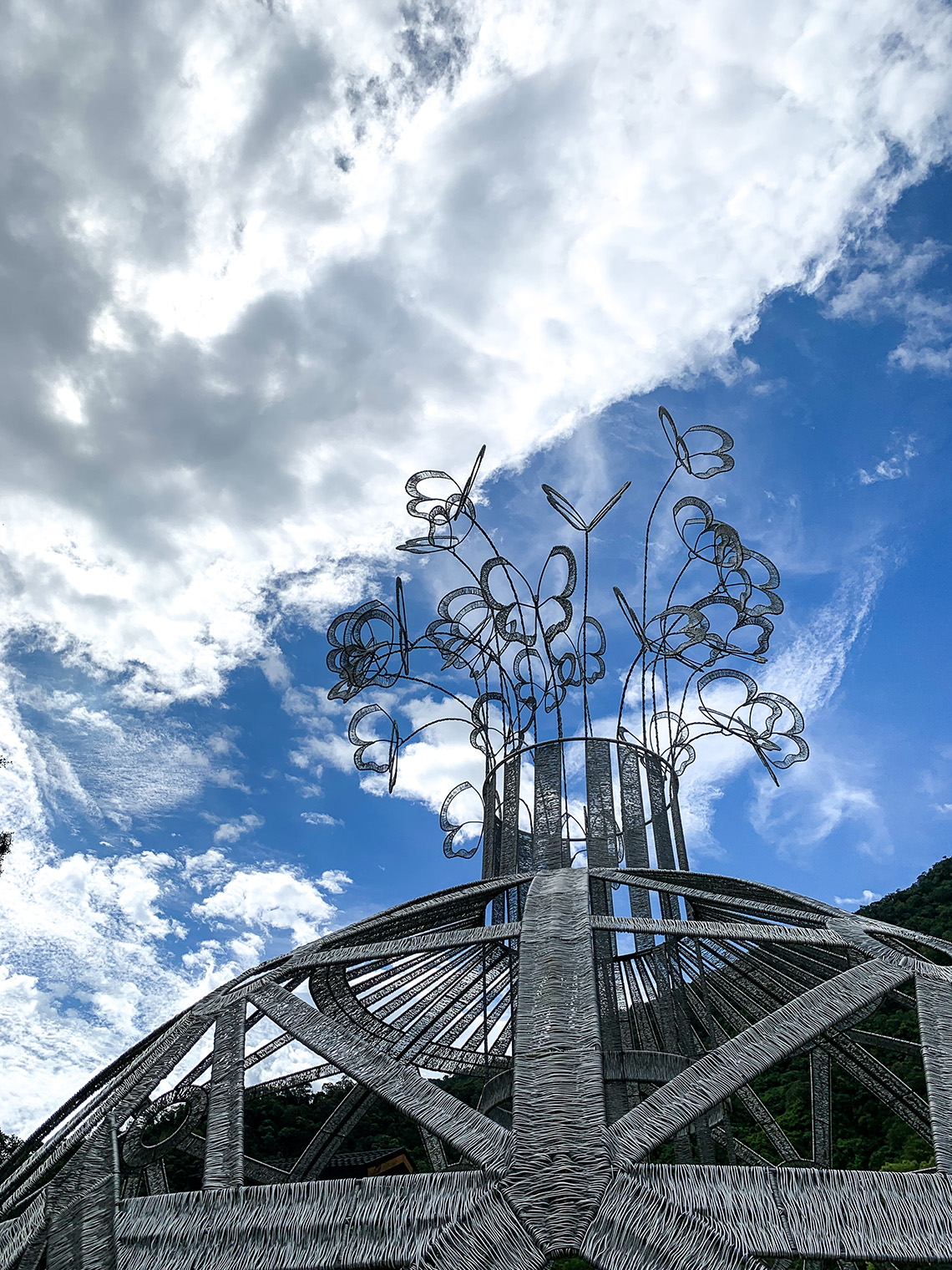
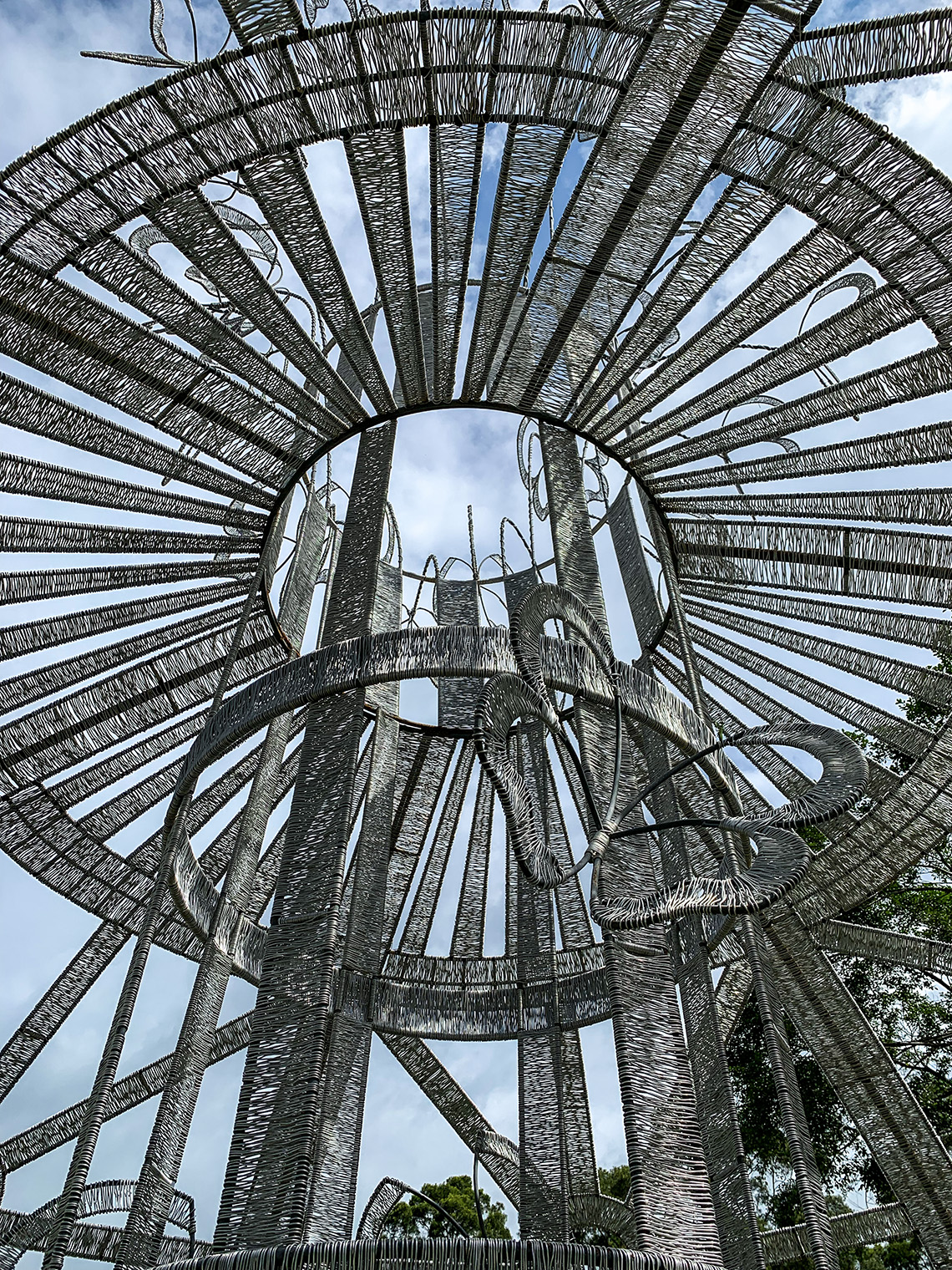
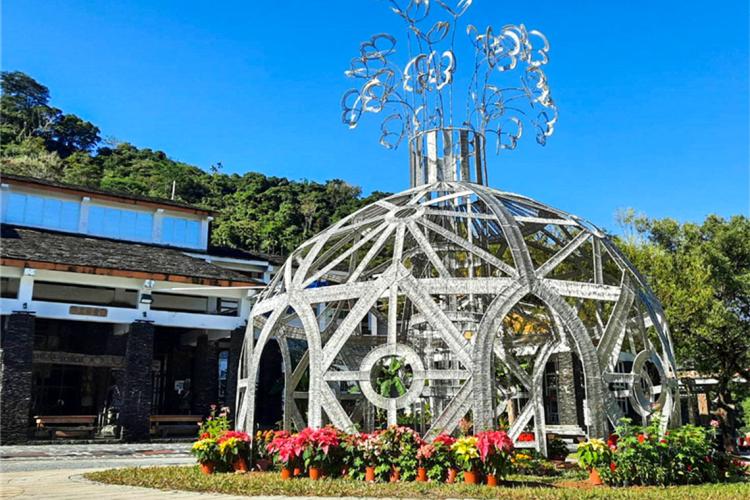
《祕密花園》佇立在進入園區最明顯的入口處,藝術家安聖惠表示,聽聞文化園區在建園以前,曾是紫斑蝶離開越冬棲地北返飛行的蝶道,每年11月到隔年3月上萬隻的紫斑蝶依循祖先的記憶,飛往茂林蝶幽谷群聚度冬。透過回憶紫斑蝶飛行途徑,以及蝴蝶在排灣與魯凱文化特殊意涵下,想傳達人類與大自然的「共生」關係,在交互作用之下,影響原住民的思維與大自然生態的規律,創造出的文化象徵與意義。
""Secret Garden"" stands at the most obvious entrance in the park, where it used to be a migration path for the euploea butterflies to fly north, leaving their wintering habitat before the cultural park was constructed. Every November to March, millions of euploea butterflies follow the memory of their ancestors, and fly to the Maolin Eco Park for the winter. By recalling the flight path of the butterfly and the special connotation of the butterfly in Paiwan and Rukai culture, the artist wanted to convey the ""symbiotic"" relationship between human beings and nature. "
09藝術牆
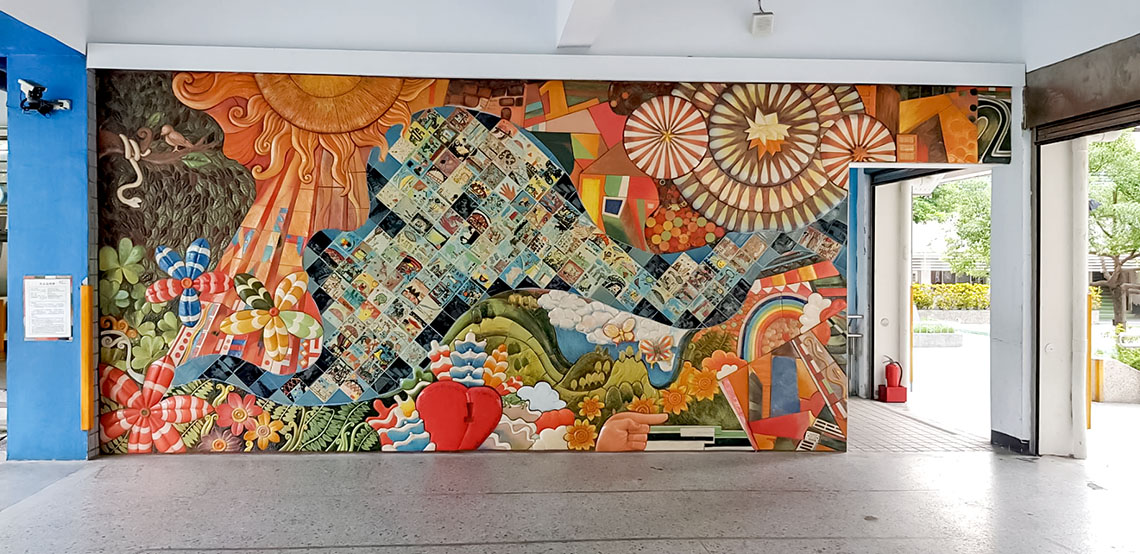
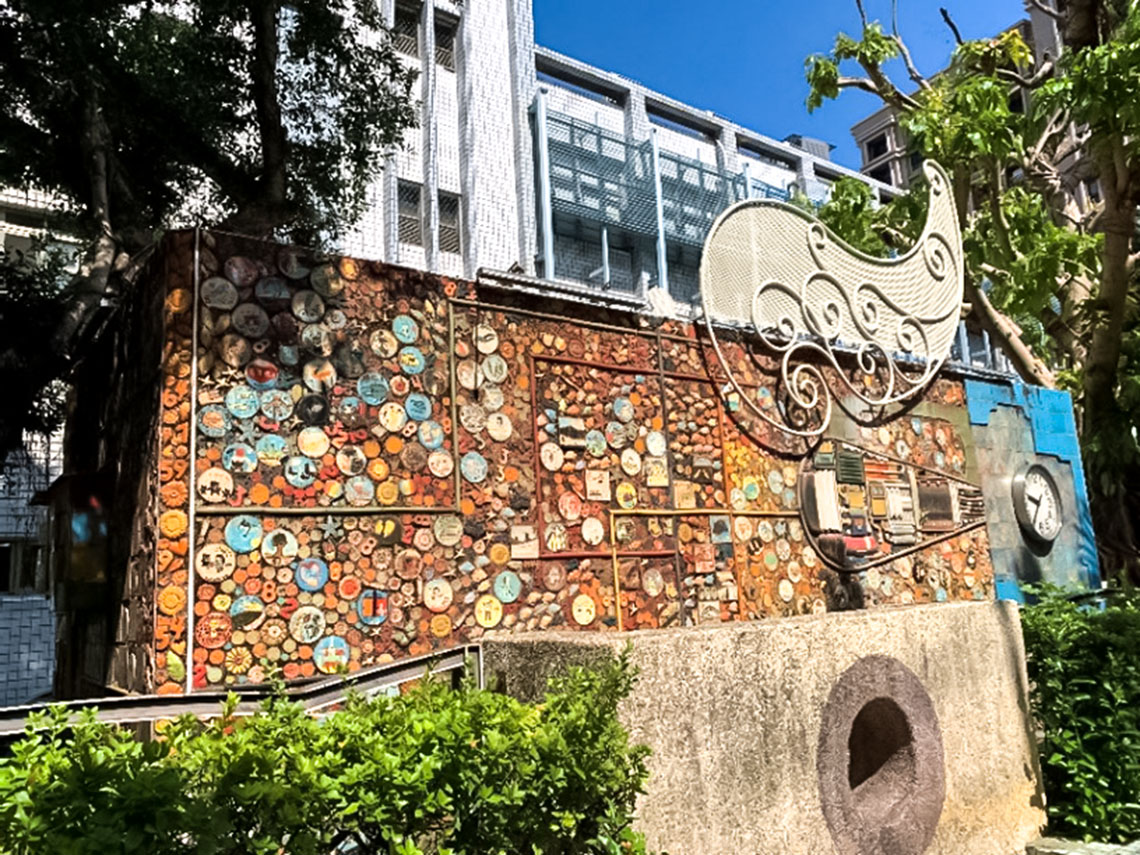
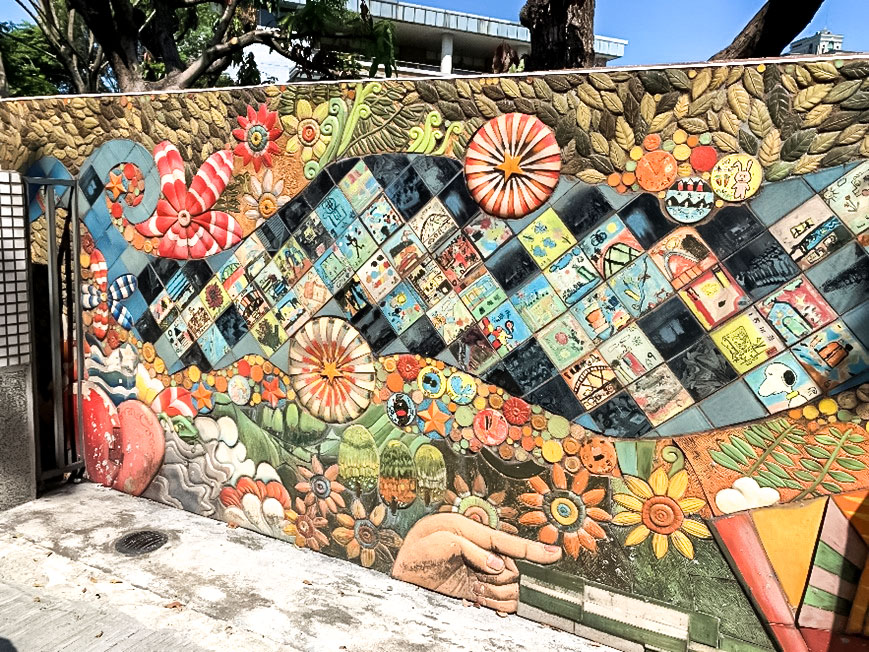
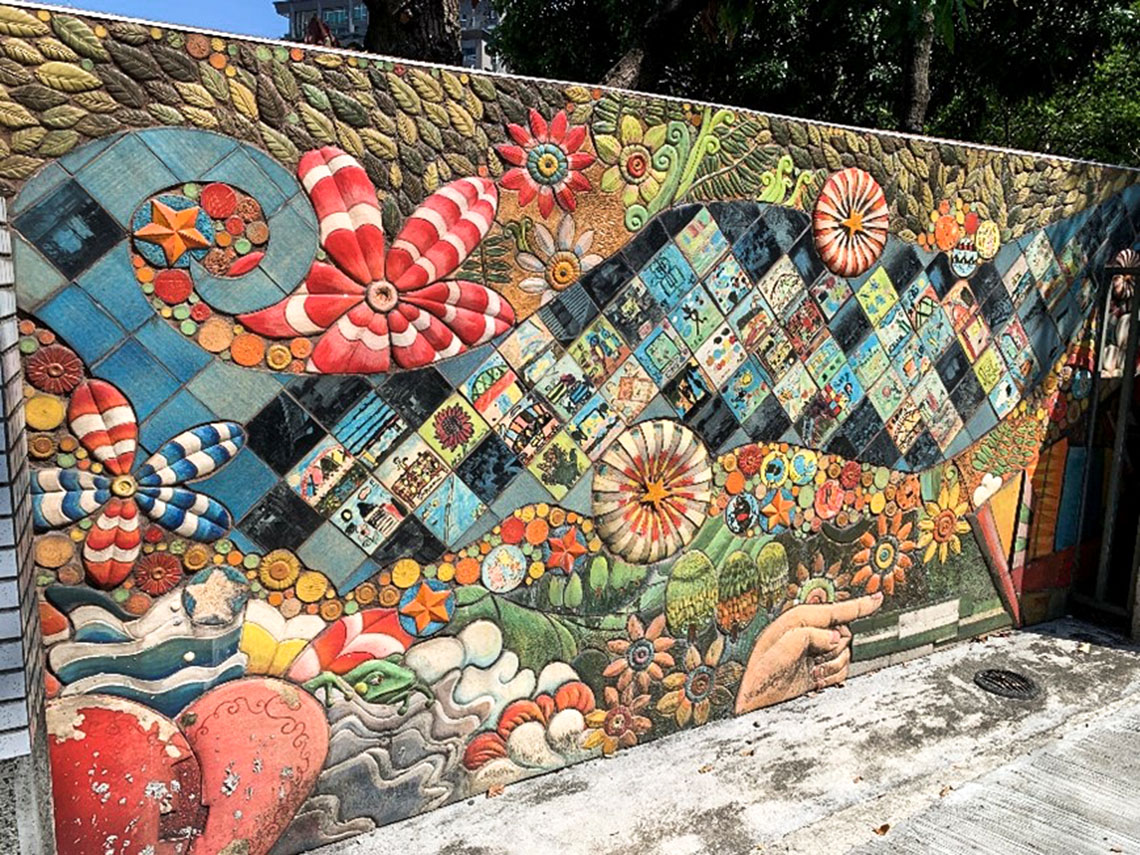
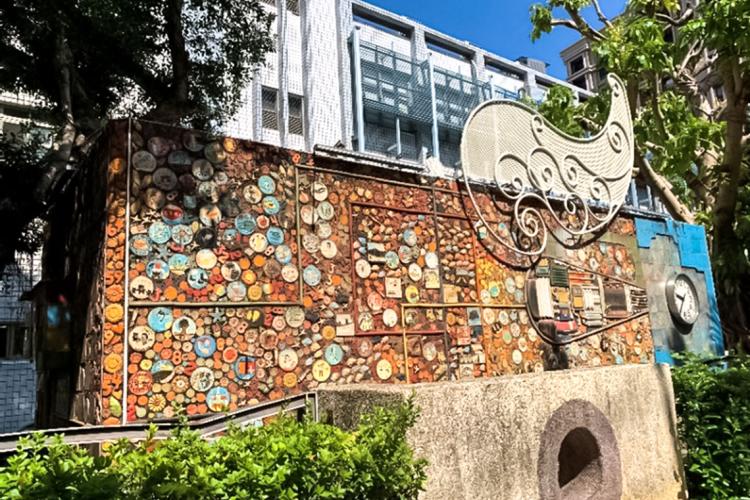
走近景文街景美國小,映入眼簾的便是景美國小圍牆邊,兩座大型的藝術作品,這是景美國小為了推廣鄉土教育,讓孩子了解家鄉的地理環境和人文,於2012年聘請藝術家黃耿茂先生,利用景美街48號古厝拆下來的舊建築物件,透過藝術家的獨特眼光,以景美溪和當地居民的互動關係為創作理念,讓舊建物賦予新生命,創作了四件公共藝術作品,分別為:時光的探索、生命的禮讚、未來的哩程、生命的搖籃。
(一)時光的探索--位於景美國小校門口及前庭左側蓄水池
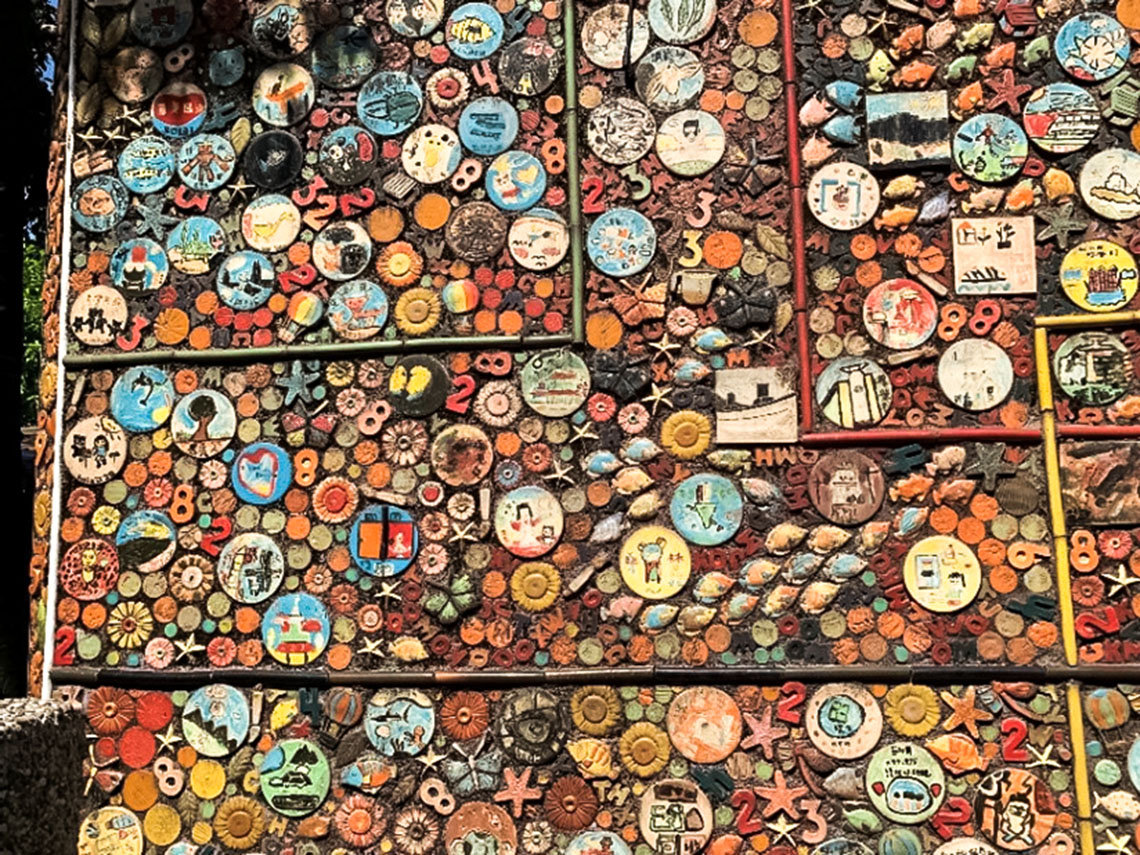
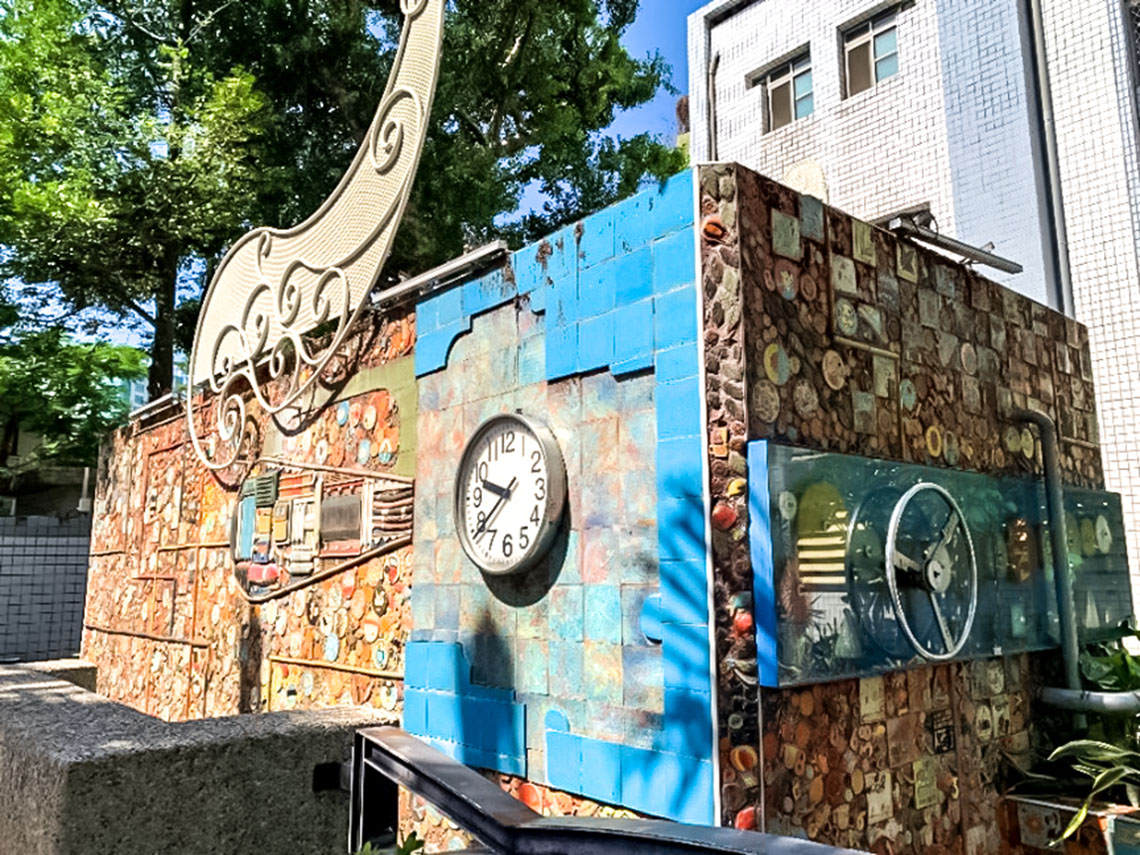
此件作品以豐富想像力結合景美國小師生的陶板創作,融入標點符號的教學及自然科學教育的造型和圖像,色彩繽紛,建構出多元且具童趣的藝術作品,並在正面加上大型時鐘,側面則有可以轉動的齒輪,讓原本以功能性為主的蓄水池披上藝術新裝,呈現出新舊時光互動的探索軌跡,耐人尋味。
(二)生命的禮讚--開道碑後方牆面
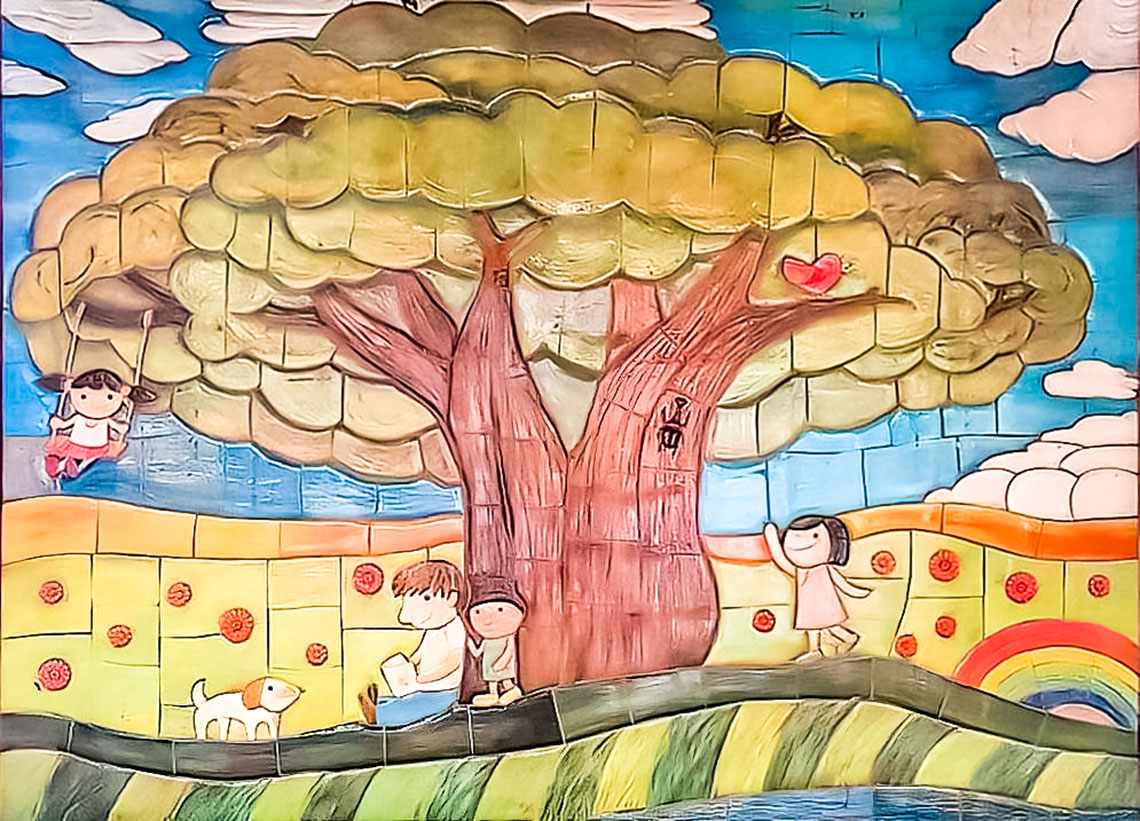
此藝術品設計理念延伸自鄉土穿廊中所設置的--「生命的搖籃」。作品中將紀錄景美區生活的老照片製作成窯燒影像,結合童趣的陶版作品,黏貼在藍色蜿蜒的景美溪溪流中,宛如訴說著潺潺而流的景美溪和景美人相濡以沫的關係。而作品上多彩豔麗的花草意象圖,則是刻畫景美區有著仙跡岩等美麗的山川美景。
(三)未來的哩程--鄉土穿廊左側
此作品以一個木板浮雕影像呈現,用景美街48號老建築拆下的廢板料,重新裁切、拼組加上顏色,部分融入景美街區懷舊老照片影像,用抽象的色彩幾何方塊,展現出一座城市日夜更迭、充滿多元繽紛的景象。
(四)生命的搖籃--鄉土穿廊右側
這是一件陶板浮雕作品,創作上以土為元素,部分加入景美街48號古厝拆除的磚瓦土塊料,將廢料轉化為元素融入作品中。用來詮釋河流生命的演化,以景美溪意象轉化成時間軌跡,帶動文明的發展。中間淡藍色流動曲線是景美溪,結合景美國小師生集體創作,加上具歷史意義的景美街老照片窯燒影像,藉以表達出景美溪豐富的生命力。
參考資料:
1.臺北市公共藝術網-景美心.臺北情 Jingmei Current, Taipei Feel:https://publicart.taipei/Works_detail.aspx?id=571
2.文山社區大學文山學資訊網:https://wenshan.org.tw/wss/index.php

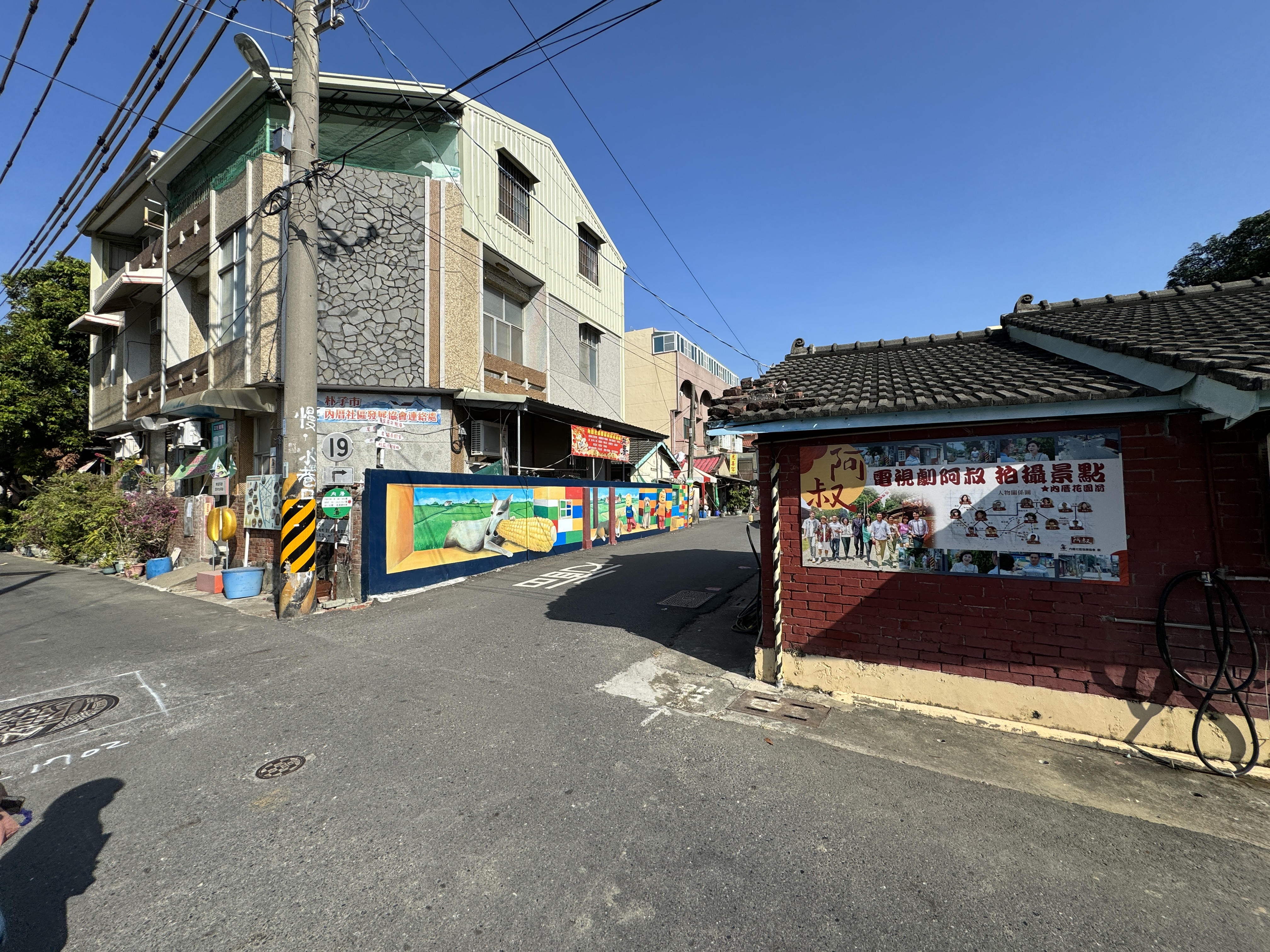
10內厝幸福花園
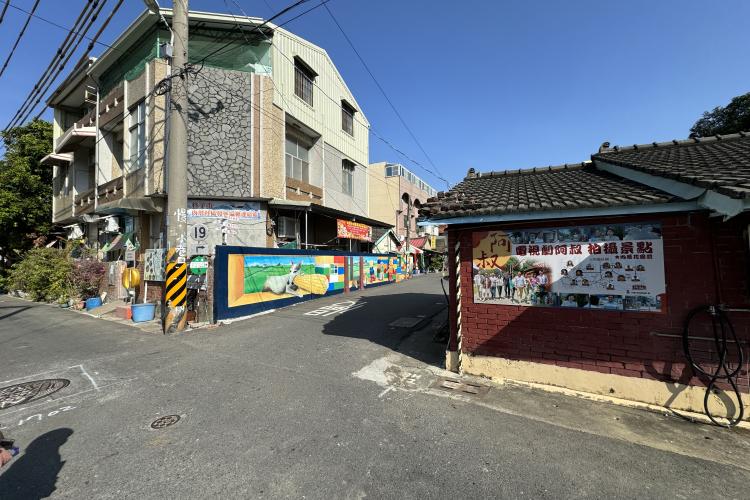
【出現集數:7】
美秀與阿峰在豆花店(嘉義桃城豆花)為了懷疑文欽與明珠有曖昧而吵架後,又到外面爭執之處(背景牆上有彩繪之三隻小狗)
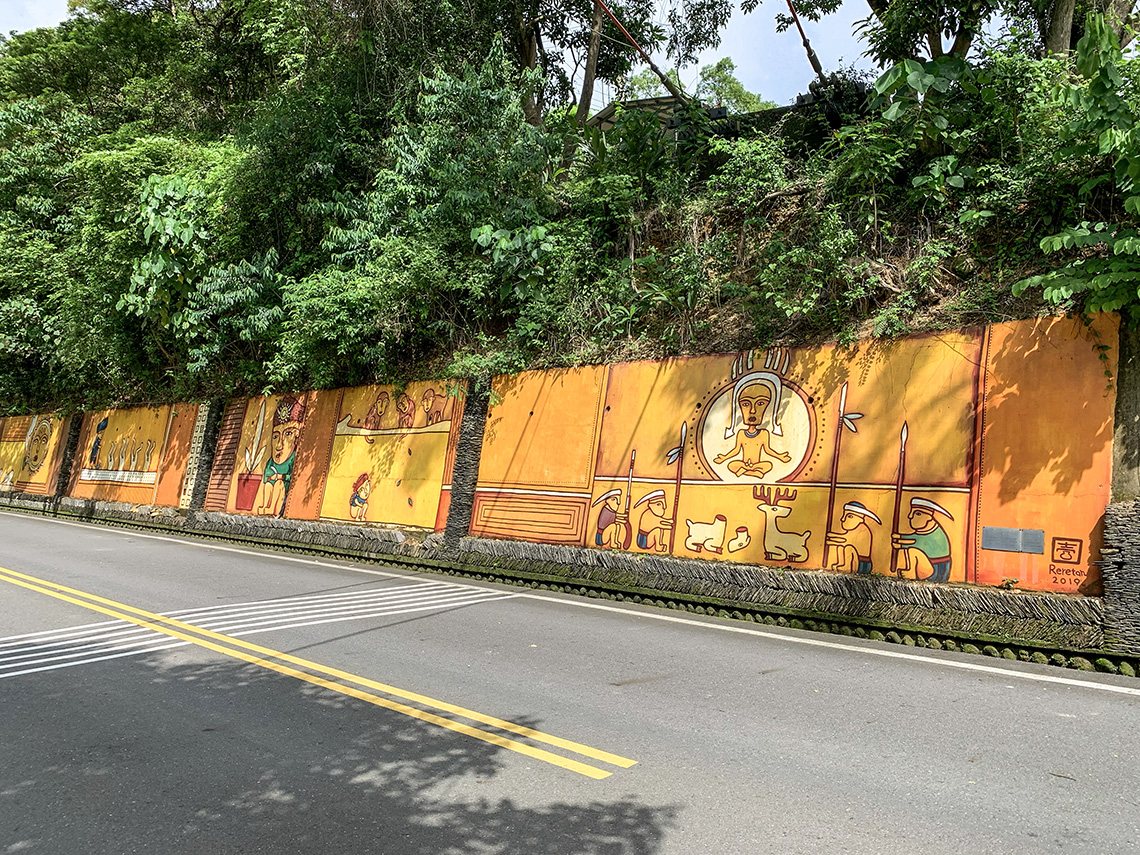
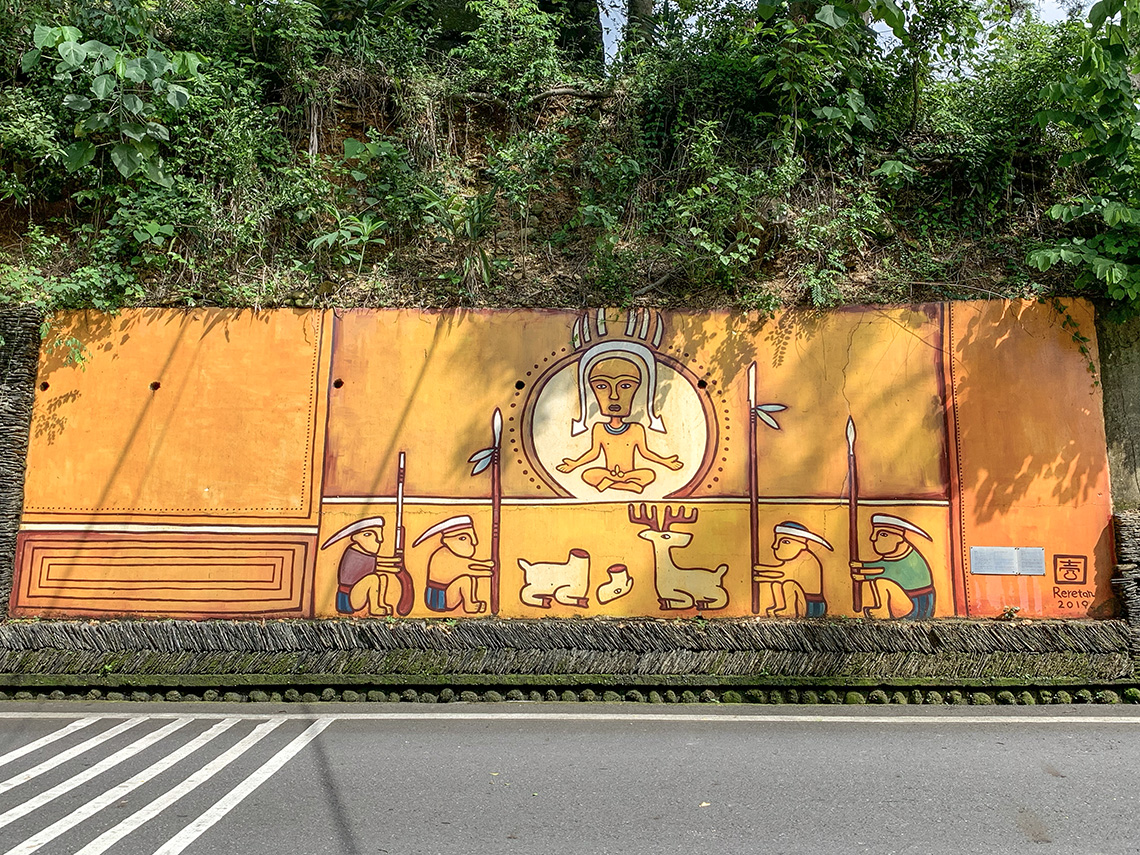
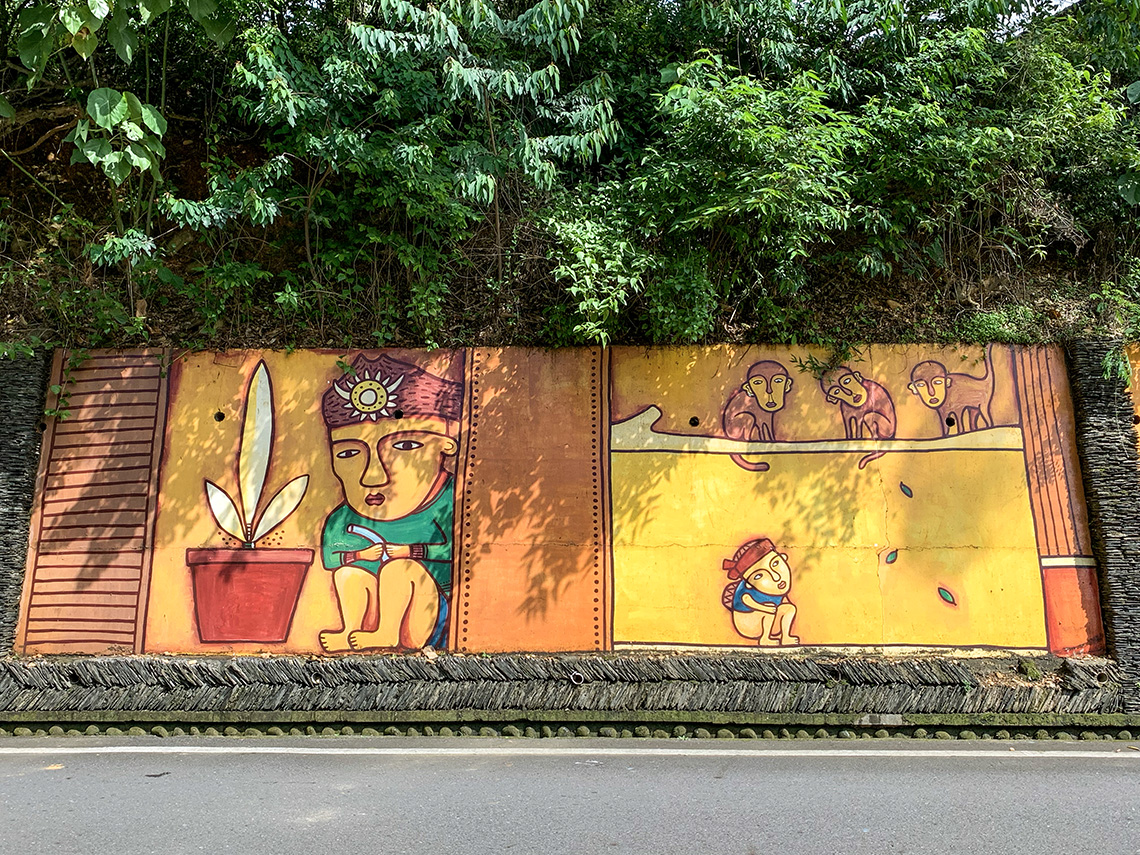
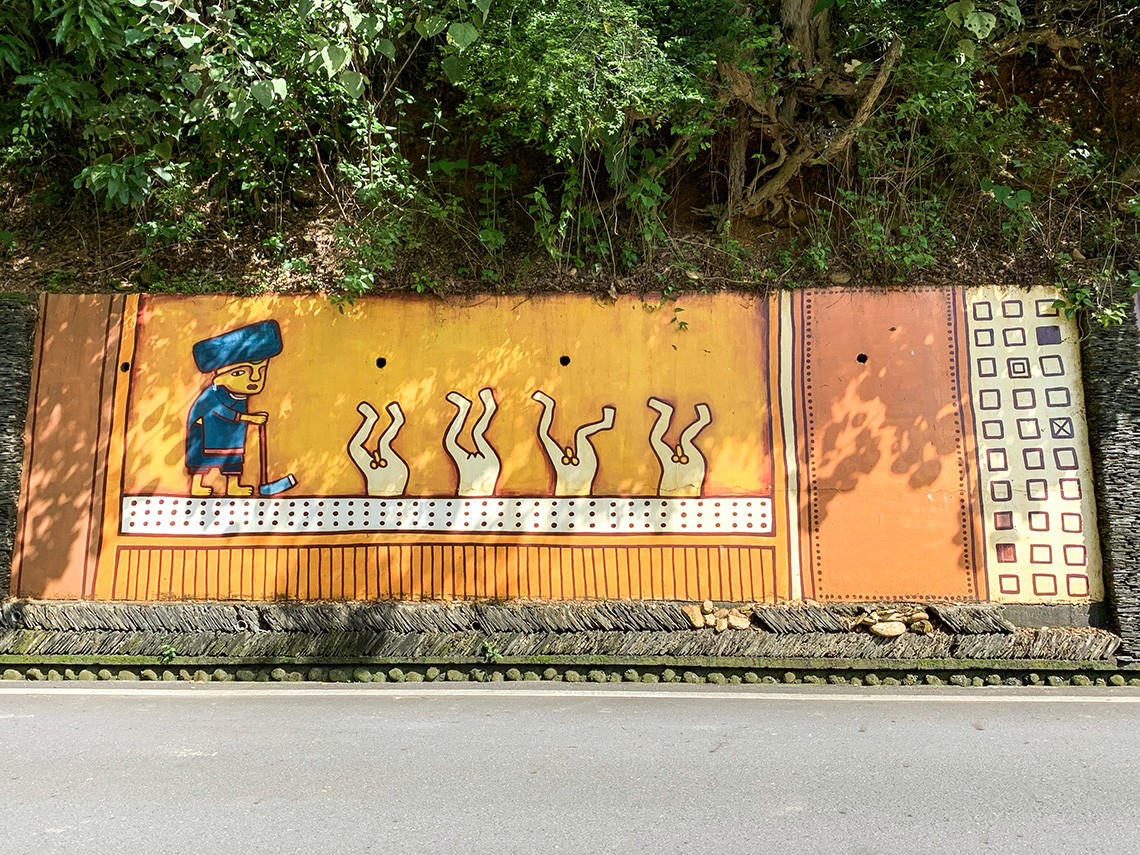
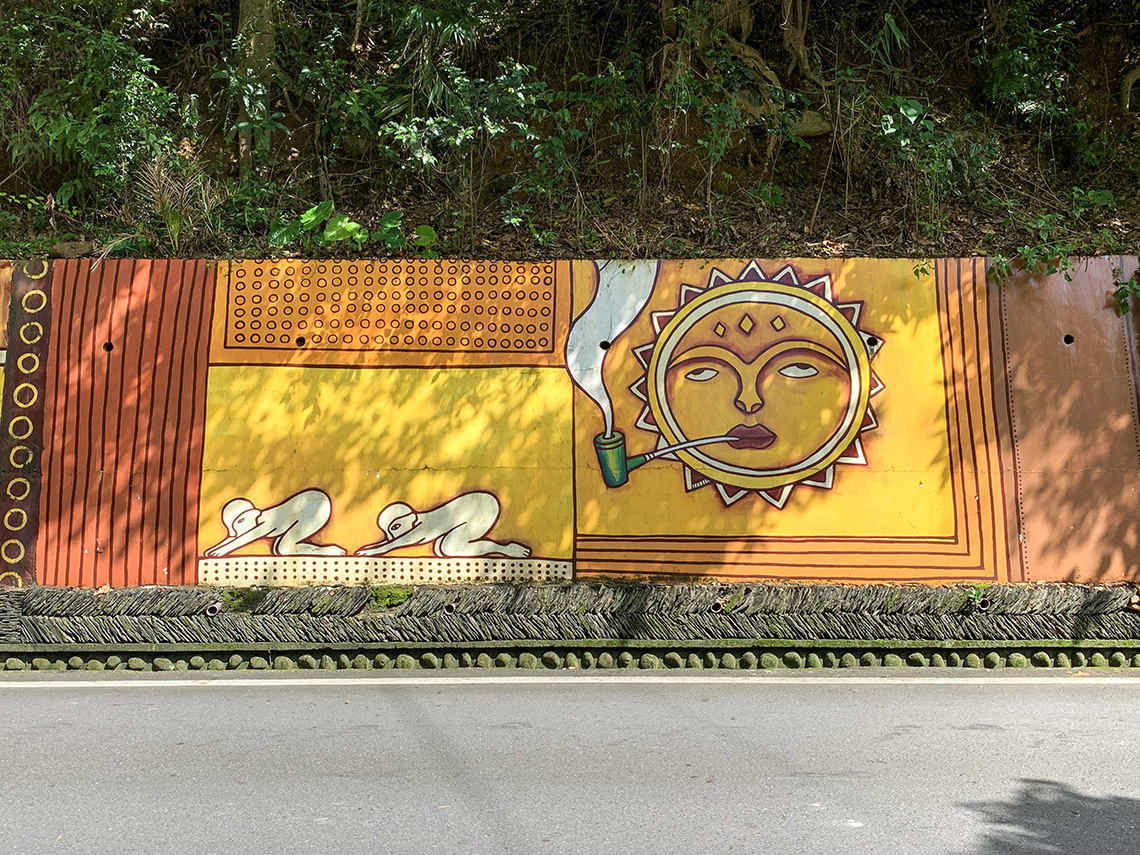
11異域色 The Colours of Foreign Land
藝術家:磊勒丹‧巴瓦瓦隆 /排灣族
Artist: Reretan Pavavaljung /Paiwan
2019
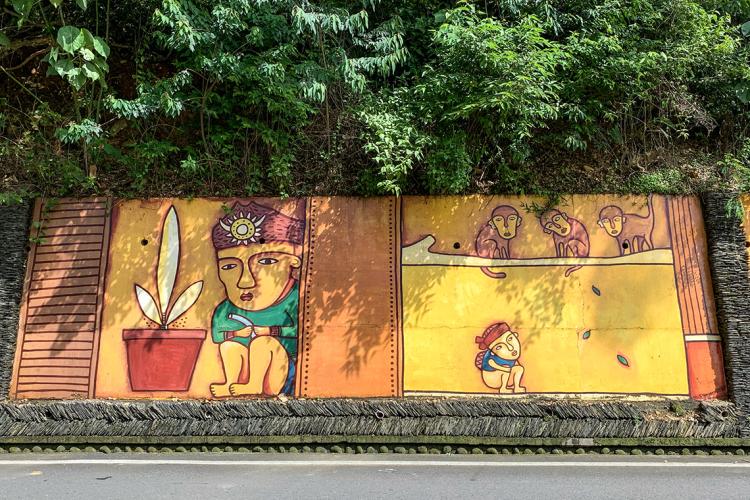
自工業革命出現之後,蔓延全球的都市化過程,整整齊齊的重新規劃了我們的生活,極為細瑣繁複的分類模式,讓人類的時間、語言、世界觀變得越來越「精確」。
磊勒丹回想起小時候接受國家教育前的思考模式,總喜歡用天馬行空的幻想覆蓋每件事物,似乎這樣就可以改變些什麼,但隨著年齡增長,現實越來越清晰,幻想也漸漸褪色。
磊勒丹希望用孩童般純真的視野,尋找記憶中那有如萬花筒、被現代人歸屬於異域的顏色(或說想法)。模糊掉大自然、文明、種族...等等彼此間的交界,探索人類最原始的本能。
Since the emergence of the Industrial Revolution, the urbanization process that has spread across the world has neatly re-arranged our lives, making the worldview more and more "accurate".
Before receiving national education, Reretan has always liked to cover everything with wild fantasies. However, as he grew older, his fantasies were gradually replaced by reality .
In his artwork, Reretan wishes to find that forgotten kaleidoscope, that has been categorized as foreign, through the eyes of a child so pure it blurs the boundaries between nature, civilization, races, etc., and explore the most primitive instincts of human beings.
12座落 Settled
藝術家: 達鳳.旮赫地 /阿美族
Artist: Tafong Kati /Amis
2010
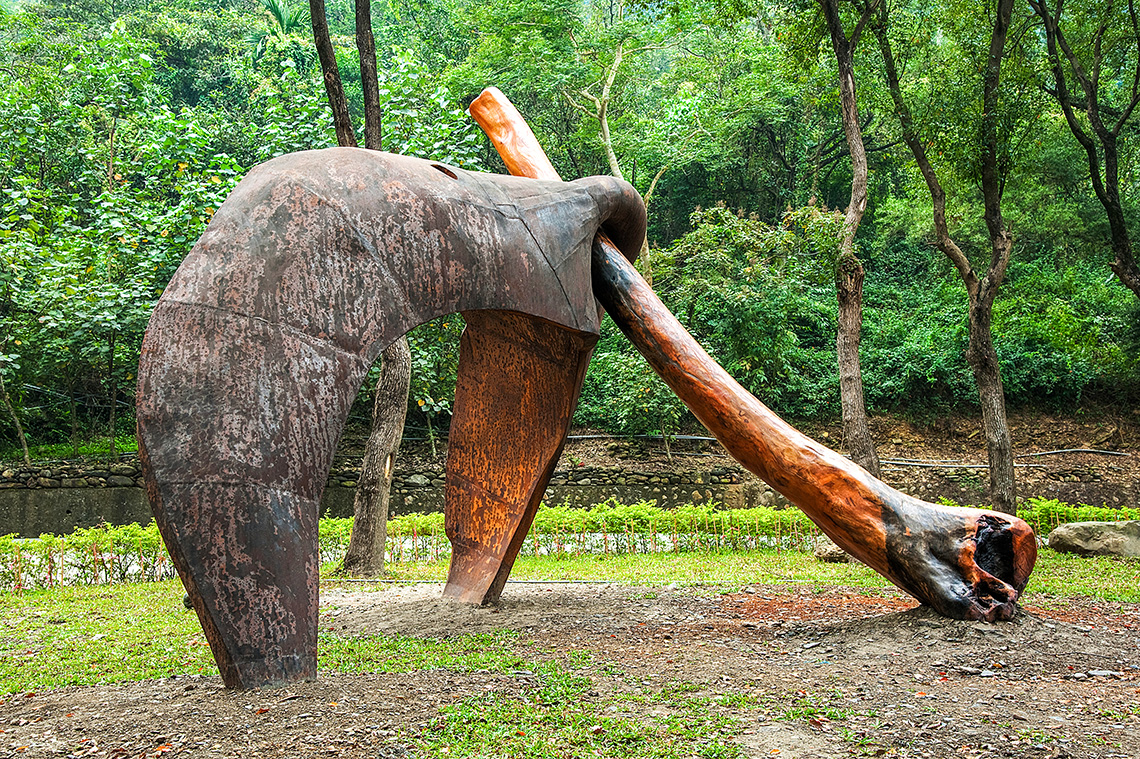
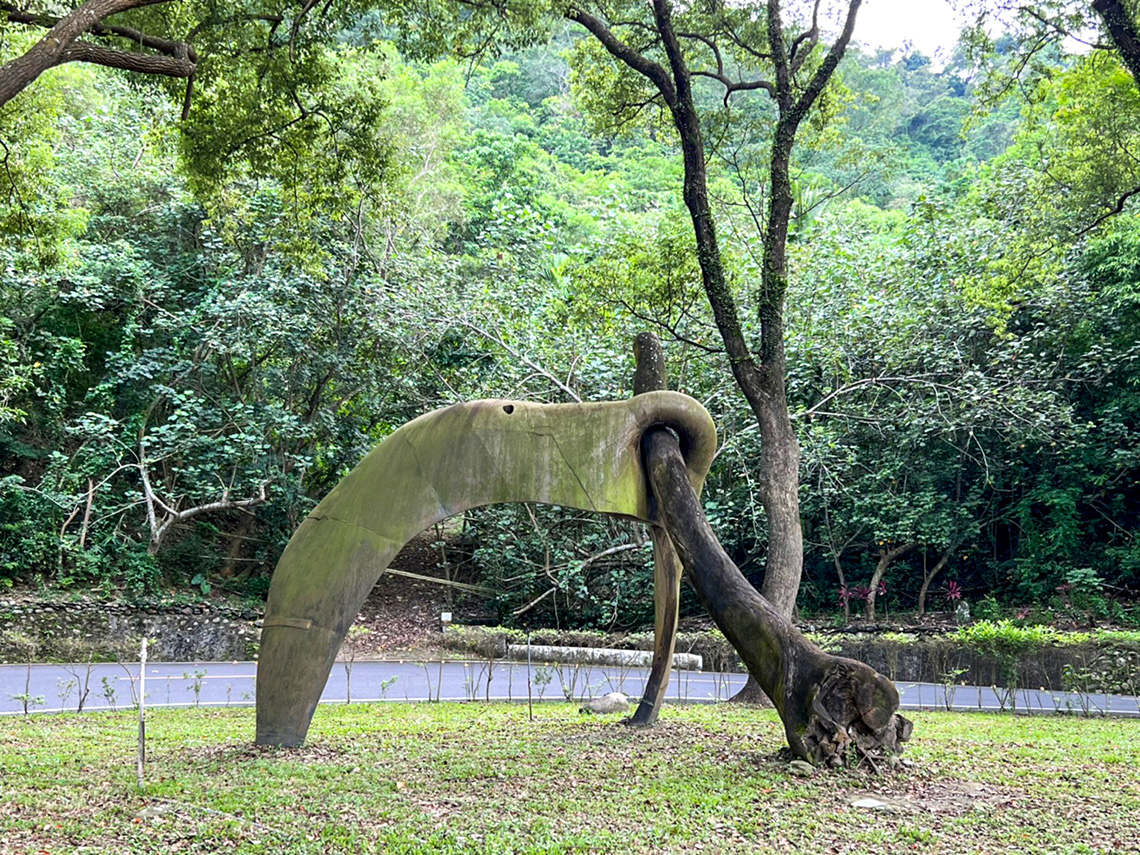
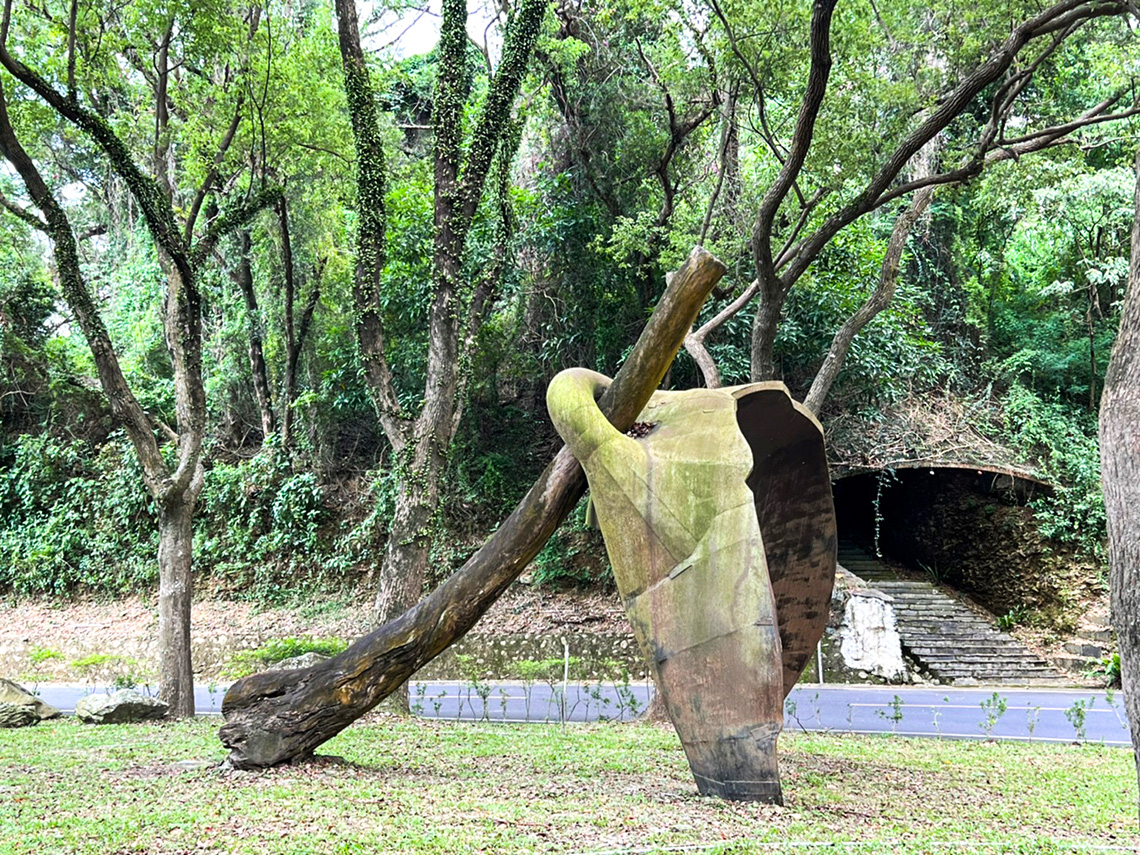
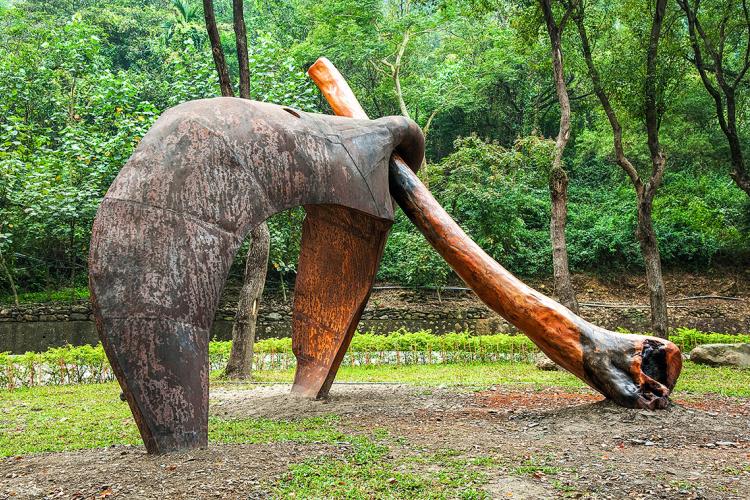
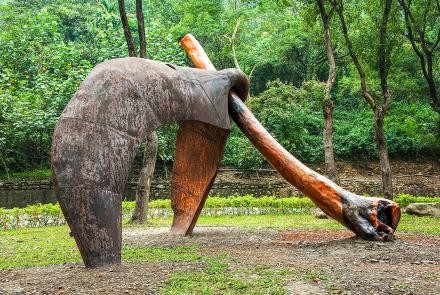
❰座落❱選用鐵和櫸木為創作素材,鐵的形狀代表著阿美陶,「陶」的局部線條象徵著女性,因傳統陶器都是由女性來製作,且有各種不同功能。而櫸木扮演的角色「杵」,象徵著男性,也代表著家中的重要支柱。
透過「陶」與「杵」本身即有特殊的文化意涵,試圖藉著木、鐵雕塑的複合創作,表達人們應從哀傷站起,以傳統文化的根源為基礎,重新再起建造部落,同時保有對家對社會的關懷與期望。
The materials used in this artwork are iron and beech wood. The sculpture made of iron is in the shape of a piece of an Amis clay pot. The pot symbolizes women, because traditional pottery is made by women and has various functions. The role of the beech wood, the "pestle", symbolizes the male and also represents an important pillar of the family.
Through "pottery" and "pestle", which themselves have special cultural connotations, the artist try to use the composite creation of wood and iron sculptures to express that people should stand up from grief and build their tribes anew based on the roots of traditional culture. At the same time, continue giving care to family and having expectations of the society.
13最後的信仰 Ultimate Belief
藝術家:巴豪嵐.吉嵐 /排灣族
Artist: Pahawlan Cilan /Paiwan
2015
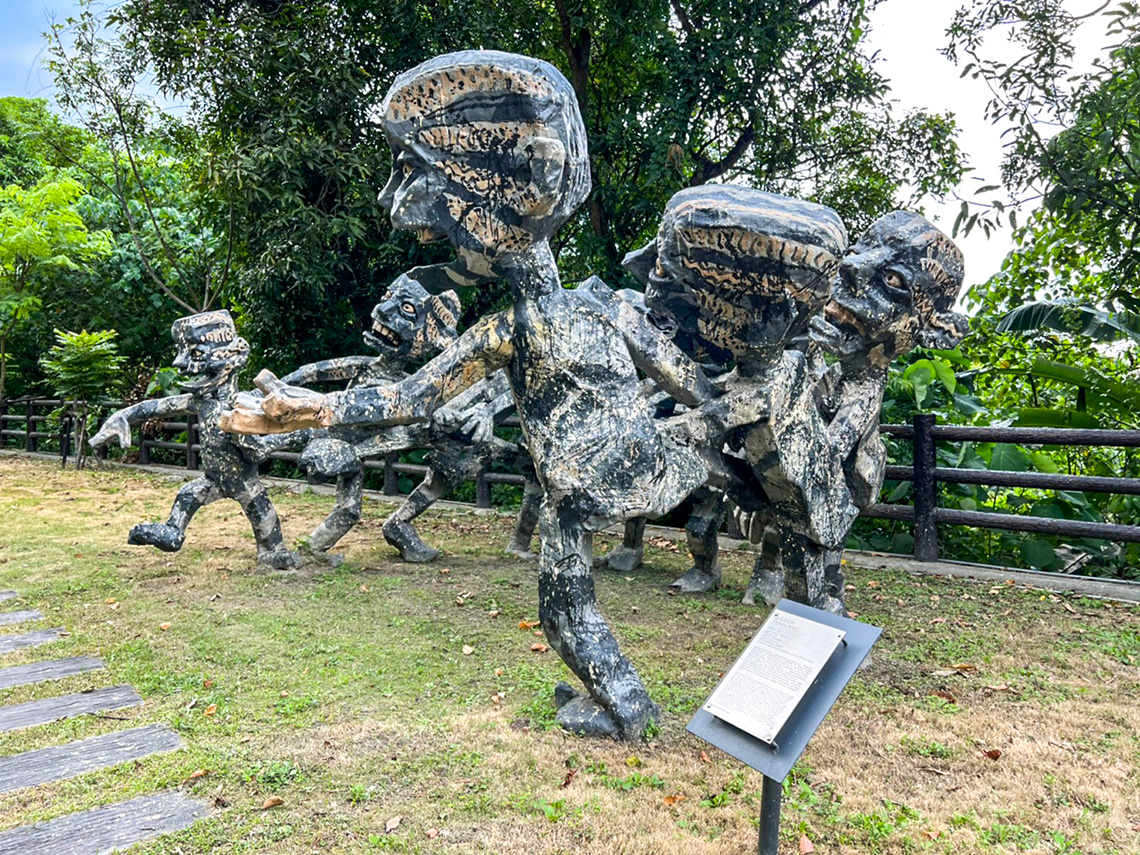
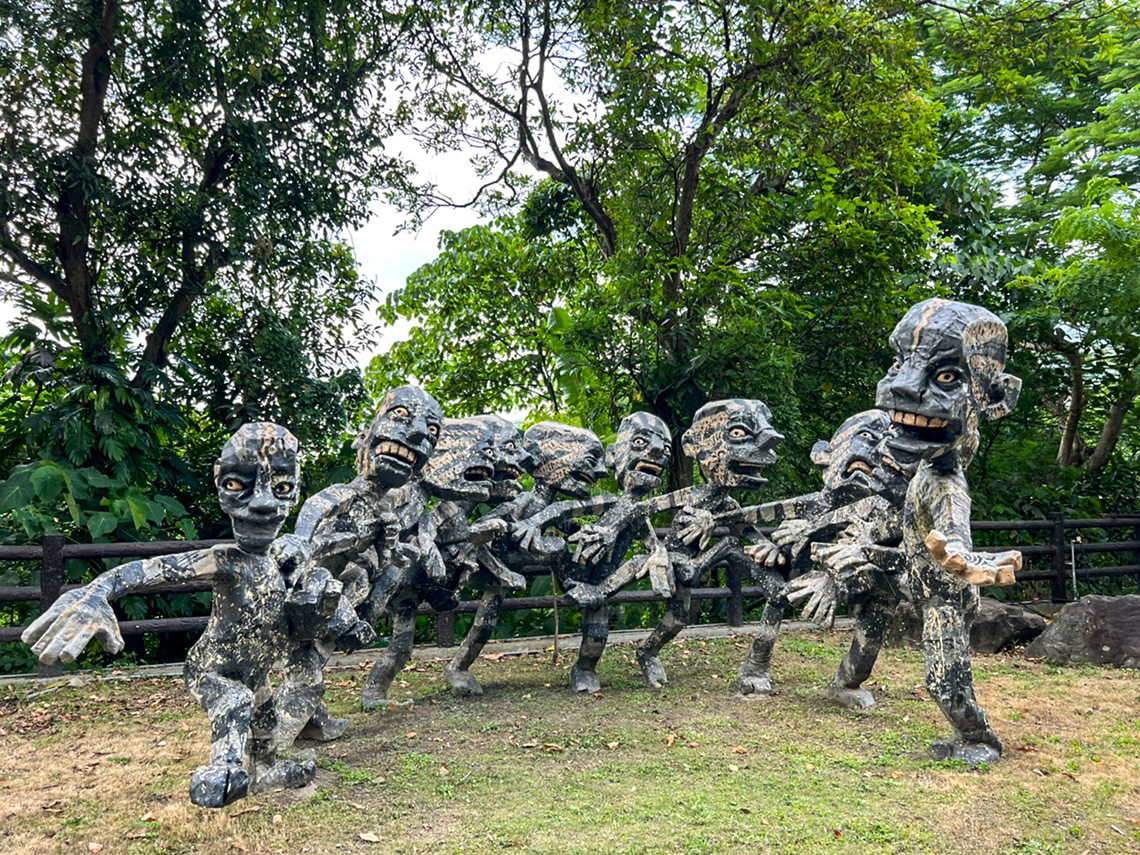
牽起雙手,唱起屬於神靈之歌曲,舞動著身體,儀式可能正在進行或開始進行著,吉嵐將田野裡看見的文化,重新塑造於作品上。
過去對於「泛靈信仰」不了解的他,只能從字面上大概去得知它的意義,但後來在經過花蓮東昌部落時,看見了讓他喚起古老記憶般的祭儀,在這裡找到傳統「泛靈信仰」文化,就這樣停留並花6年的時光,觀察阿美族的傳統信仰文化。阿美族傳統儀式裡,有將近兩百位不同神,雖然不太能夠精準地述說每位神靈的族語名字,卻透過這樣的概念創作作品,他強調每位形象不是為了詮釋標準的祭儀動作,而是為了營造一種文化氛圍。
Holding hands, singing songs belonging to the gods, and moving one’s body to the beat, it is a ceremony that may be in progress or has just begun. In this artwork, Pahawlan Cilan re-created a culture that he has seen in his field study.
In the past, he didn't understand the notion of "animism" until one day he saw a ritual performed in the Dongchang village, Hualien. He has found the animism culture there, and has spent 6 years observing the traditional belief culture of the Amis. There are nearly 200 different gods in the traditional ceremony of the Amis people. Although it is impossible to accurately name each god in the Amis language, he emphasizes that the images in this artwork do not represent the standard ritual itself, but rather to create a cultural atmosphere.
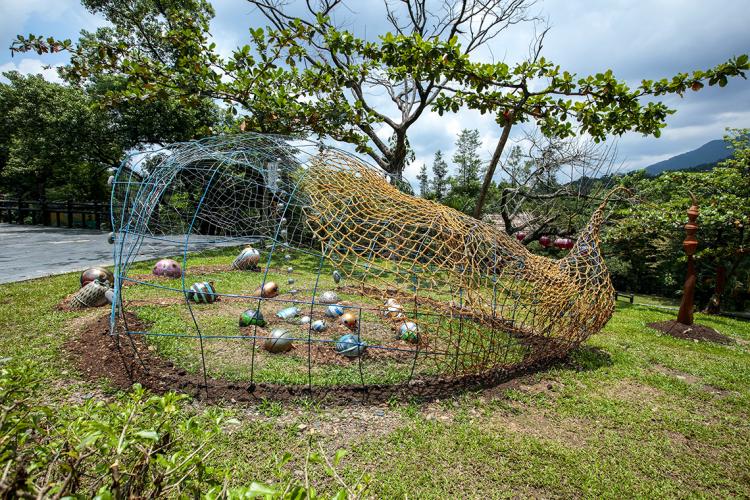
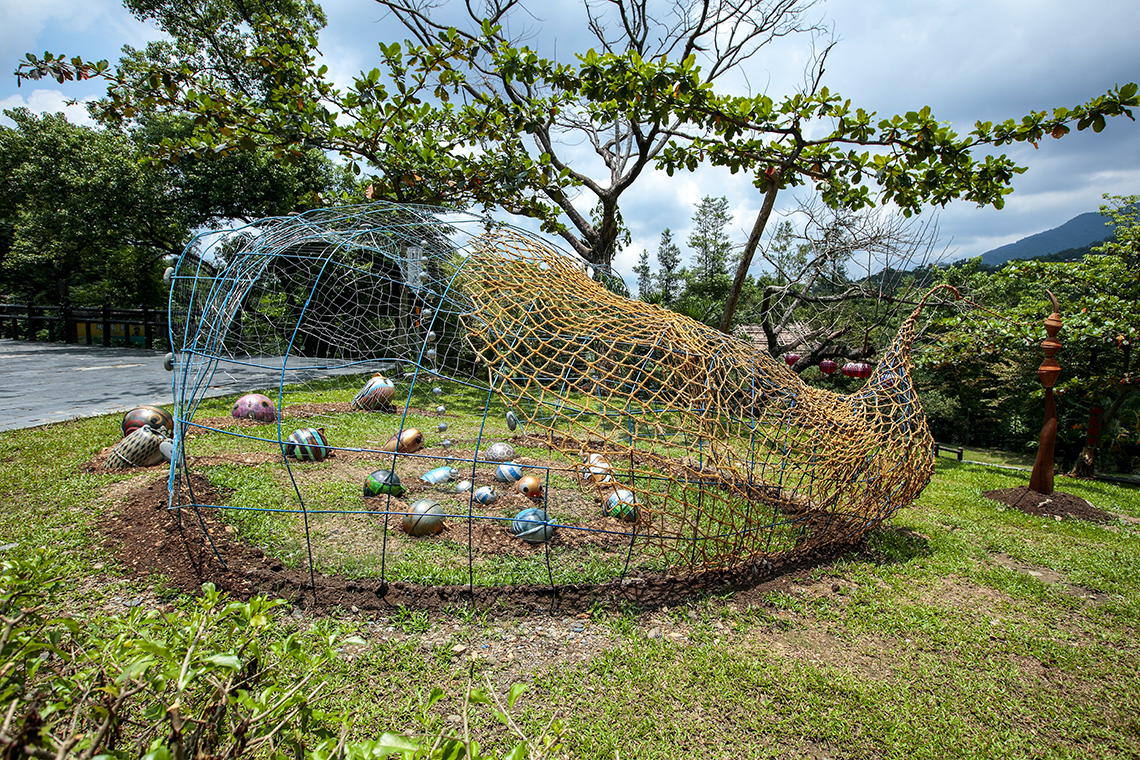
14等待漲潮-永恆與希望 Awaiting High Tide - Eternity and Hope
藝術家: 陳昭興 /阿美族
Artist: Apo’ /Amis
2018
「等待漲潮」是族人展現時間觀的純粹意志。
原住民族順應著自然,日月的起落、隨著洋流季風的魚群、作物生長收穫等,沒有分秒時針的概念,只有自然中當下要做的事。
捕魚前,耆老會提早兩小時等待漲潮到來的魚群,這般匪夷所思、沒效率的步調,卻有某種禪意,時間顯得沒有價值,如同望著大海,感覺不到時間流逝,透過無盡的等待與勞動,進而超越時間,即是永恆!終會盼到希望降臨。
作品兩個主軸:
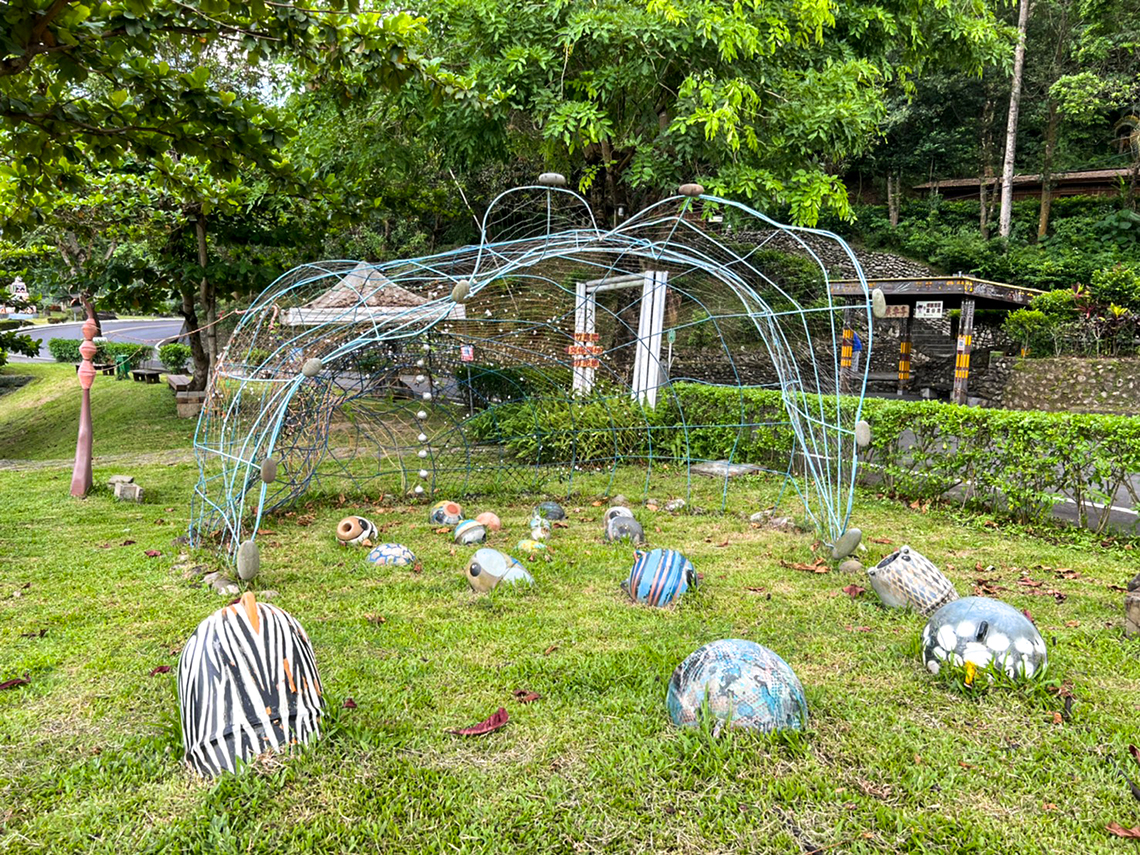
一、耆老海祭時祈求豐收禱唸:海神啊,讓年青人漁網掛的魚,像傳統服的鈴鐺那樣多。魚群鈴鐺以海漂浮球呈現,工業定置型漁網的濫捕,以往等待漲潮的魚群,已被海面的浮球取代。
二、捕魚撒出的八卦網,透過捻線編網的古老工藝,從一條線編到一張網的繁複,展現時間的超越。古早麻線編織大網目漁網,到現代機械鋼線的細網目,小魚也一網打盡。
"Waiting for the rising tide" is the indigenous peoples’ view of the time.
The indigenous peoples follow the rules of nature, like the rise and fall of the sun and the moon, the swarms of fish following the ocean currents, the growth and harvest of crops, etc. There is no concept of minutes and seconds, only the things that need to be done in nature.
Before fishing, the elders would wait two hours in advance for the fish to arrive with the tide. Although this may seem inefficient, it does create some kind of zen. Looking at the sea, time seems to be worthless as it passes by. The endless waiting and labor goes beyond time. It is an eternity! One day, what we hoped for will eventually come.
Two main axes of works:
1. When praying for a good harvest, the elders say: God of the sea, let the fish in young men’s nets hang as many as the bells on our traditional clothes. The fish here are presented by floating balls in the sea. This shows that due to overfishing by fixed fishing nets, the fish that the elders once have waited for along with the tide have been replaced by floating balls on the sea surface.
2. This fishnet shows the transcendence of time. From the ancient craft of twisting hemp threads into large-mesh fishing nets to the fine mesh made by modern mechanical steel threads, today even the smallest fish get caught.
25山巒身上的一隅 vincikan
藝術家: 峇岦嵐偲˙ 旮札涅灆
Artist: PaqeRiras Kazangiljan
2022
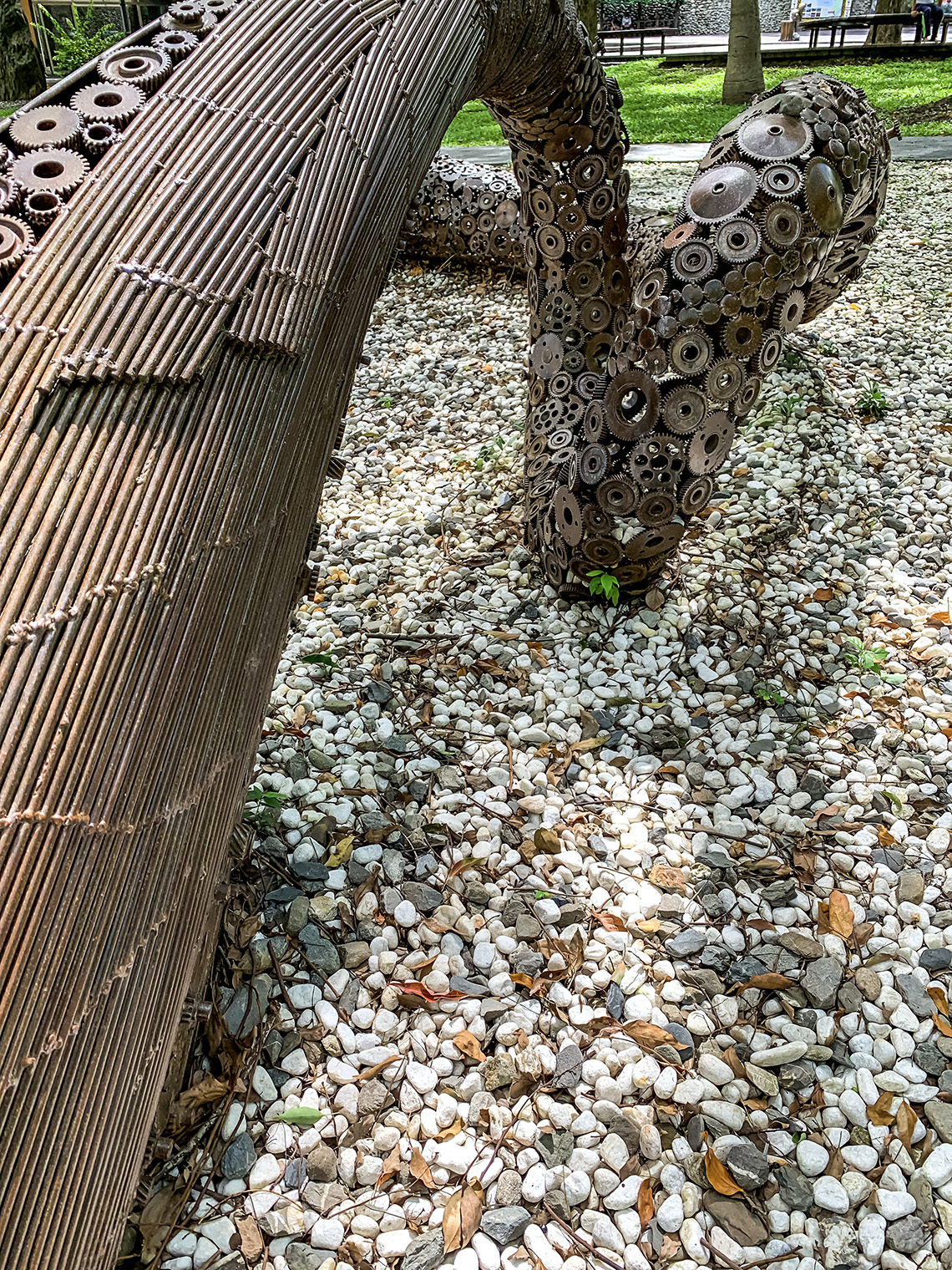
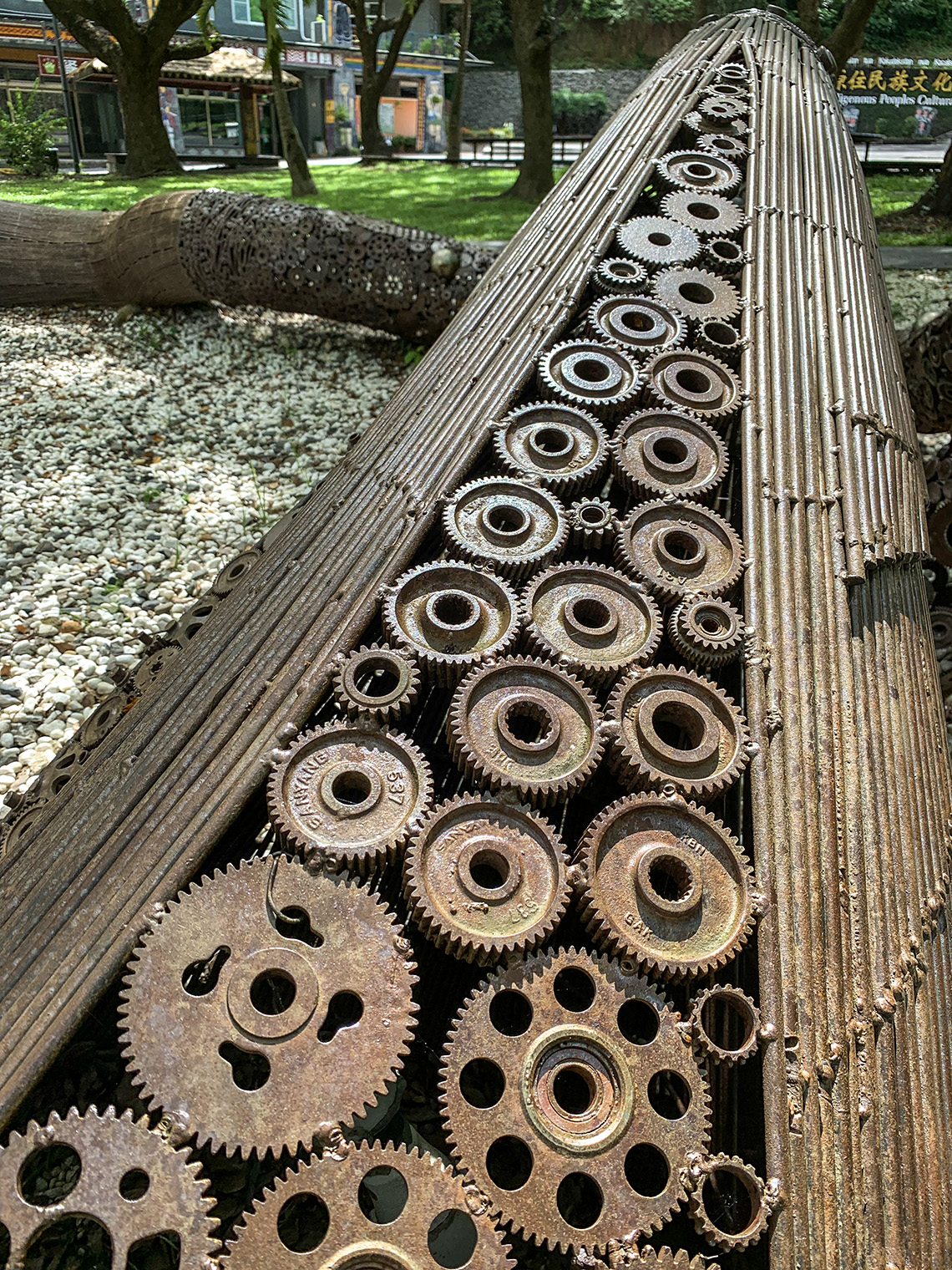
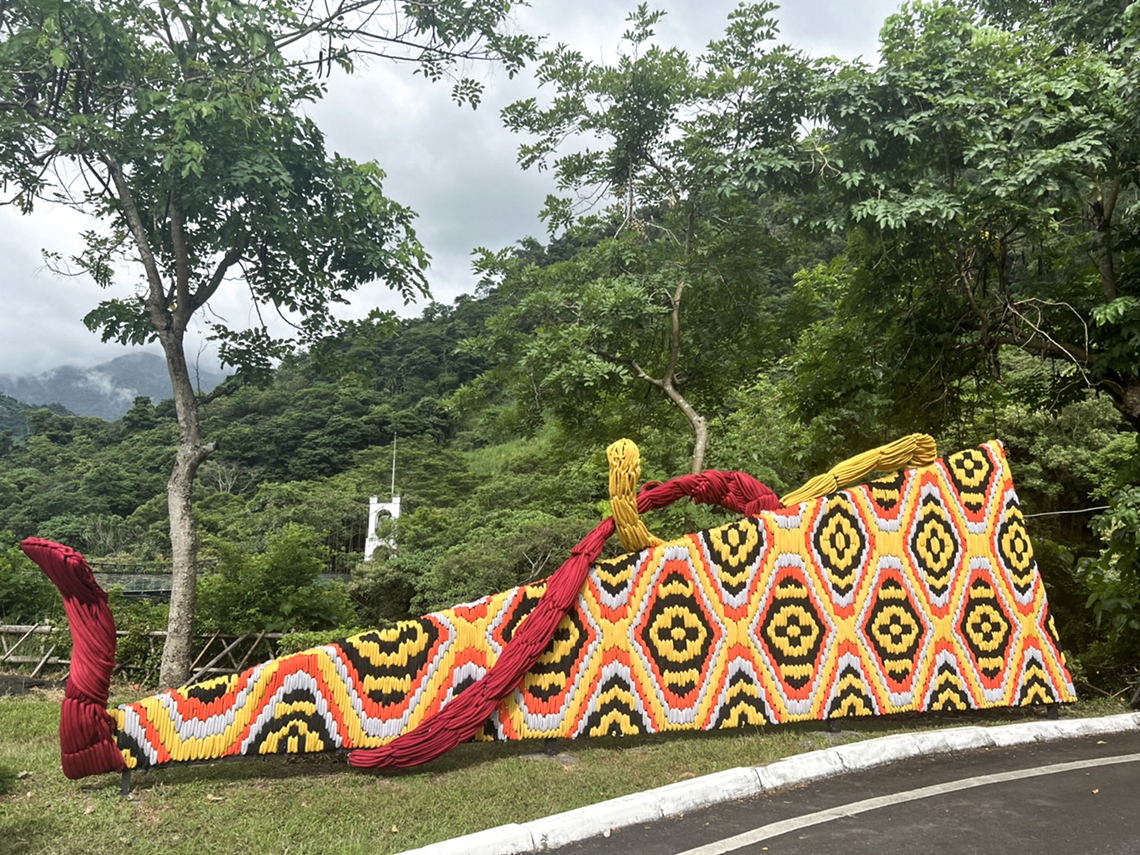
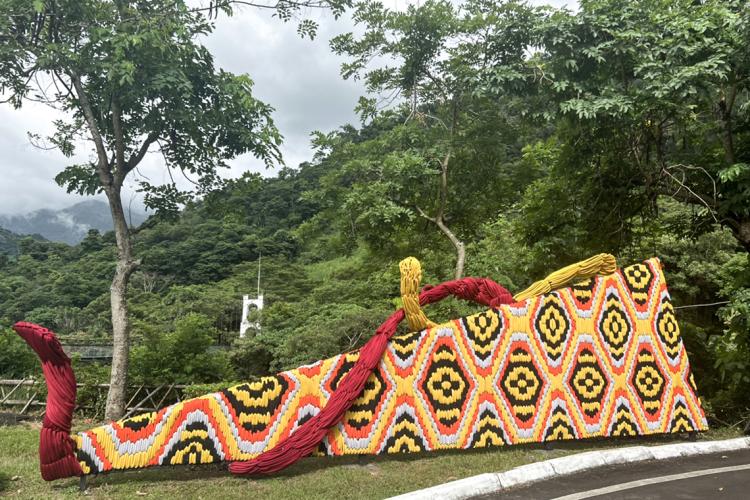
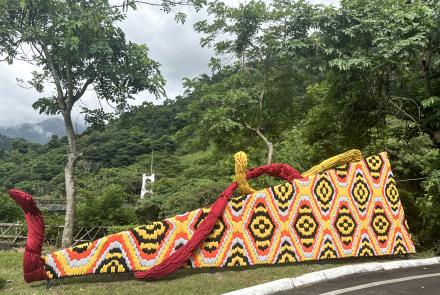
峇岦嵐偲感慨傳統繡工技法的消逝,年長者逐漸老去且傳承者甚少,他將文獻傳統服飾圖片上的一字繡紋,經數位手法觀察並試圖將圖紋繡譜記錄保存。在這件作品上他將一字繡圖紋放大百倍的方式呈現,在此展示讓人學習繡路繡譜並表現傳統工藝之美,更從作品中傳遞繡者的寄託、感動、呵護、想念與祝福。
PaqeRiras Kazangiljan laments on the disappearance of traditional weaving techniques as the elders are getting older and there are few inheritors. He observed the weaving patterns on traditional costumes and digitally recorded the patterns and style. In his artwork, he magnified the embroidery pattern to illustrate the beauty of traditional craftsmanship. He also conveys the embroiderer's sustenance, emotion, care, nostalgia, blessing and love through this piece of art.
26飛躍族群 The Flying Ethnic Group
藝術家: 達比烏蘭˙古勒勒 /排灣族
Artist: Tapiwulan‧Kulele /Paiwan
2001
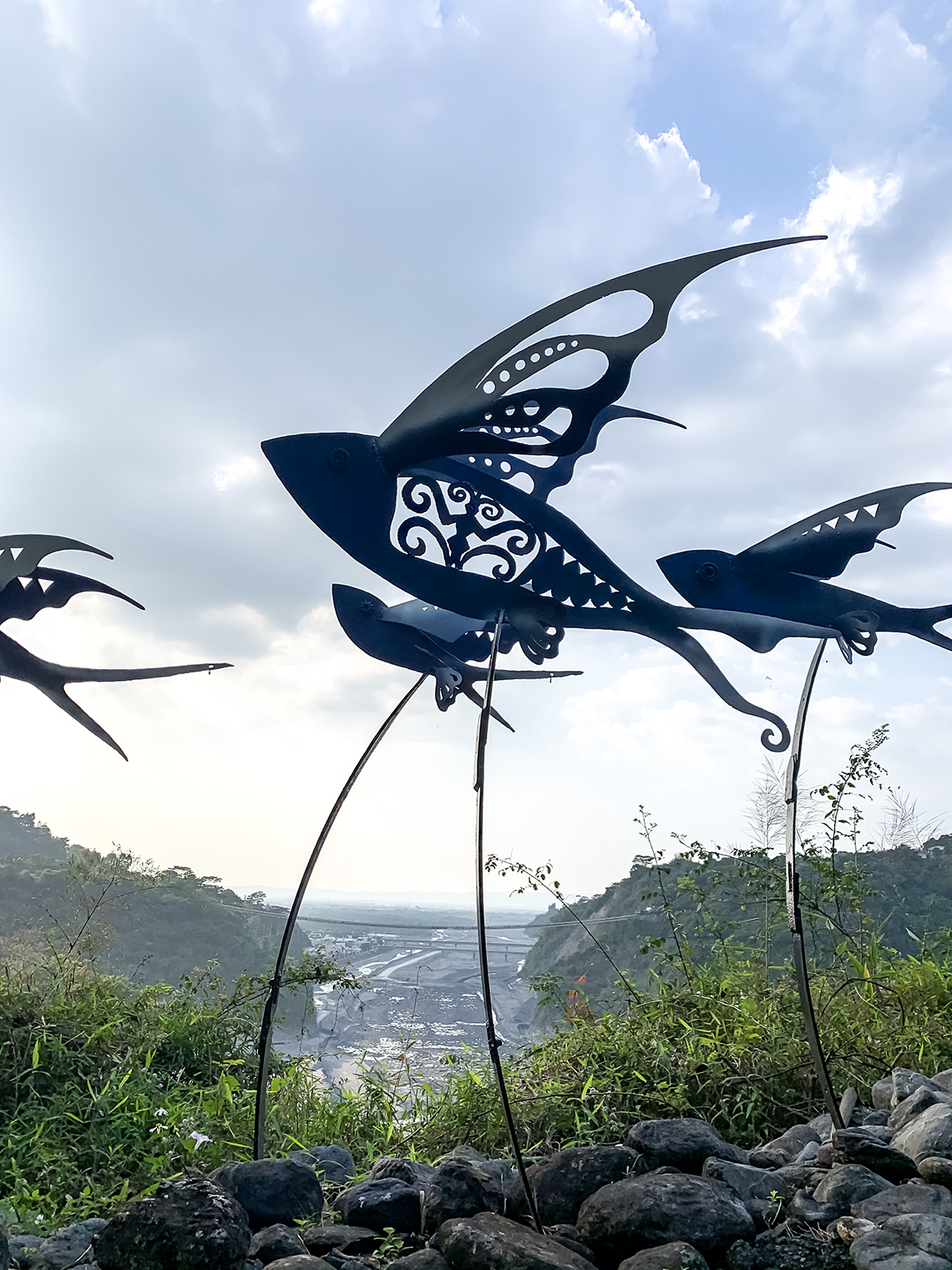
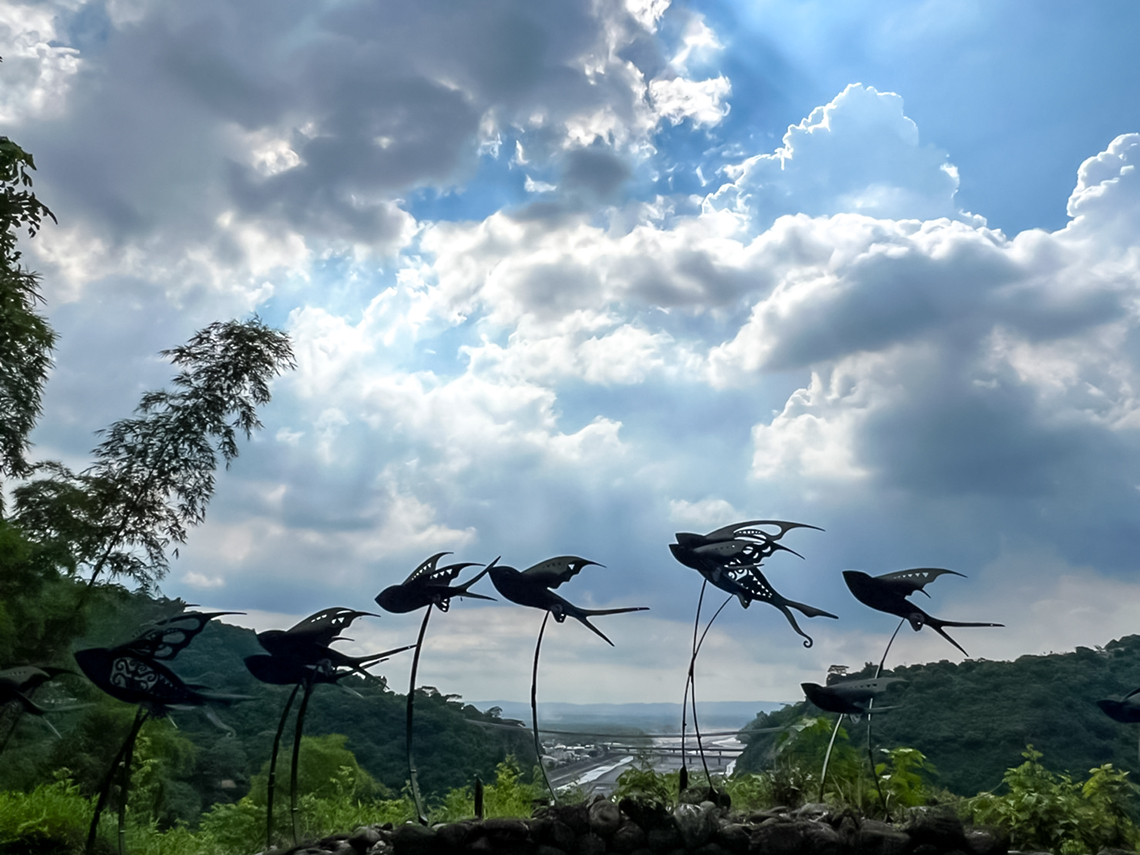
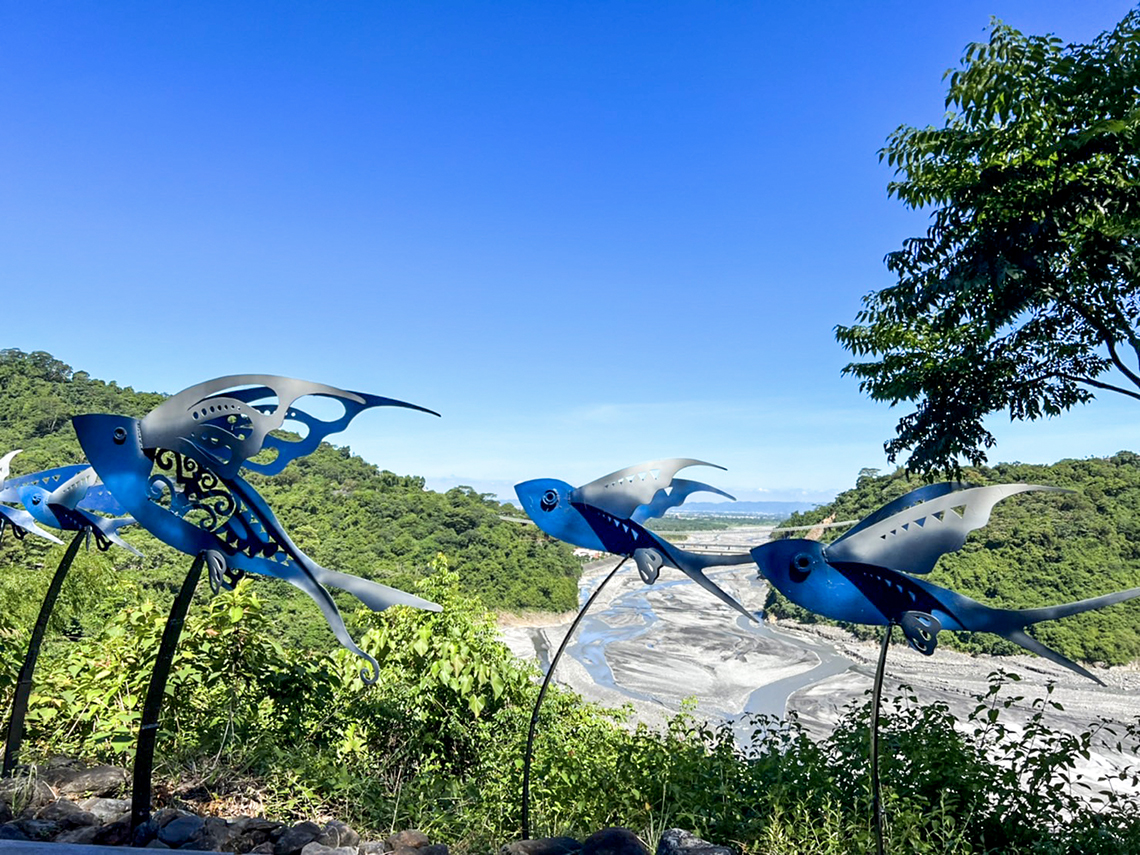
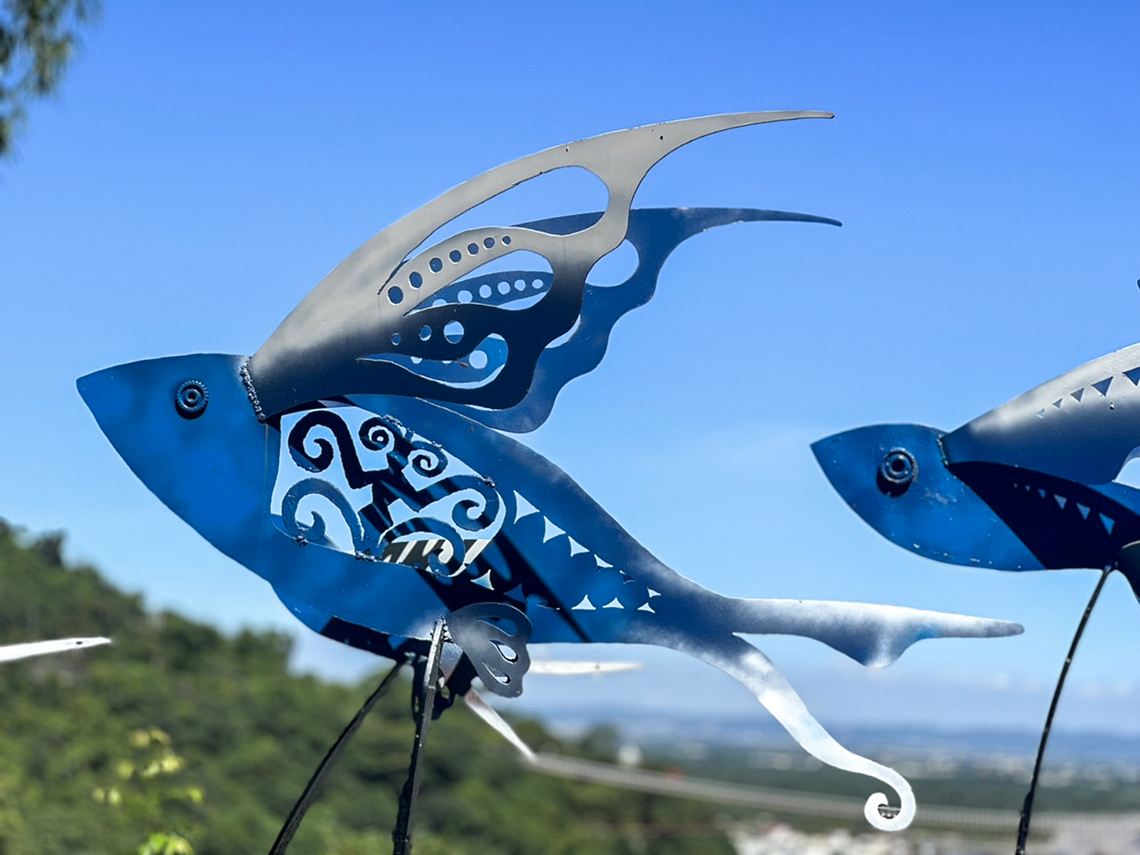
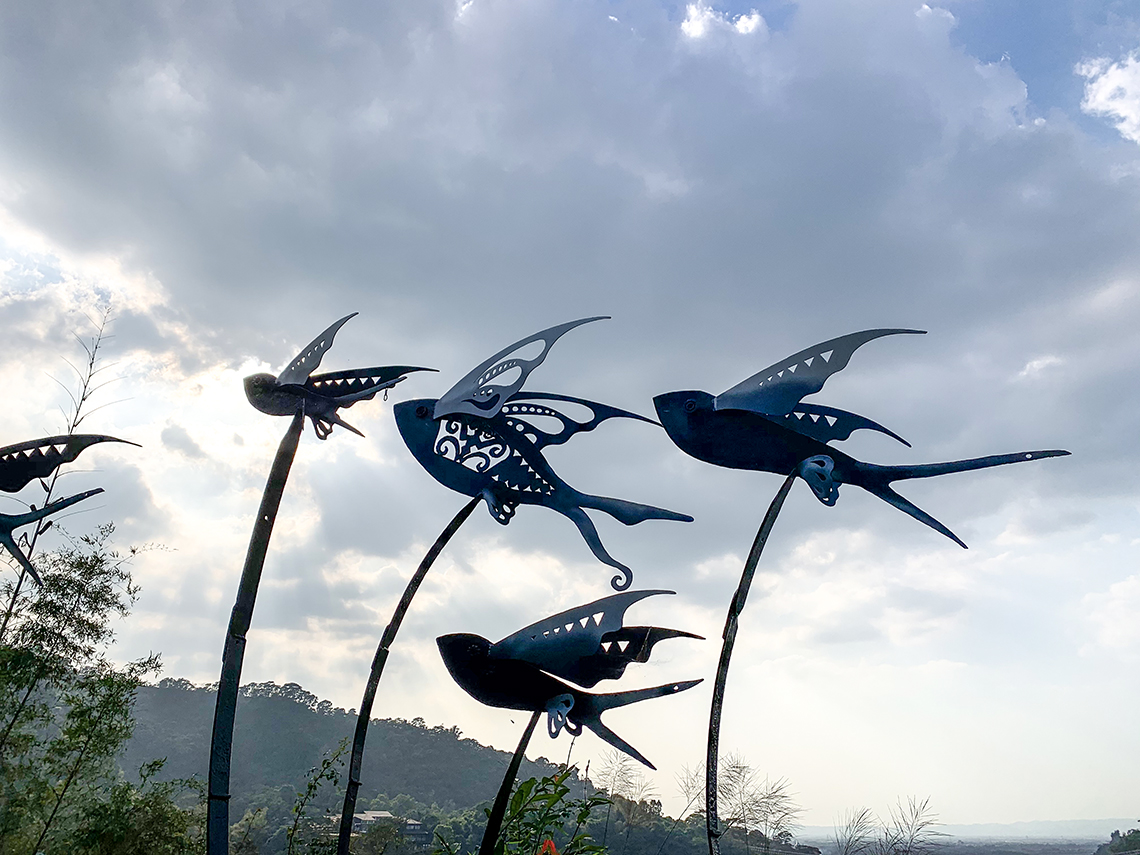
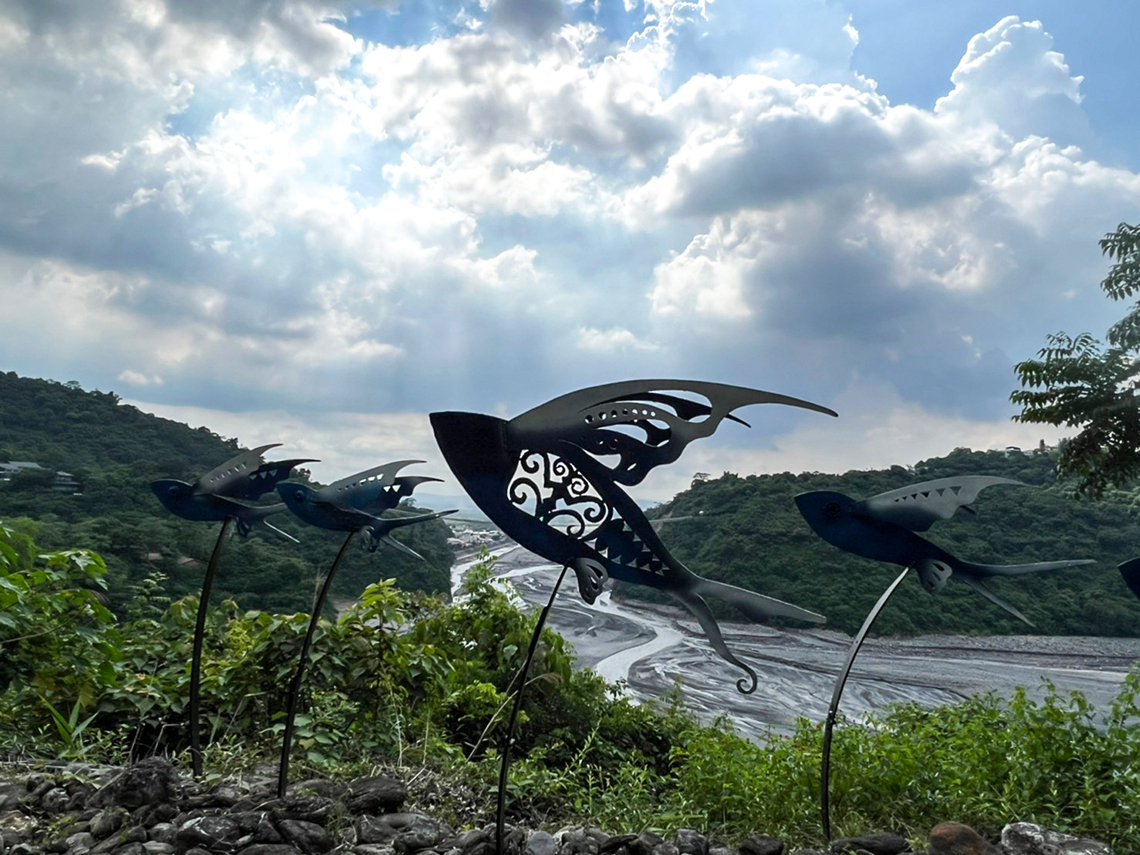
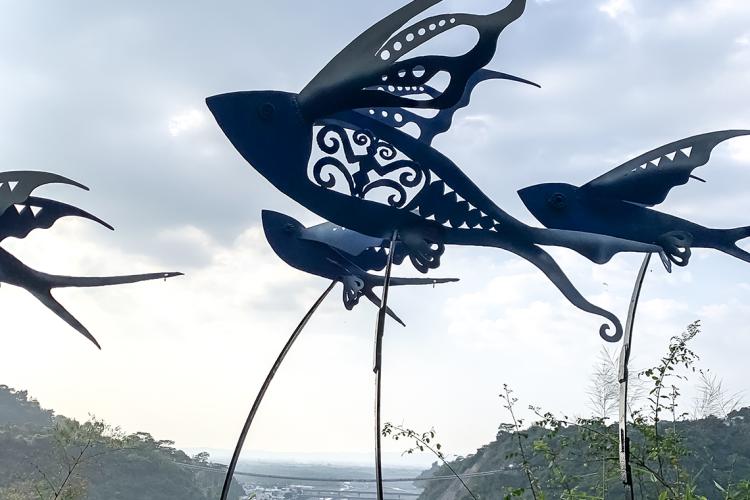
伴著河谷、山林與無比湛藍的天空,每每經過古勒勒於2001年創作的飛魚意象的作品時,總是會停繫腳步,一邊探究飛魚的魚群,一邊看著遠方的溪流,它總會帶給人們特殊的心情。
古勒勒憶起它創作❰飛躍族群❱之靈感,探起該作品坐落的空間,他表示,原住民族文化園區是原住民各族群所匯集的地方,所以希望在這看見不同族群之美,而一直想要前往蘭嶼認識達悟文化的他,正好可以藉著創作把對於蘭嶼的想像形塑出來。
Accompanied by river valleys, mountain forests and the incomparably blue sky, whenever passing by Kulele’s works of flying fish it is hard not to stop and be amazed by this imagery of flying fishes and the river view in the distance.
Kulele recalled the inspiration for his creation ❰ The Flying Ethnic Group❱ completed in 2001, and said that the indigenous cultural park is a place where various ethnic groups of indigenous peoples gather. So, he hopes to see the beauty of these different ethnic groups here. Also, since he has always wanted to go to Lanyu to learn about the Yami (Tao) culture, he shaped his imagination of Lanyu through his creation.
29《安》樹<Peace>Tree
藝術家: 哈拿˙噶琉 /阿美族
Artist: Hana Keliw /Amis
2014
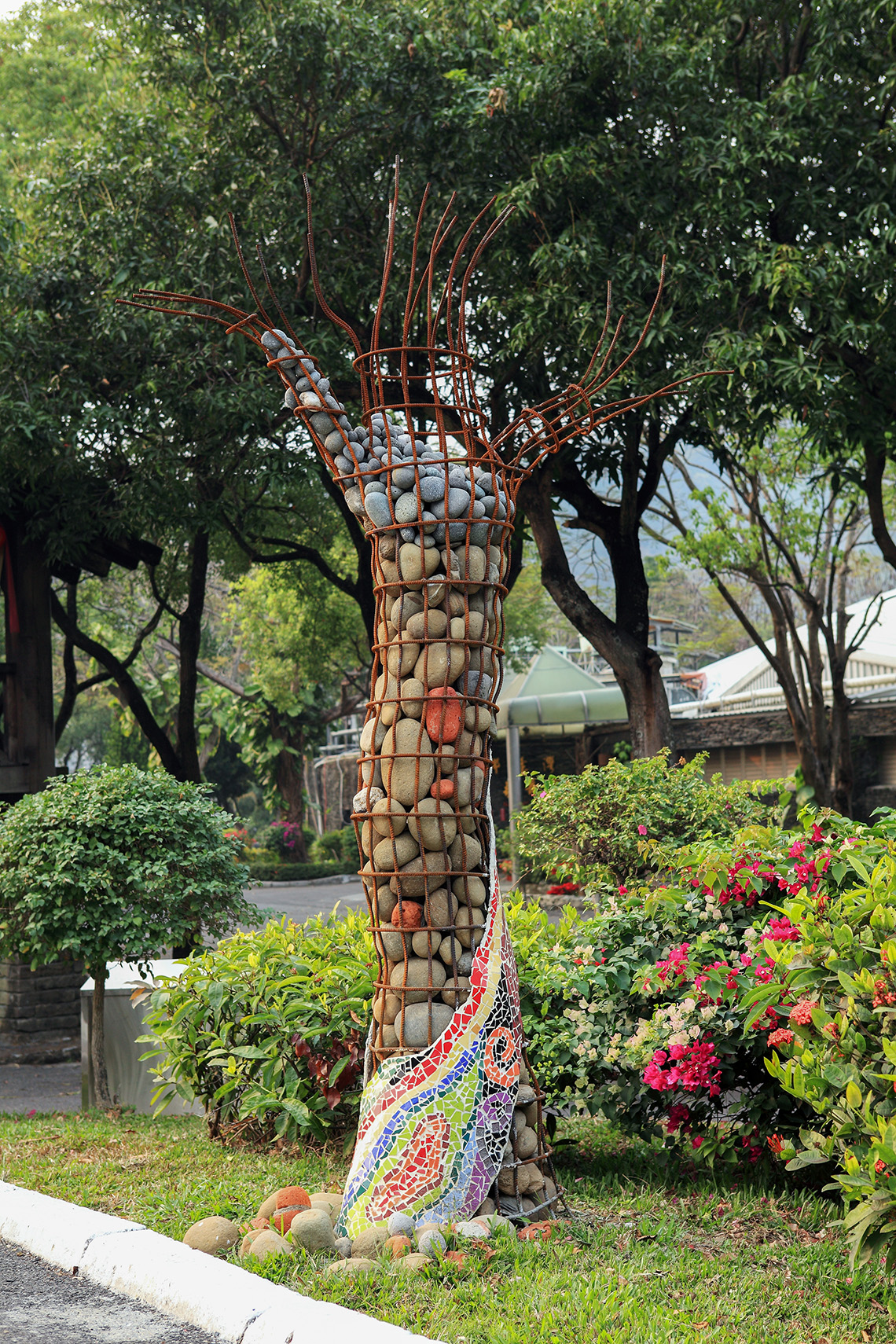
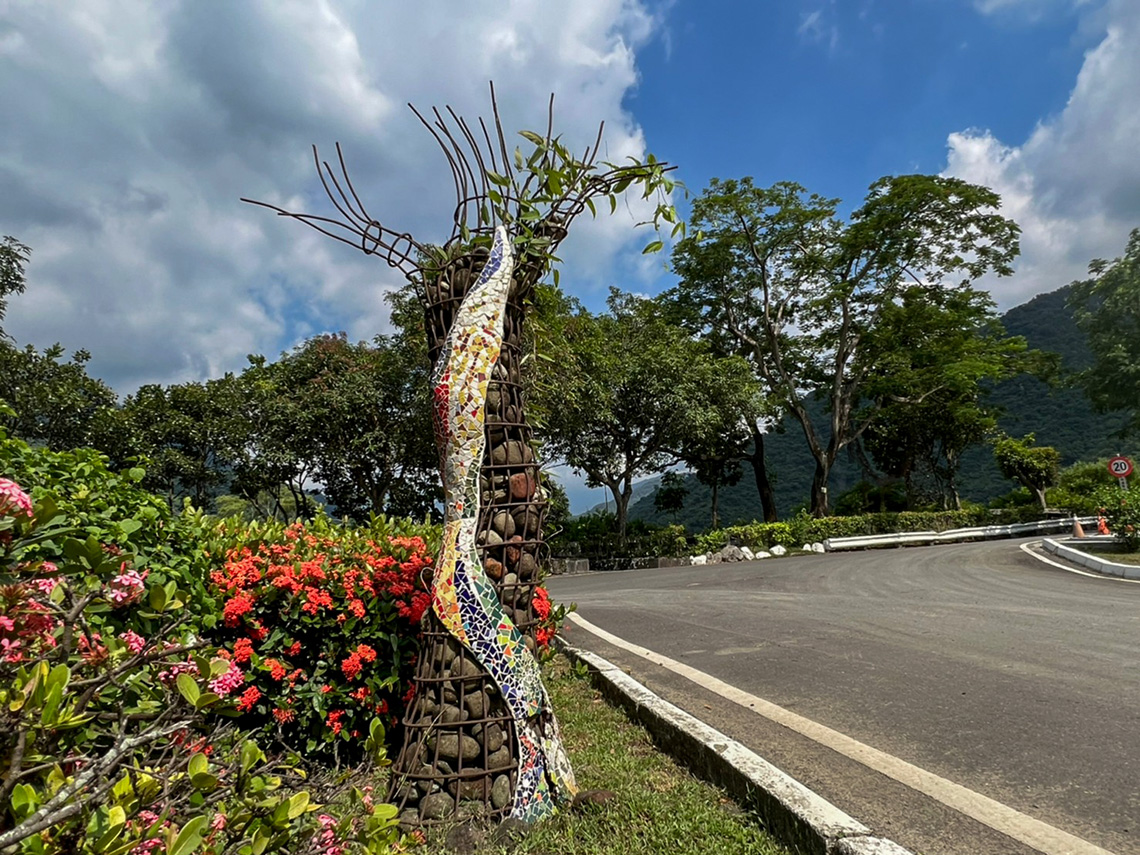
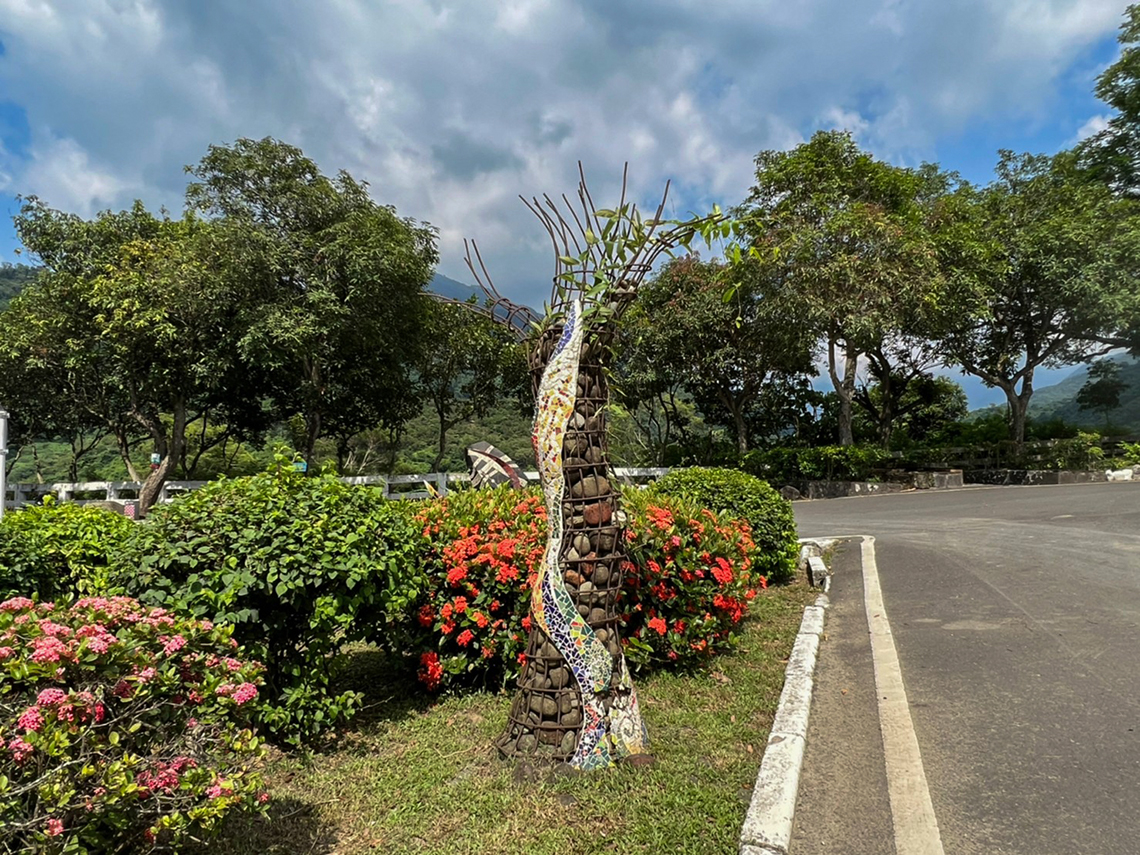
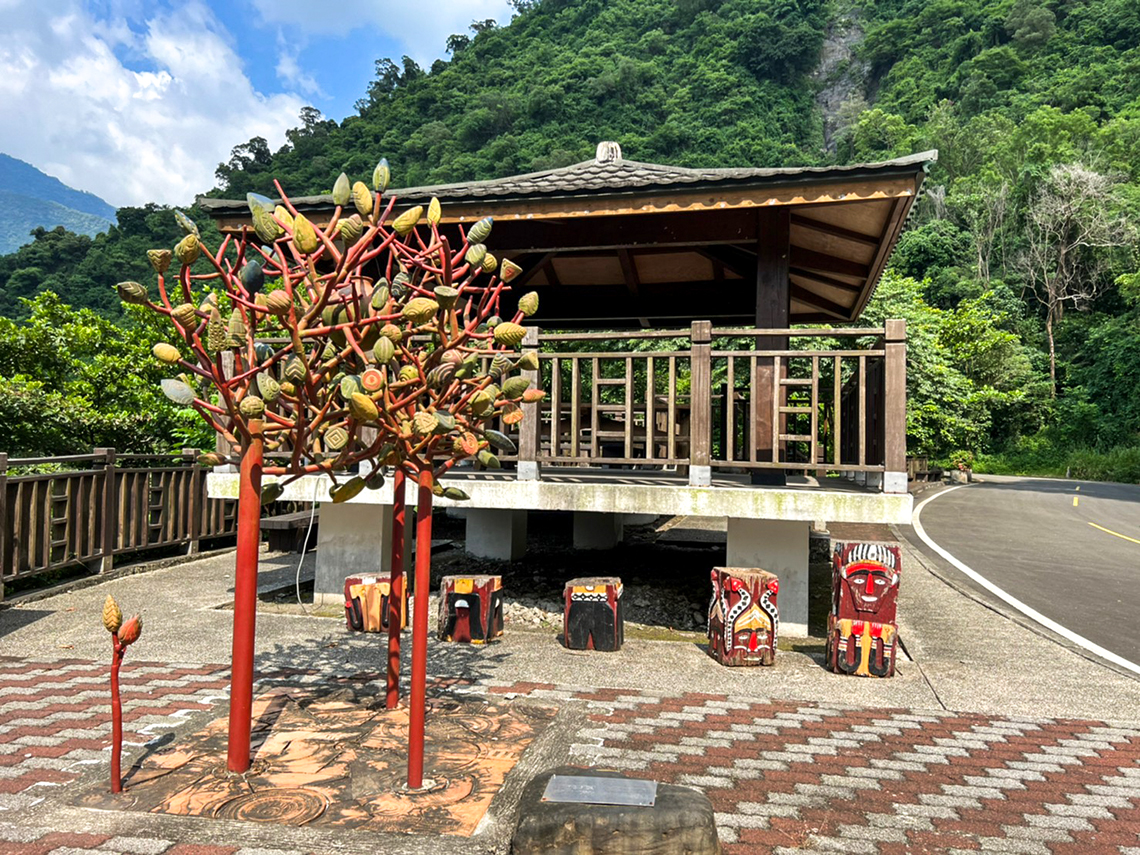
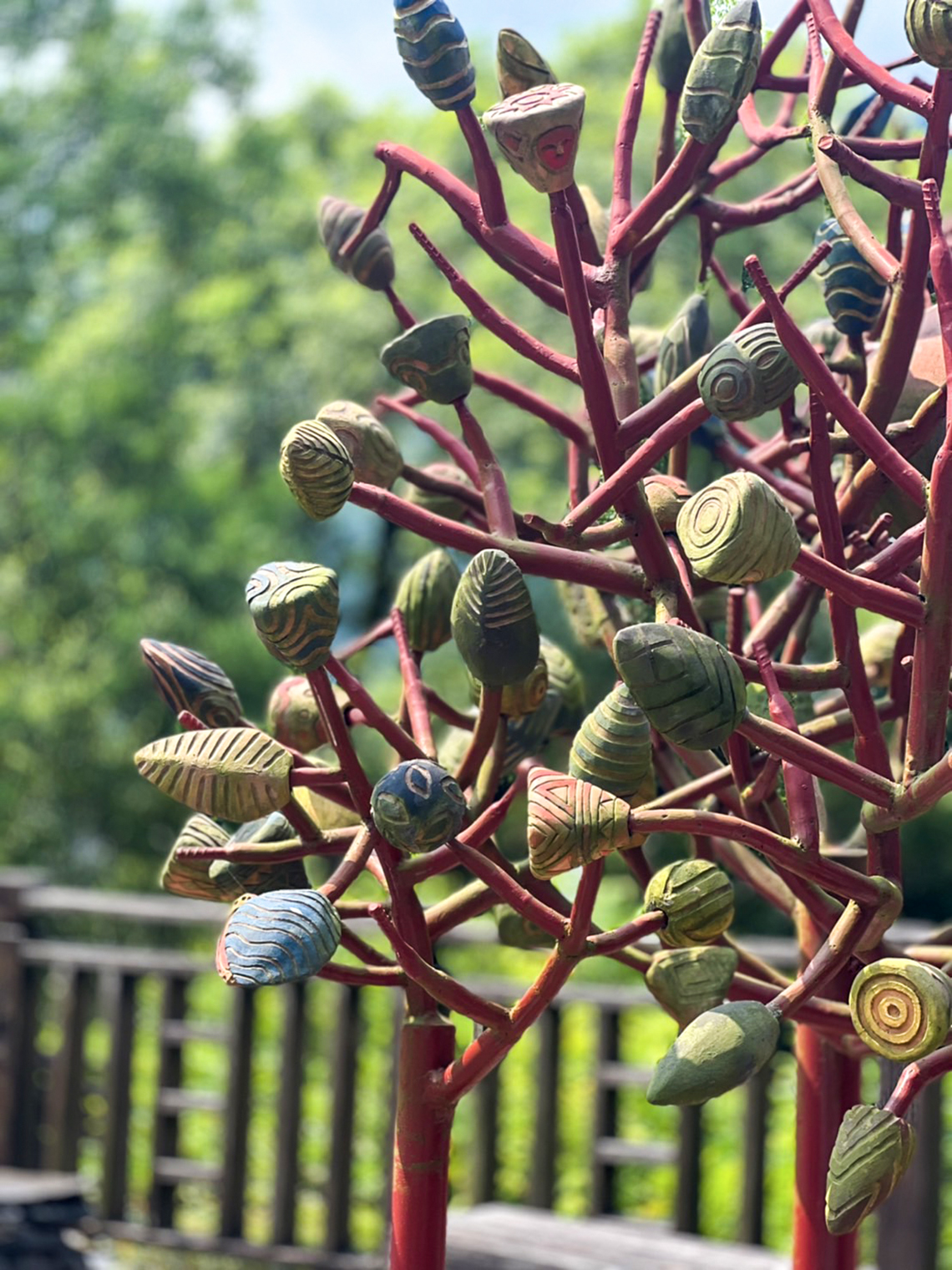
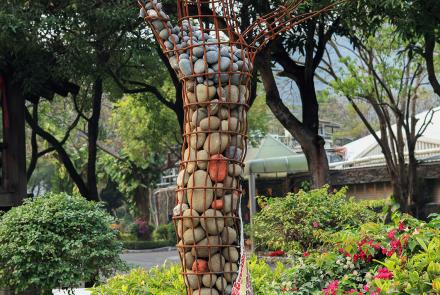
❰安❱樹是大自然生態的指標,生態豐富就是有無數生命……。
❰樹❱孕育種子生生不息傳延生命,所以生命能安逸、安心、就能安身立命的存在。
反觀人類耗盡資源而造成生態浩劫,人類忘了我們原來是大自然一部分,請請珍惜現在擁有的,讓我們學習擁抱大自然。
❰An❱ Tree is an indicator of nature's ecology. With an abundant ecology, there will be countless lives....
❰Trees❱ grow seeds, which has a meaning of endless circle of life, and so that living can be done at ease and in peace.
On the other hand, human beings have exhausted resources and caused ecological catastrophe. Humans have forgotten that we were originally part of nature. Please cherish what we have now, and let us learn to embrace nature.
30斜坡上的風很香 The Fragrant Breeze on the Hill
藝術家:伊誕.巴瓦瓦隆 /排灣族
Artist: Etan Pavavalung/ /Paiwan
2017
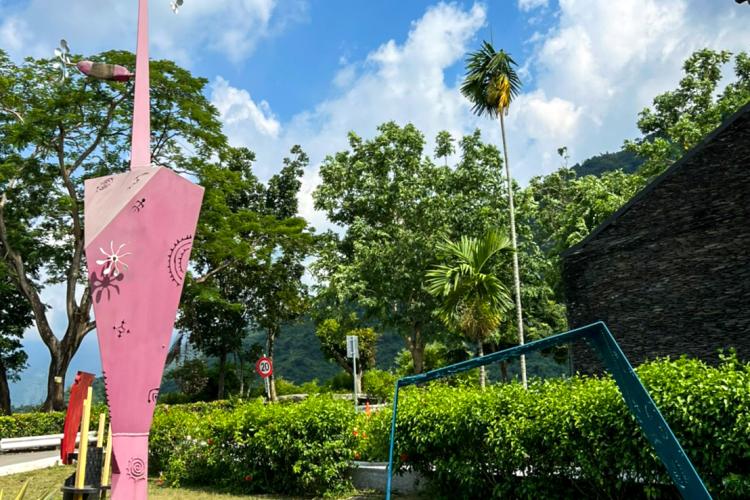
你能買賣大地的風嗎?空氣、生態、自然真的無價,需要守護珍惜,這是原住民留傳的古老智慧。如果想要有很香的風,就必須正視環境保育的永續價值。而風很香也意指原住民樸實、友善、純真的生活哲理。
Can you buy and sell wind? Air, ecology and nature are priceless and need to be protected and cherished. This is the ancient wisdom passed down by the indigenes. If you want to have a very fragrant breeze, you must face up to the sustainable value of environmental conservation. The fragrant breeze also symbolizes the indigenous people’s simple, friendly and pure life philosophy.
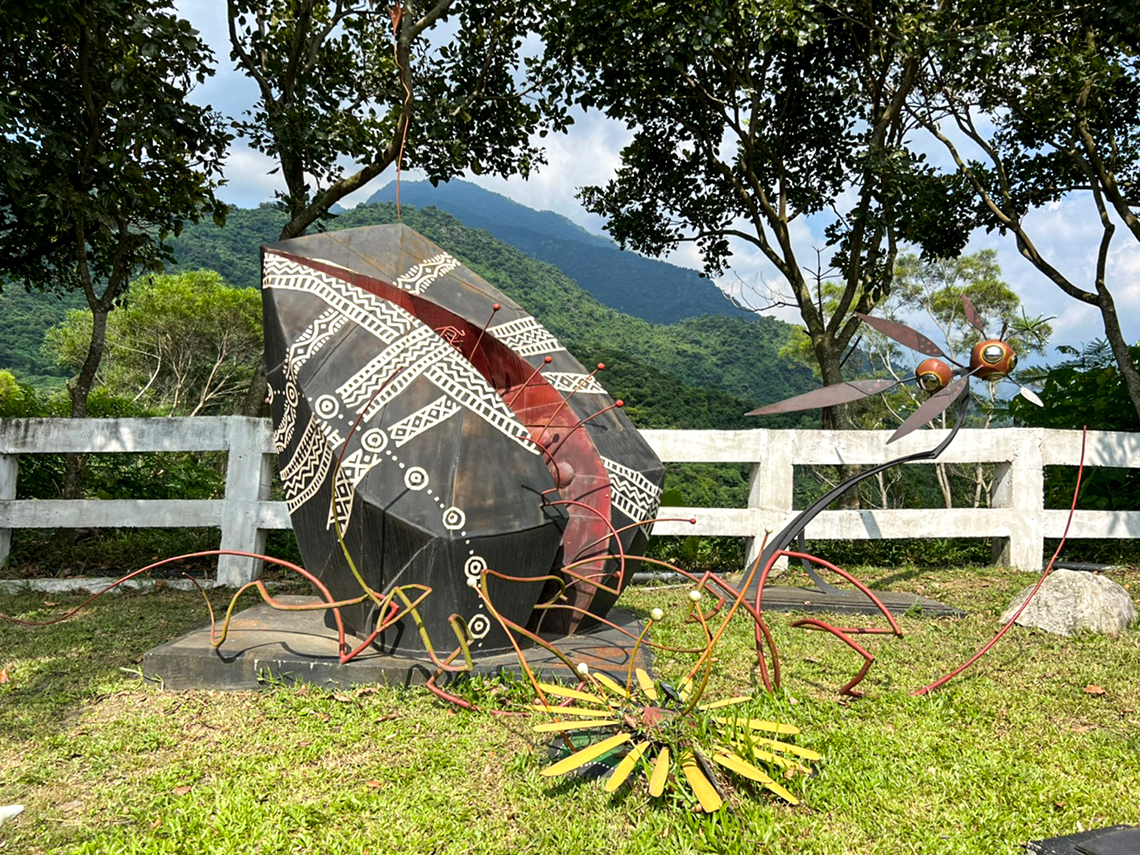
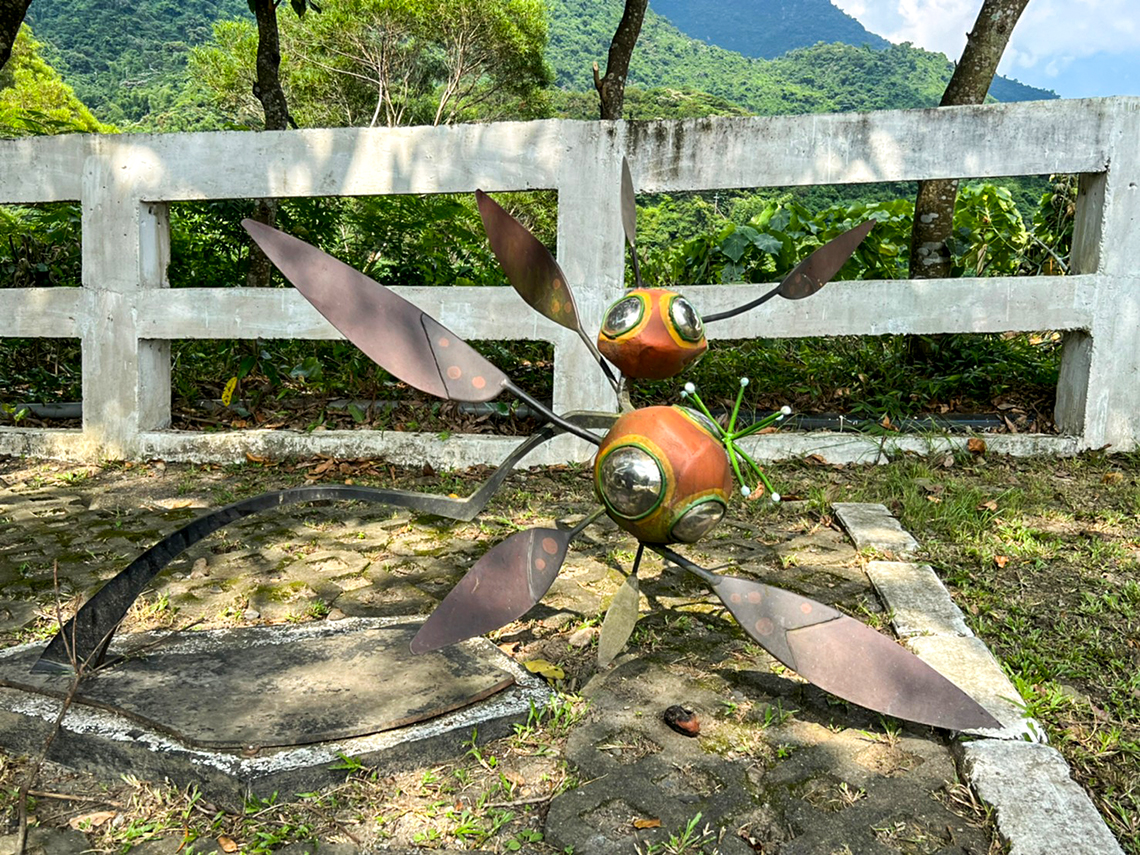
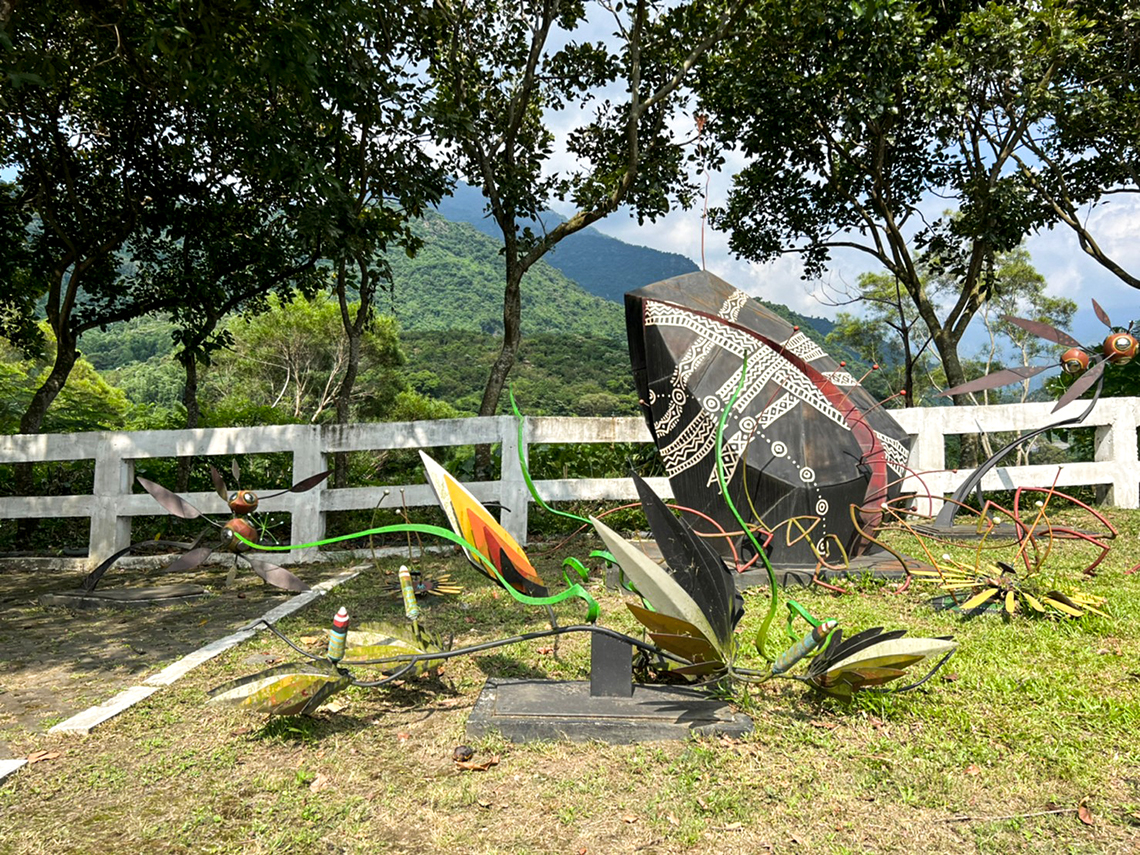
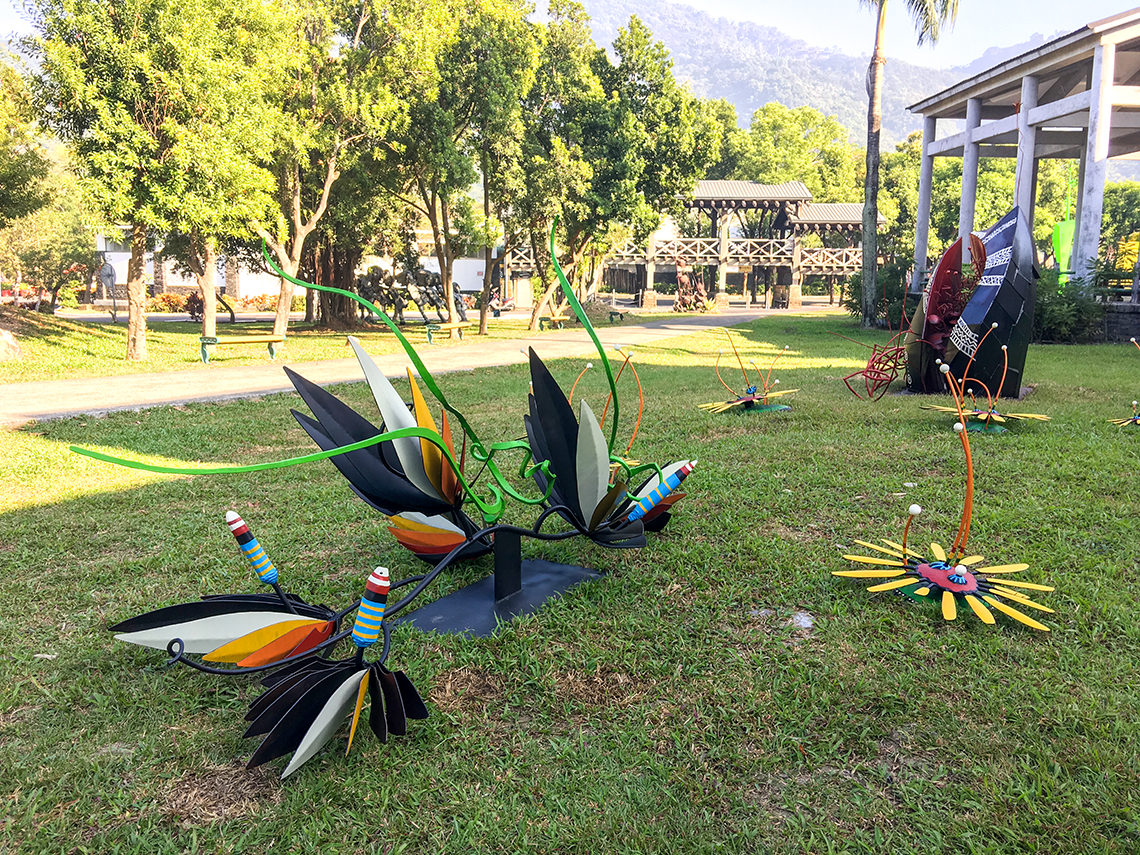
31心花朵朵開 Heart Blossoms
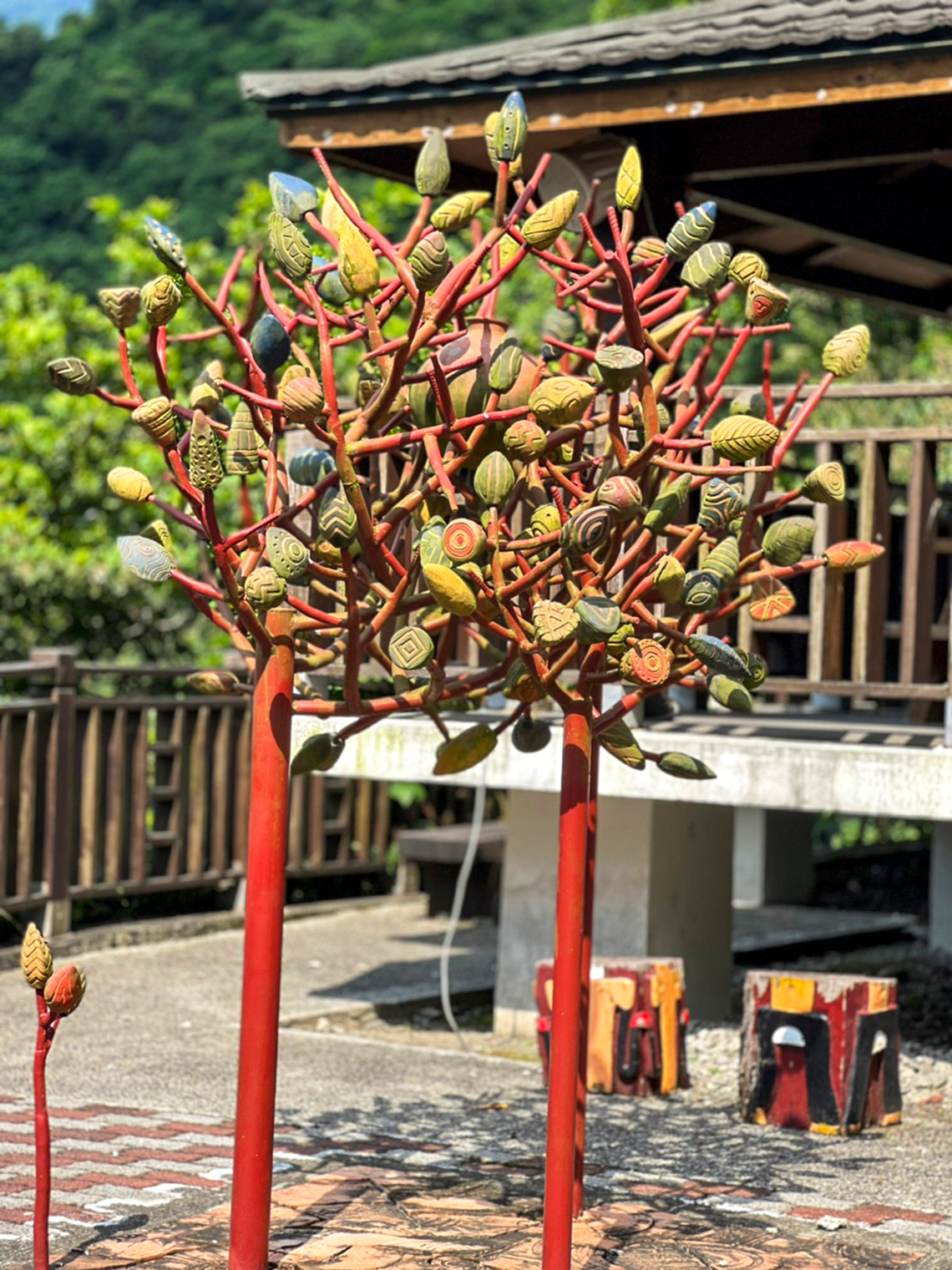
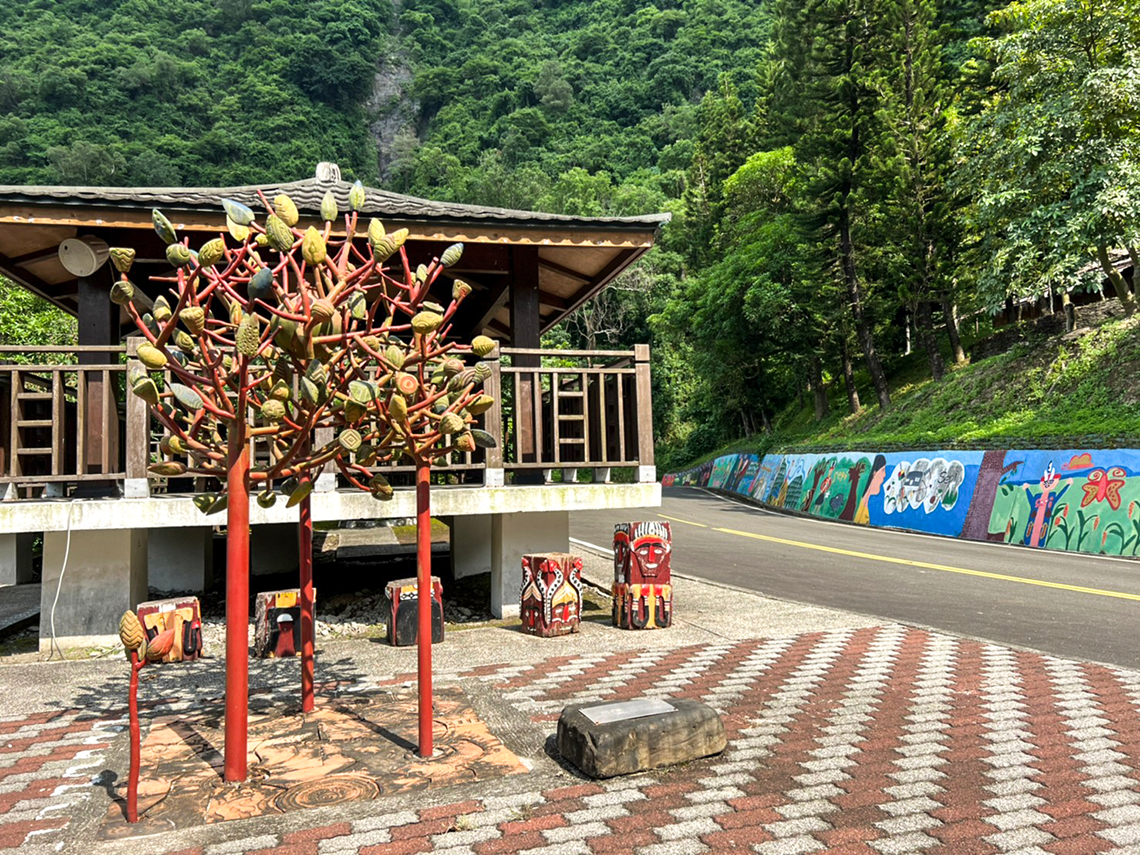
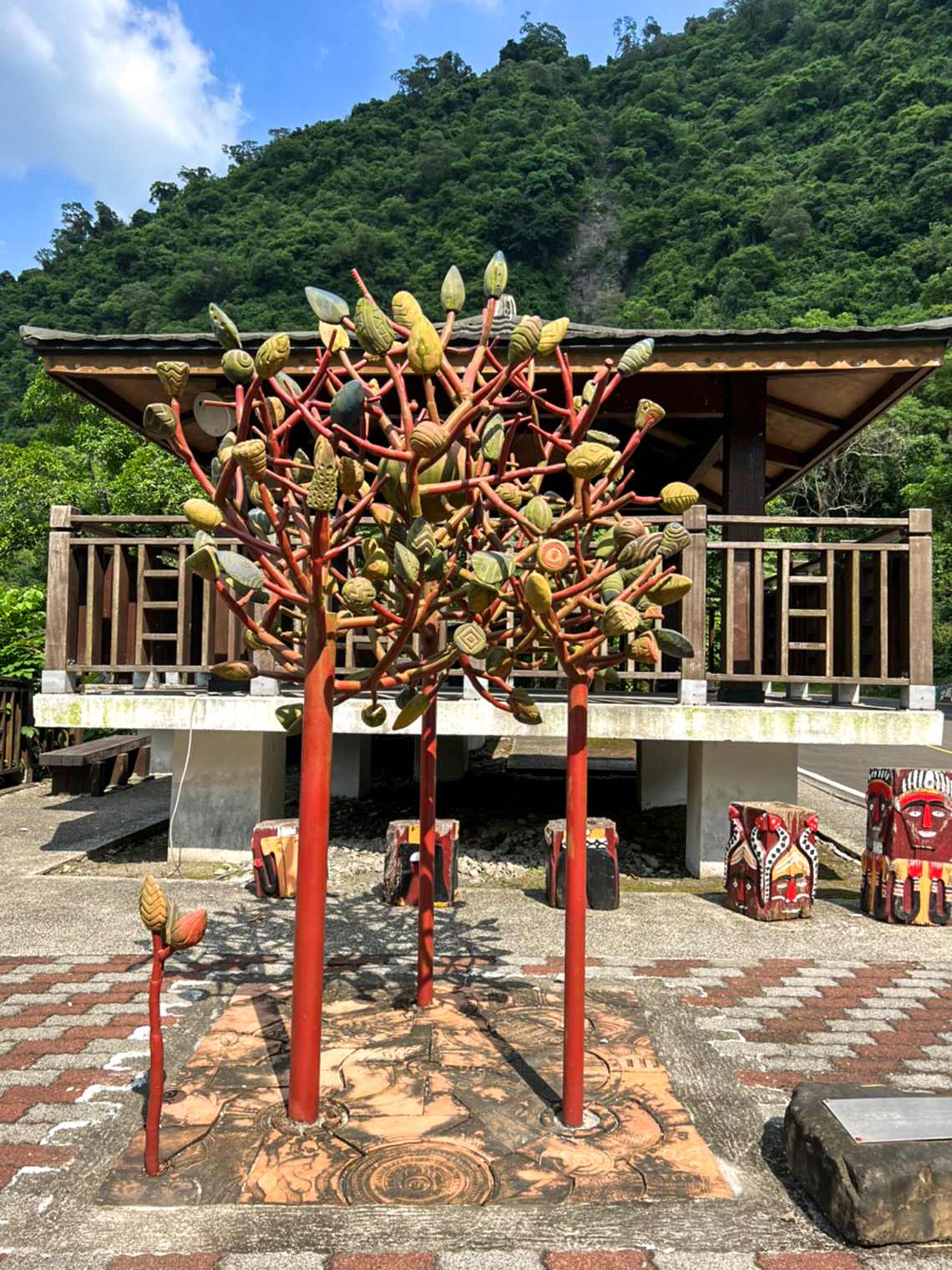
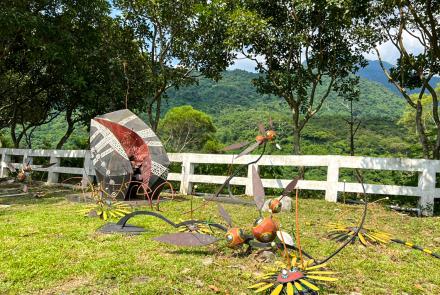
藝術家: 雷恩(古勒勒‧雷拉登) /排灣族
Artist: Kulele Ruladen /Paiwan
2017
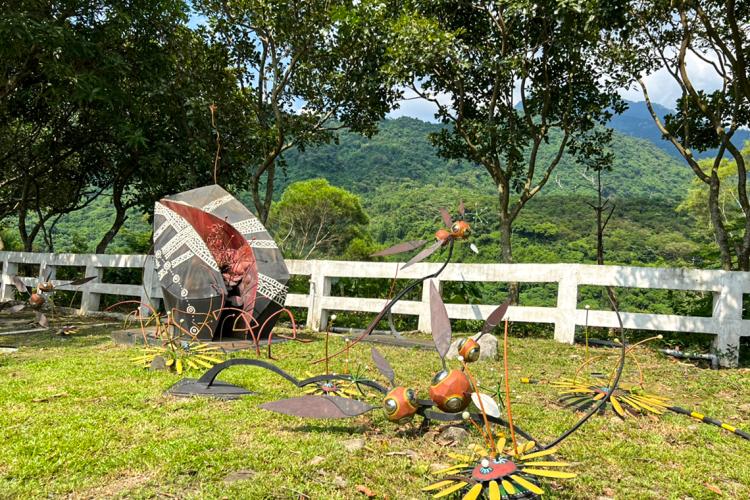
我們的祖先相信我們是由石頭誕生而來,
意謂著我們是大地的孩子。
一切都來自於土地...
藉由幾組模擬植物生態而創作的作品,
呈現的是一個很簡單的概念:
初生→成長→綻放,
在近自然的環境裡,
我希望每個人能夠沉靜在這種簡單的思維裡,
我們被滋潤與呵護,
我們選擇與被選擇,
然後歸於大地…
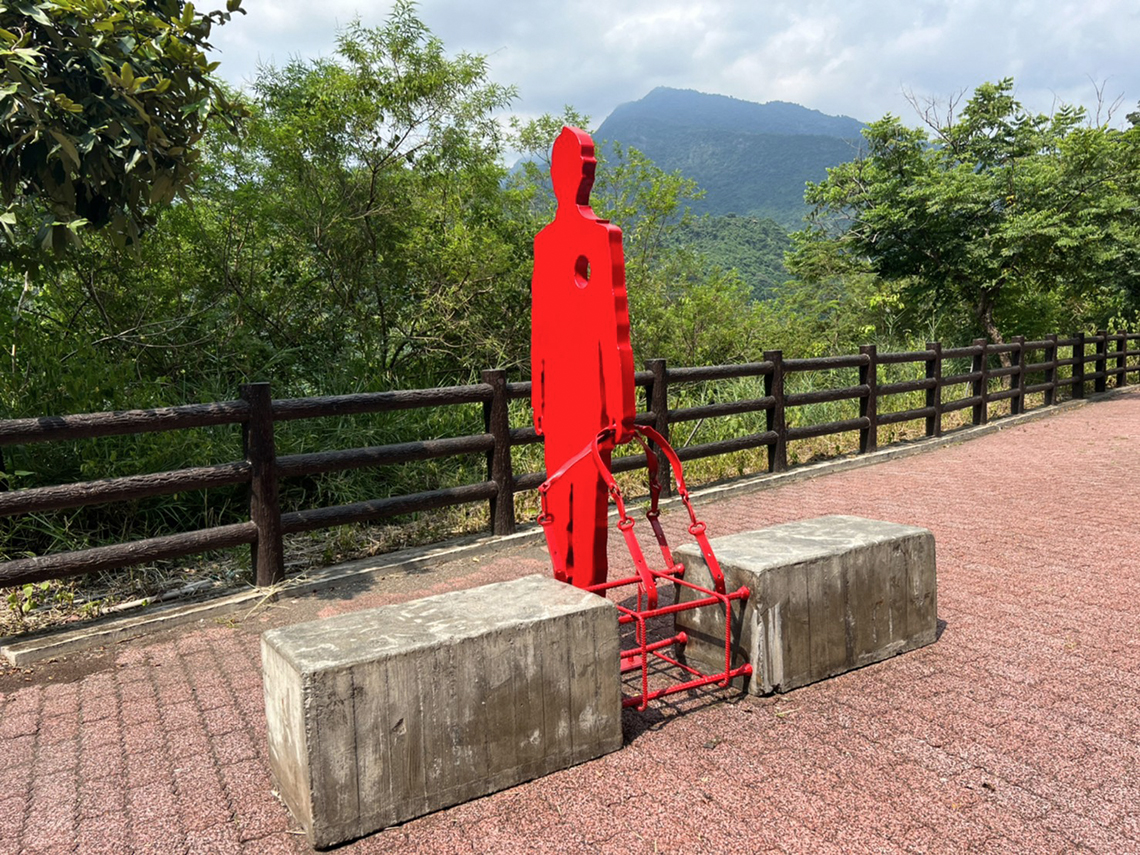
32傳遞森林的訊息 Delivering Messages of the Forest
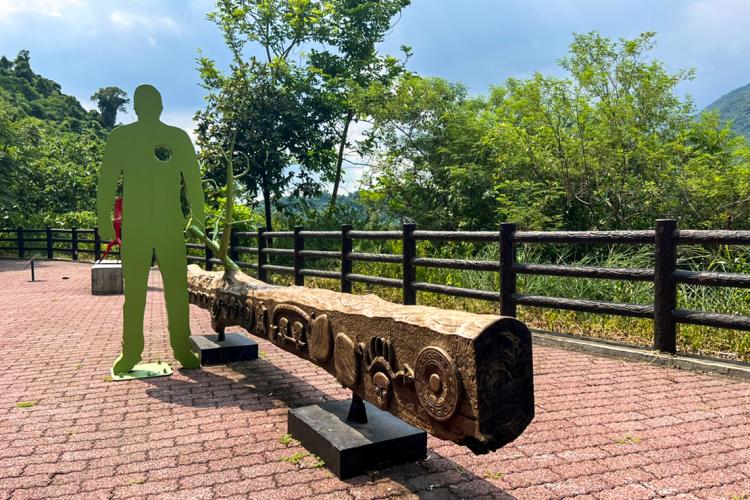
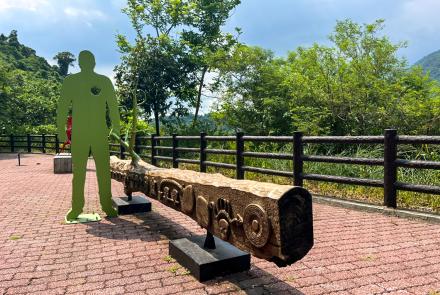
藝術家: 拉夫拉斯.馬帝靈 /排灣族
Artist: Lavuras Matilin /Paiwan
2015
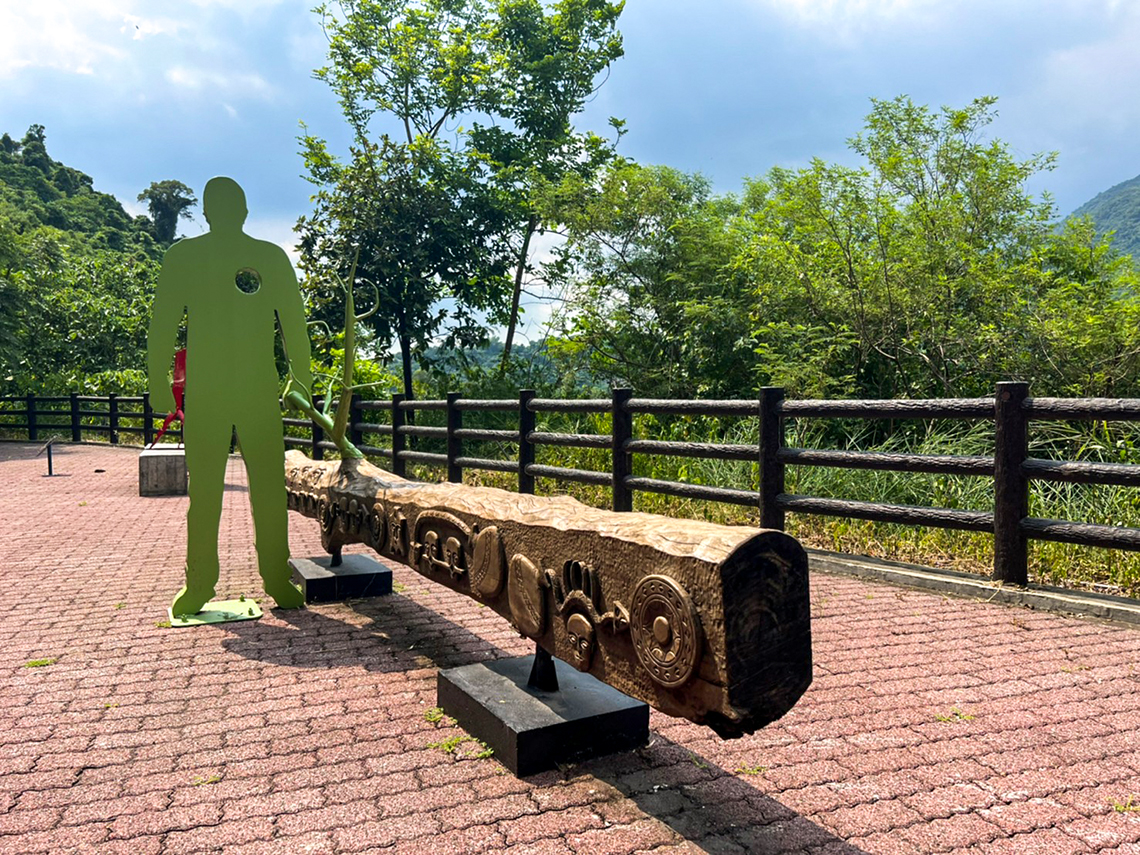
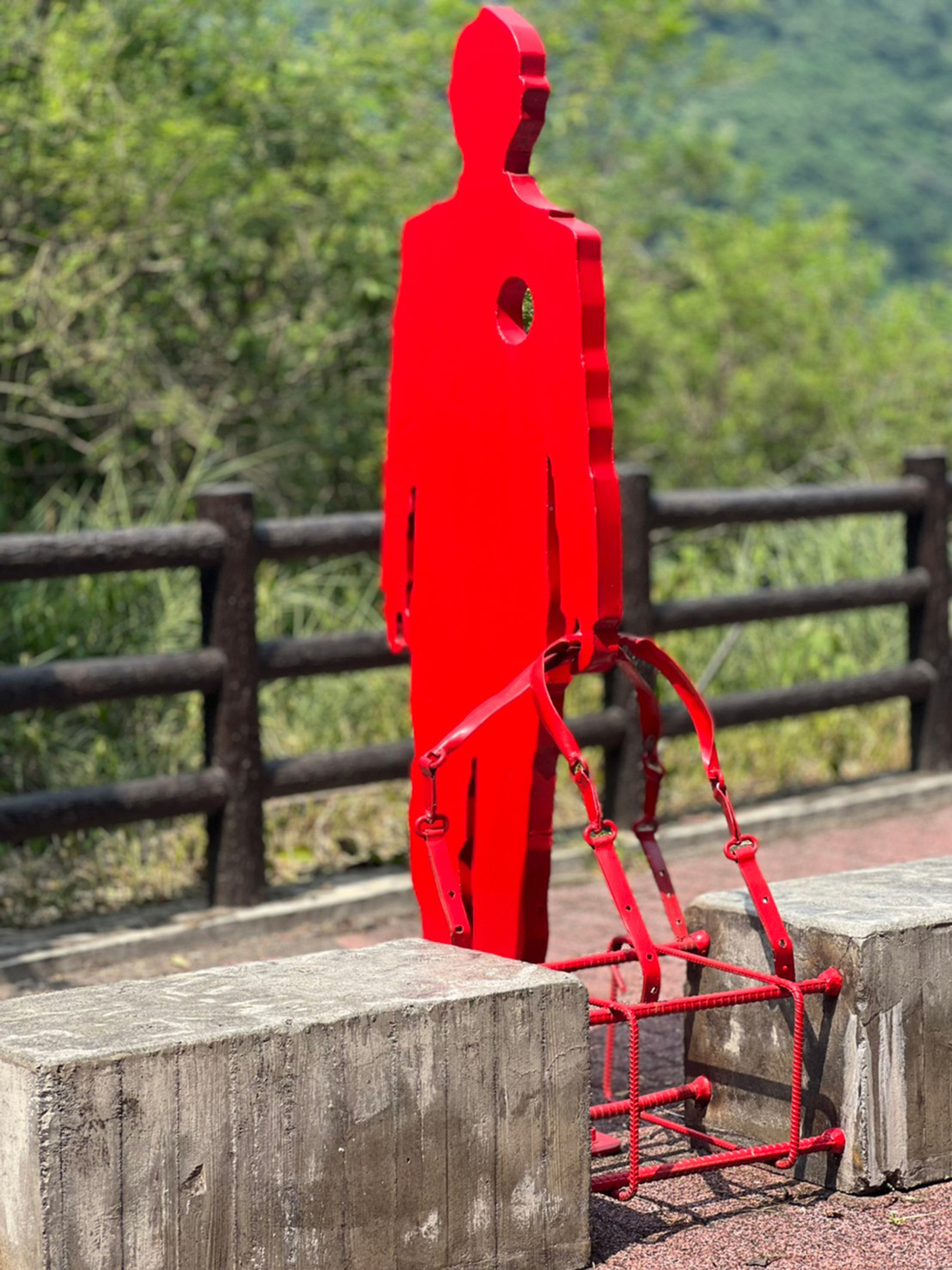
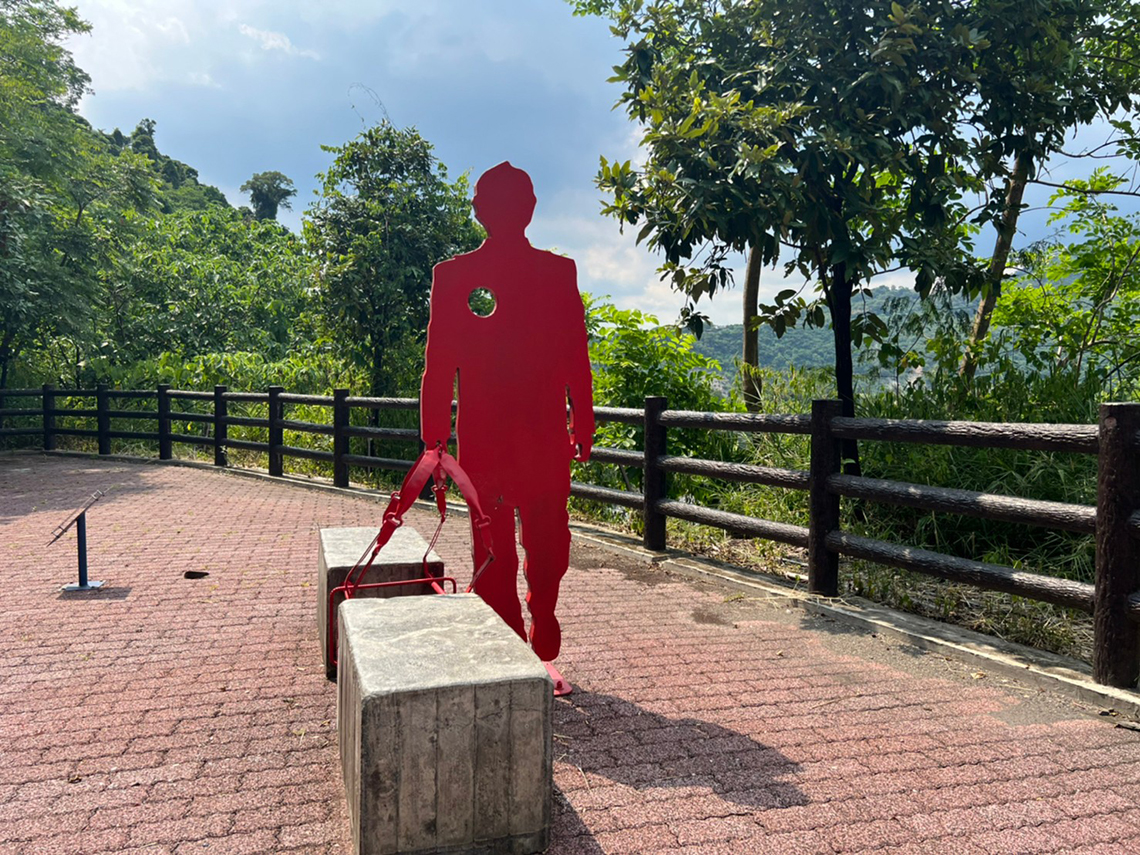
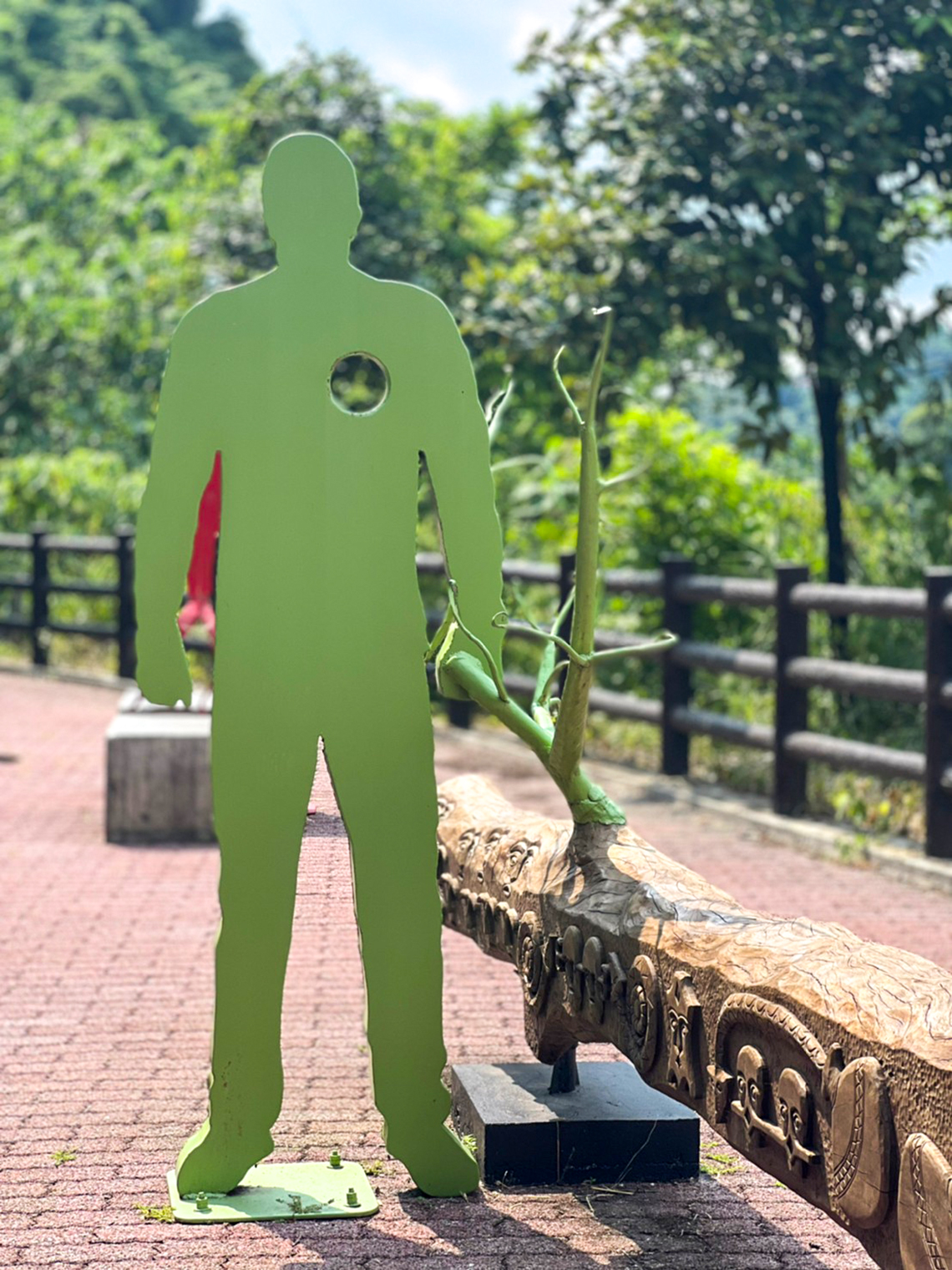
運用金屬建構猶如影子殺的人像雕塑,這形象可能代表著成人、旅人、孩子,甚至是任何觀者所想像的角色,對拉夫拉斯而言,他對作品「人」的角色並沒有特別偏重,比較希望觀者自我認定角色。被掏空的心口,代表著縱使離鄉背井,也始終把心繫在家門。
拉夫拉斯運用了大型巨木製作手提包包,傳達的是「訊息」的概念。包包隊我們來說,可能只是所謂的行囊,或是一件禮物,但拉夫拉斯賦予另一種含意,這「訊息」可能是給人的消息,也可能是給自然:可能是好消息,也可能是壞消息,也或許是一個包袱,甚至敘述著我們不曾知道的故事與我們忽略的事情。
This artwork is to represent the messages that come from the forest. The use of metal to construct a shadow-like portrait is to illustrate the image of an adult, a traveler, a child, or even any character imagined by the viewer.
The hollowed-out heart means that even if you leave your hometown, you will always keep your heart at home.
Lavras used a large giant wood to make a handbag, conveying the concept of "message". This "message" may be for people or for nature. It may be good news or bad news. It could be a bag of burden or stories that we didn't know about and things that we have ignored.
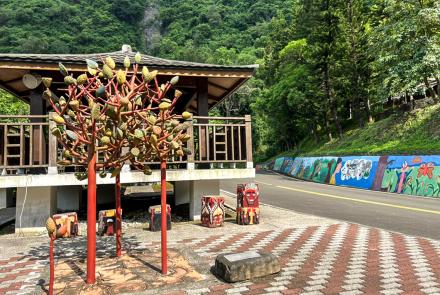
33智者的記憶 Memories of the Wise
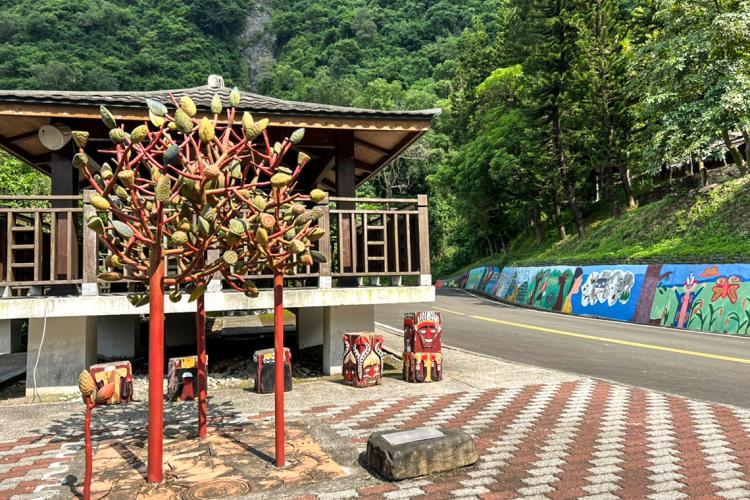
藝術家:雷斌(瑪斯斯格.金碌兒) /排灣族
Artist: Masiswagger Zingrur /Paiwan
2018
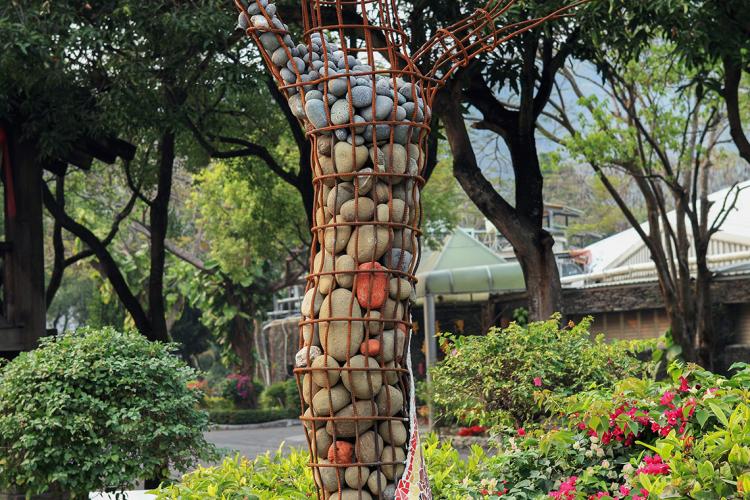
創作的靈感來自於這十五年雷斌在部落所得到的文化養分,他塑造了智慧之「樹」來做為創作的主體,對他來說那棵「樹」就像智慧一樣,它不斷的在生長到茂盛結果實,然後一直重覆,這樣的重覆開始不斷的結出果實的過程,就像是這樣的智慧與記憶是取之不盡,源源不絕的。
主要想傳達面對文化的時候要用非常纖細的態度去看待它,用謹慎的態度去面對和分析,最後到實踐文化。
The inspiration for this artwork came from the cultural nourishment that Zingrur has received from the tribe over the past 15 years. He created this tree because to him, trees are like wisdom that keep growing until it prospers and bears fruit, and then it repeats all over again. Similarly, the wisdom and memory that we have, they grow endlessly.
He wants to convey the message that when facing culture, we should look at it with a very mindful attitude, be cautious when facing and analyzing it, and finally practice the culture.